This analysis covers what the data actually shows: verified market size figures from multiple research publishers, the coating technologies gaining the most commercial traction, the regulatory developments reshaping compliance strategy, and the manufacturing innovations—including how PVD-coated tooling fits into precision medical device production—that are redefining how coatings get made and applied at scale.
Key Takeaways
- The global medical device coatings market was valued at $13.47 billion in 2024 and is projected to reach $21.17 billion by 2030 at a CAGR of 7.83% (TechSci Research)
- Cardiovascular applications lead demand, holding 26.9% of the market in 2025; Asia-Pacific is the fastest-growing regional market
- Antimicrobial and hydrophilic coatings are the two fastest-growing product segments
- PFAS-free formulations are a growing commercial priority, though regulatory timelines vary significantly by jurisdiction
- Automation in coating production, including PVD coatings on manufacturing tooling, is compressing cycle times and improving precision on the shop floor
Medical Device Coatings Market: Size, Growth, and Key Drivers in 2026
What the Market Data Shows
Multiple research firms have published estimates for the medical device coatings market, and their figures differ based on scope and base year. The most useful figures for planning purposes:
| Source | Baseline | Forecast | CAGR |
|---|---|---|---|
| TechSci Research (Nov. 2025) | $13.47B (2024) | $21.17B (2030) | 7.83% |
| MarketsandMarkets (Jul. 2025) | $9.98B (2025) | $15.81B (2030) | 9.6% |
| Mordor Intelligence (Jan. 2026) | $11.67B (2025) | $17.35B (2031) | 6.83% |

These estimates use different market definitions and base years, so direct comparison has limits. The consensus across all three: coatings market growth is running at roughly the same pace as the broader medical device sector — and in some estimates slightly ahead of it — which Mordor Intelligence benchmarks at a 6.99% CAGR for 2026–2031.
The Demand Drivers
Those growth rates are being sustained by two converging forces:
Chronic disease burden. The WHO's July 2025 fact sheet reports 19.8 million cardiovascular deaths in 2022 — roughly 32% of all global deaths. This scale of disease burden directly sustains demand for coated cardiovascular implants, stents, and interventional devices across every major geography.
Minimally invasive procedure growth. As endoscopic and catheter-based procedures displace open surgery, device manufacturers need coatings that reduce friction and enable navigation through narrow anatomy. Lubricious and hydrophilic coatings on guidewires, catheters, and endoscopes are growing in step with MIS procedure volumes.
Application and Regional Breakdown
By application, Grand View Research's June 2026 report places cardiovascular devices at 26.9% of the 2025 market, followed by orthopedics, neurology, general surgery, and dentistry. By product type, Mordor Intelligence puts implantable devices at a 30.85% share in 2025.
Regionally:
- North America leads with approximately 40.7% of the market in 2025 (Grand View Research), supported by robust regulatory infrastructure and high procedure volumes
- Asia-Pacific is the fastest-growing region, with Mordor projecting an 8.78% CAGR, driven by aging populations, expanding healthcare investment, and rising procedure adoption
- Europe remains a significant market, with EU MDR compliance timelines shaping procurement and supplier qualification decisions

Key Coating Types Driving Market Innovation
Medical device coatings serve distinct clinical functions—and understanding which categories are gaining traction helps manufacturers and procurement teams prioritize R&D and sourcing decisions.
Hydrophilic and Lubricious Coatings
Hydrophilic coatings absorb water to create a slick surface, reducing friction during device insertion and navigation. Their primary applications include guidewires, catheters, and endoscopes.
The clinical tradeoff is real: peer-reviewed literature confirms hydrophilic guidewires reduce friction and improve maneuverability, but also documents a coating-peel and particulate risk that manufacturers must address through durability testing. FDA's February 2024 atherectomy guidance recommends coating-defect imaging at 40x–500x magnification and particulate counts at validated size thresholds—a signal that regulatory scrutiny of coating integrity is increasing.
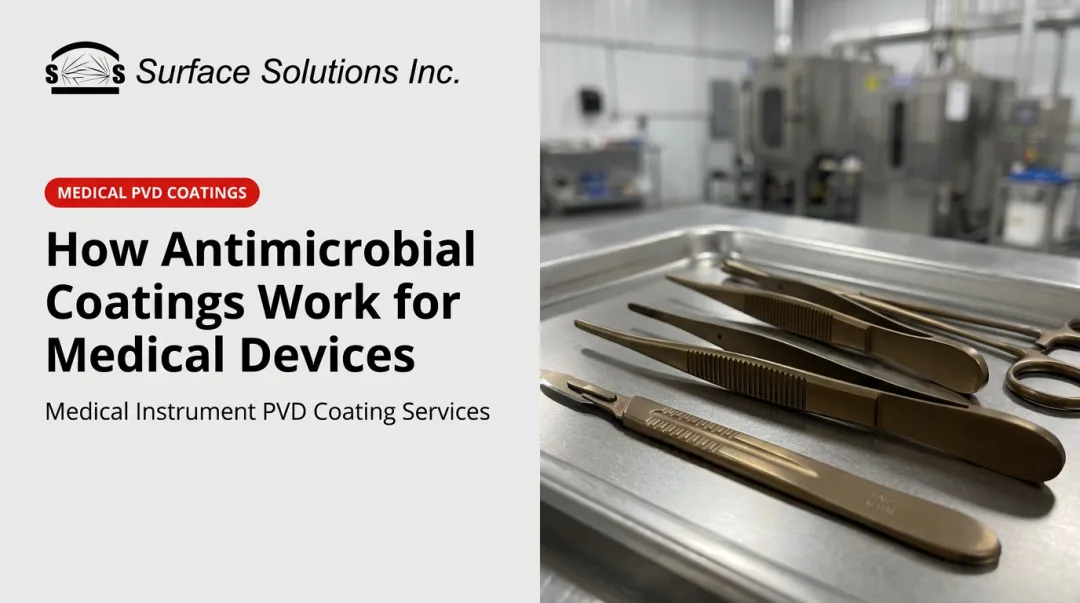
Antimicrobial Coatings
The ECDC's 2024 survey estimates that 4.3 million EU/EEA hospital patients acquire at least one healthcare-associated infection annually, with a weighted prevalence of 8.0% across more than 1,300 hospitals. That scale of clinical burden is driving hospital procurement decisions toward devices with embedded antimicrobial surfaces.
The evidence base for specific coatings is still developing. A 2026 multicenter RCT in China (n=300) comparing poly-L-lysine and noble-metal-alloy coated catheters found a 3.1 percentage point difference in bacteriuria rates (6.9% vs. 10.1%), but the result was not statistically significant. Active investment continues in silver ion, chlorhexidine, and peptide-based antimicrobial coating technologies as researchers seek stronger clinical validation.
Drug-Eluting Coatings
Drug-eluting coatings release therapeutic agents—anti-inflammatory or antiproliferative drugs—over time at the implant site. Coronary stents represent the most established application; orthopedic implants are a growing area of interest.
The regulatory burden is substantial. Under U.S. FDA rules, drug-eluting cardiovascular stents are combination products with CDRH as lead, typically requiring PMA. Under EU MDR Article 1(8) and Annex VIII Rule 14, devices incorporating an ancillary medicinal substance are classified as Class III, the highest regulatory tier, and manufacturers should plan for extended timelines and comprehensive clinical evidence packages before filing.
Anti-Thrombogenic and Biocompatible Coatings
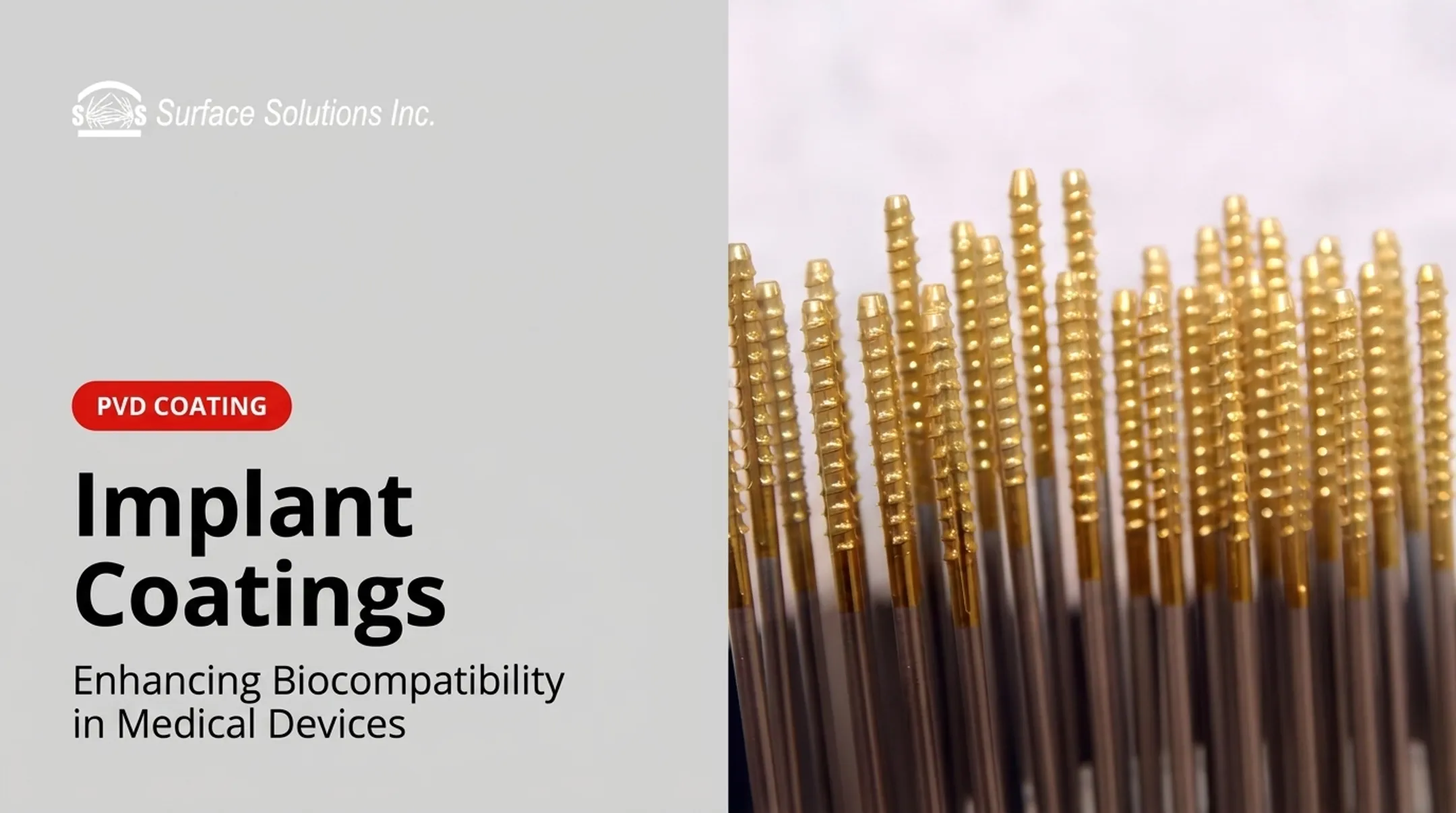
Anti-thrombogenic coatings reduce blood clot formation on device surfaces—critical for cardiovascular implants and any blood-contacting device. Biocompatibility coatings more broadly minimize immune response and tissue irritation across a wide range of implant types.
Both categories must meet ISO 10993 biocompatibility requirements. Applicable parts vary based on contact type and duration:
- ISO 10993-1:2025 — general evaluation framework
- ISO 10993-4:2017 — blood interactions
- ISO 10993-5:2009 — cytotoxicity
- ISO 10993-17:2023 — toxicological risk assessment
- ISO 10993-18:2020 — chemical characterization
Top Trends Reshaping the Medical Device Coatings Industry in 2026
PFAS-Free Formulations
Per- and polyfluoroalkyl substances (PFAS) are under scrutiny for environmental persistence and potential health effects, but the regulatory picture is more nuanced than headlines suggest.
Current status by jurisdiction:
- FDA: As of August 2025, the FDA sees no reason to restrict PFAS use in medical devices, noting PTFE's functional value for lubrication, insulation, and biostability
- EPA: TSCA Section 8(a)(7) requires PFAS reporting (not a coating ban), with most reports due October 13, 2026
- EU REACH: ECHA's scientific committees completed their assessment in March 2026; the SEAC opinion consultation ran through May 25, 2026—the restriction is not yet enacted, and no final medical-device application deadline exists
Commercially, supplier reformulation is moving faster than regulation. Hydromer announced PFAS-free hydrophilic coatings in June 2025; Harland Medical markets its Lubricent UV as 100% PFAS-free with claims of up to 98% friction reduction. For medical device OEMs, the practical question isn't whether PFAS will be banned tomorrow—it's whether having PFAS in a formulation creates supply chain risk over a 5–10 year product lifecycle.
Infection Control as a Strategic Priority
HAI burden continues to drive procurement decisions. Hospitals increasingly specify antimicrobial surfaces in device contracts, pushing coating suppliers to demonstrate clinical differentiation. Investment in next-generation antimicrobial technologies—peptide-based coatings, dual-function surfaces that are simultaneously lubricious and antimicrobial—is accelerating.
A 2026 preclinical study showed a pH-triggered dual-function hydrogel producing rat inflammation scores of 0.8 versus 3.2 for coated and uncoated groups—promising early data, though not yet validated in human clinical trials.
R&D Investment and Novel Formulations
MedTech Europe's 2025 industry figures report that medtech companies invest approximately 8% of sales in R&D—though the underlying data cite 2018 figures, making this the latest available association benchmark rather than a confirmed 2025 measurement.
At that investment rate, the pipeline for novel coating technologies is growing fast. Smart responsive surfaces that change properties based on pH or temperature, and coatings with dual functionality (lubricious and antimicrobial simultaneously) are moving from preclinical into early commercialization stages.
Surmodics' 2023 launch of its Preside hydrophilic coating—emphasizing lubricity, durability, and reduced particulate generation—illustrates how R&D investment is translating into market-ready products targeting the most demanding clinical applications.
Supply Chain Localization and Capacity Expansion
Post-pandemic supply chain disruptions pushed coating suppliers to expand domestic capacity. Two concrete examples from the current cycle:
- Hydromer announced modular high-speed automated dip-coating and UV-curing equipment in February 2026
- Freudenberg Medical opened a 130,000 sq. ft. Alsdorf coating facility in June 2024, tripling its manufacturing footprint
The pattern is clear: coating suppliers are building capacity that bridges prototype-scale development work and high-volume OEM production runs from the same infrastructure.
Regulatory Landscape and Compliance Challenges
The Pathway Map
Coatings don't get approved in isolation—the coated device gets cleared or approved, and the coating's properties are evaluated as part of that submission. Key frameworks:
- FDA 510(k): Substantial equivalence pathway for lower-risk devices; MDUFA V goals target 95% of submissions reviewed within 90 FDA days
- FDA PMA: Required for Class III devices, including drug-eluting combination products; 90% of original PMAs targeted within 180 FDA days (320 days with advisory committee input)
- EU MDR: CE marking required; drug-containing devices are automatically Class III under Rule 14; legacy device transitions extend to December 31, 2027 (Class III and non-exempt Class IIb implantables) and December 31, 2028 (other Class IIb and Class IIa devices)
- ISO 13485: Quality management system certification expected by OEM customers as a baseline supplier qualification requirement

The Cost and Compliance Burden
Regulatory compliance covers ISO 10993 biocompatibility testing, clinical validation, and submission preparation — and it's one of the steepest barriers for novel coating technologies. For smaller innovators, preclinical testing alone can drain budget and timeline before a submission is even filed.
That testing scope is broad: cytotoxicity, sensitization, hemocompatibility, and chemical characterization all need to be addressed.
Drug-eluting coatings add another layer of complexity. Combination-product classification means navigating dual FDA centers, longer review cycles, and post-market lifecycle controls for both the device and drug components.
Compliance as Competitive Advantage
The compliance burden also creates a real opening for well-prepared suppliers. Coating providers that build and maintain this infrastructure become easier partners for OEM customers qualifying vendors across multiple regulatory jurisdictions at once.
Specifically, suppliers that differentiate on compliance tend to invest in:
- ISO 13485 certification as a baseline quality signal
- Documented biocompatibility testing records (ISO 10993 series)
- Audit-ready quality systems with traceable process controls
- Regulatory affairs support for customers navigating 510(k) or PMA submissions
Manufacturing & Production Innovations Powering Growth
Automated Coating Lines
Electrostatic robotic spray systems and automated dip lines are displacing manual coating processes at leading suppliers. The benefits are measurable:
- Tighter coating thickness control across production batches
- Reduced material waste through precise application
- Greater throughput consistency for high-volume OEM runs
- Scalability from prototype quantities to production volumes within the same facility
Hydromer's February 2026 announcement of automated load, dip-coating, and UV-curing equipment signals this shift clearly. So does Freudenberg Medical's 130,000 sq. ft. facility expansion — both investments targeting infrastructure built to handle the full production lifecycle.
Cleanroom Standards in Coating Facilities
ISO Class 8 cleanroom environments — permitting up to 3,520,000 particles per cubic meter at ≥0.5 microns — are the baseline for medical-grade coating operations.
HEPA-filtered HVAC systems and contamination control protocols support consistent bioburden management, helping coating suppliers meet the environmental requirements OEM customers audit during supplier qualification.
PVD Coatings on Medical Manufacturing Tooling
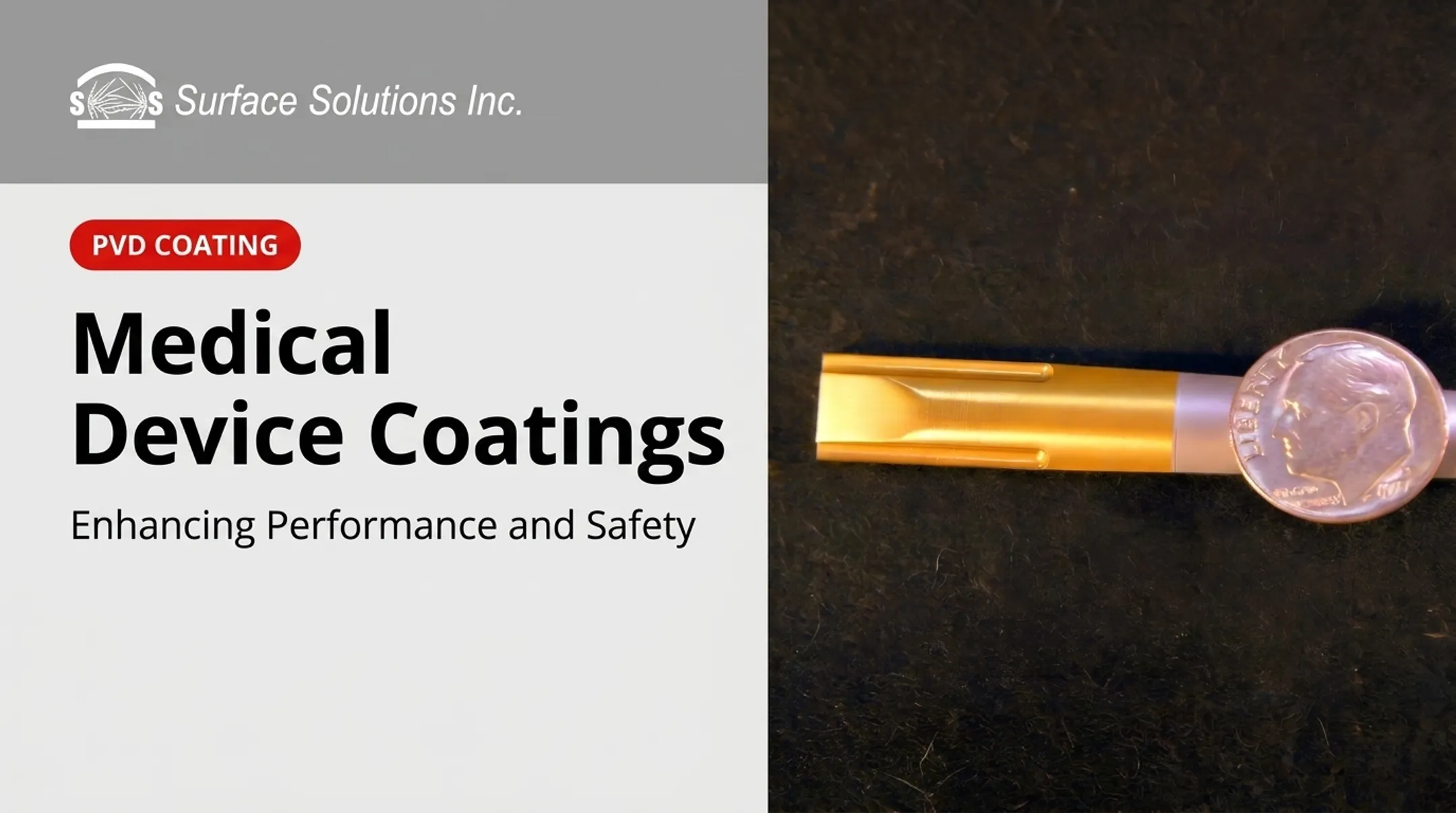
PVD coatings play a critical role not just on finished medical devices, but in the manufacturing of those devices — applied to the cutting tools, punches, and forming dies used to fabricate surgical instruments and implant components.
Surface Solutions, based in Fridley, Minnesota, provides exactly this service. Their PVD coating portfolio for medical manufacturing tooling includes:
- TiN (Titanium Nitride): Gold-finish baseline coating for punches, cutting tools, and forming dies
- AlTiN (Aluminum Titanium Nitride): Hardness rated at 4,000–4,200 Hv; explicitly documented as biocompatible and suitable for medical instruments and implantable devices; delivers 2–7x tool life versus uncoated tools
- CrN (Chromium Nitride): Preferred for medical applications due to superior corrosion resistance and biocompatibility against bodily fluids and sterilization processes
- TiCN (Titanium Carbo-Nitride): High-cycle performance for demanding punching and forming die applications
- Alpha™: Surface Solutions' proprietary formulation; documented case studies show tools running over 15 million parts before requiring sharpening, versus sharpening uncoated D2 punches every three weeks

Applied at 0.0001″–0.0002″ (2–5 microns), these coatings add negligible dimensional change to precision-ground tooling — allowing manufacturers to coat tools after final machining without returning to the machine shop. For medical device production, where tolerances are often held to tenths of thousandths of an inch, that eliminates a costly rework step.
Surface Solutions serves medical device manufacturers nationally, accepting shipped parts from California, New York, Florida, and across the Upper Midwest — with most locations reachable within three business days via UPS Ground. Contact them at 763-785-9436 or info@tincoat.net for application-specific consultation.
Frequently Asked Questions
What is the projected size of the global medical device coatings market by 2030?
TechSci Research values the market at $13.47 billion in 2024 and projects $21.17 billion by 2030, a 7.83% CAGR. Growth is driven by chronic disease prevalence, rising infection control requirements, and growing minimally invasive procedure volumes worldwide.
What types of coatings are most commonly used on medical devices?
Four primary coating categories dominate medical device applications:
- Hydrophilic/lubricious coatings — reduce friction on catheter and guidewire surfaces
- Antimicrobial coatings — inhibit biofilm formation and reduce infection risk
- Drug-eluting coatings — enable localized therapeutic delivery at the implant site
- Anti-thrombogenic coatings — minimize clot formation and immune response
Why are medical devices coated in the first place?
Coatings add functional properties the base substrate alone cannot provide—lubricity, infection resistance, drug delivery capability, or enhanced biocompatibility. These properties improve device performance, patient safety, and product longevity without changing the device's core structural design.
What regulatory standards apply to medical device coatings?
Coatings must satisfy ISO 10993 biocompatibility requirements, with FDA clearance (510(k) or PMA) or EU MDR CE marking required depending on the device. Drug-eluting coatings face the most complex review, classified as combination products requiring coordination across both device and drug regulatory frameworks.
What is PFAS, and why does it matter for medical device coatings?
PFAS (per- and polyfluoroalkyl substances) are synthetic chemicals used in some coatings for non-stick and water-resistant properties. Regulatory scrutiny is growing—particularly in the EU—due to environmental persistence. FDA currently permits PFAS in medical devices, but suppliers are reformulating toward PFAS-free alternatives to reduce future supply chain risk.
How are automation and robotics changing the medical device coating industry?
Robotic electrostatic spray systems and automated dip lines are improving coating uniformity, reducing material waste, and enabling suppliers to scale production while maintaining cleanroom standards. Freudenberg Medical's 130,000 sq. ft. Alsdorf facility is one example of the significant capacity expansion happening across the industry.