Engineers hear a lot of noise about coated bearings: they flake off, they mess with clearances, they're not worth the added cost. Some of that is true in specific cases. Most of it isn't.
This guide breaks down what coated bearings actually are, the main coating families in use today, their real-world benefits, and how to decide whether they make sense for your application.
Key Takeaways
- A thin engineered coating (often 2-7.5 microns) reduces friction, resists wear, and extends bearing life
- PVD coatings (TiN, CrN, DLC), dry film/PTFE, polyurethane, and ceramic each suit different demands
- Coating thickness is minimal, so most applications need little to no clearance adjustment
- Coated bearings cost more upfront, but extended service life typically offsets that premium
What Are Coated Bearings?
Coated bearings start as standard ball, roller, plain, or engine-style bearings. Manufacturers then bond an additional engineered layer onto the base material, modifying friction, hardness, or corrosion resistance without changing the bearing's core geometry.
The layer itself is thin. Engine bearing coatings, for instance, commonly run 0.0002 in to 0.0004 in depending on the brand and formulation, with 0.00025-0.00030 in cited as a typical range for many performance applications. That's thin enough that most builds don't need major clearance changes.
Coated bearings serve two main niches: OEM stop/start engines, which need protection against repeated start-up scuffing as engines cycle on and off in traffic, and extreme high-performance applications, which face high-load, high-speed metal-to-metal contact in racing or industrial equipment.

Think of the coating as a secondary lubrication layer. During cold starts, momentary oil starvation, or before a full hydrodynamic oil film builds up, the coating buys the surfaces time before they'd otherwise be grinding against each other.
That said, coatings don't fix bad engineering. A bearing running with the wrong clearance, poor oil supply, or excessive load will still fail; the coating only narrows the margin of forgiveness. Good design and proper maintenance still carry the load, and the coating simply adds a buffer on top of them.
How the Coating Process Works
Bearing coatings are applied through processes like physical vapor deposition (PVD), spray application, or dry-film bonding. Each method requires three steps: surface preparation, application of the coating material, and a curing or adhesion stage that bonds the layer at a molecular or mechanical level. Skipping or rushing any of these steps is the most common source of coating failures, far more often than the coating chemistry itself.
Types of Coated Bearings
The right coating depends on load, temperature, speed, and environmental exposure. There's no universal "best" option, just the best fit for a given job.
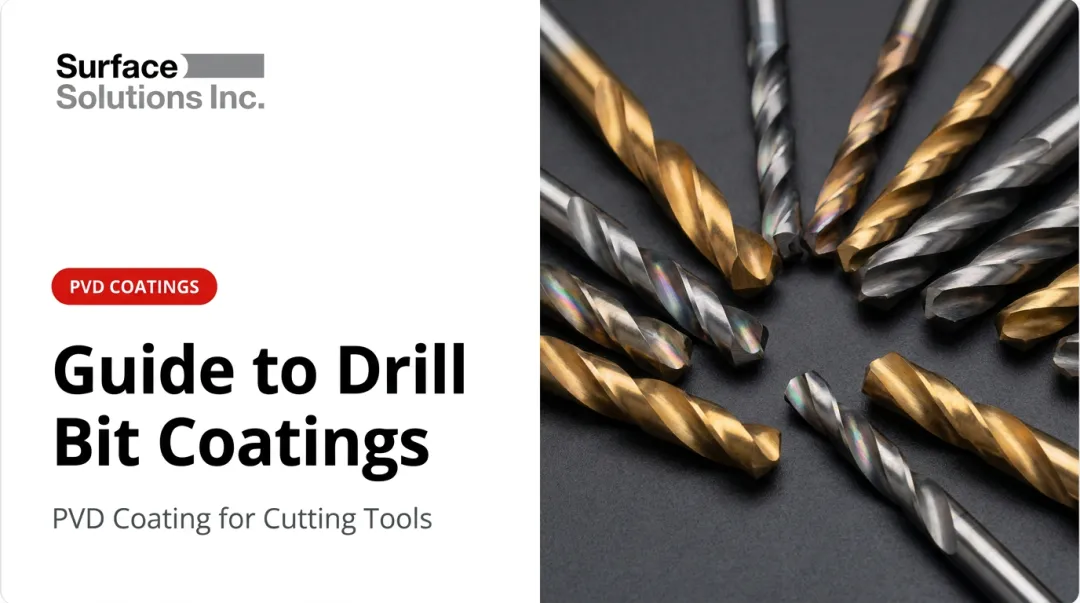
PVD Coatings (TiN, CrN, DLC)
PVD coatings create an ultra-hard, ceramic-like layer bonded at a near-molecular level. They're common in high-load, high-heat, or high-speed bearing and tooling applications. Schaeffler's Triondur CN coating, for example, runs 1-4 microns and exceeds 2,200 HV in hardness, hard enough to resist abrasive wear on rolling elements and spherical plain bearings.
Base alloy matters here too. Bi-metal bearings (typically aluminum-based) and tri-metal bearings (with a softer overlay) often call for different coating formulations, since the substrate underneath affects how the coating bonds and performs.
Dry Film Lubricant and PTFE Coatings
These coatings embed solid lubricant particles (often moly or graphite) directly into the surface. They offer low friction and strong cold-start protection, which is why they show up frequently in performance engine bearings. MAHLE describes its dry-film overlay as intermittent dry lubrication: it protects during low-load start-up, then steps back once a proper oil wedge forms.
Polyurethane Coatings
Valued for shock absorption and abrasion resistance, polyurethane coatings are common on rollers, wheels, and bearings used in conveyor and heavy-industrial equipment. Unlike raceway coatings, these typically bond to the external contact surface rather than the internal load path, and selection depends heavily on durometer and temperature range: one common polyurethane formulation is rated for roughly -20°F to 200°F.
Ceramic, Zinc-Nickel, and Phosphate Coatings
- Ceramic coatings: plasma-sprayed alumina layers sealed with acrylic resin, mainly used for electrical-current insulation in motor and generator bearings rather than as a general heat barrier
- Zinc-nickel (ZnNi): typically 2-10 microns, delivers strong corrosion resistance for marine or outdoor environments
- Phosphate coatings: 2-15 microns, improve oil adhesion and anti-fretting behavior, though they need a top coat of oil or grease to hold up against salt exposure

Benefits of Coated Bearings
Most of a coating's value shows up at the margins: during start-up, under abnormal conditions, or in harsh environments, rather than during steady, well-lubricated running.
Extended service life. Coated bearings wear less overall largely because coatings reduce wear during start-up, the period when metal-to-metal contact is most likely. SKF reports that DLC-coated bearings commonly last 5 to 10 times longer, depending on running conditions.
Reduced friction and heat. Lower friction means less energy lost to heat, which matters for both efficiency and component longevity.
Protection during abnormal conditions. Engine builders have reported that a coated bearing can sacrifice itself during a momentary oil pressure loss, limiting the damage to the bearing rather than the crankshaft or block. That's a meaningful difference between a cheap repair and a rebuild.
Corrosion resistance. Bearings operating in humid, marine, or chemically harsh environments benefit from added protection. Schaeffler's ZnNi coating testing shows 360-720 hours of protection before base-metal corrosion in standard salt spray testing, roughly five times the protection of plain zinc at equal thickness.
More even stress distribution. A coated surface can help distribute load more evenly, supporting higher effective capacity within the bearing's designed limits.
Lower long-term maintenance costs. Fewer replacements mean less downtime, and those savings add up over a bearing's service life.
Reducing wear at the surface extends the interval between failures. That means fewer emergency repairs, lower parts spend, and less unplanned downtime overall.
Coated vs. Uncoated Bearings: Which Should You Choose?
Cost is usually the first question. One retail comparison of same-series Clevite main bearings showed a coated set at $169.99 versus $114.99 uncoated — a 47.8% premium.
Industry discussion often cites a broader 50-100% range, but pricing varies by brand, availability, and coating type. Check current supplier quotes rather than assuming a fixed markup.
Clearance is the second concern, and it's usually overblown. Because coating thickness is minimal, most engine builders and engineers don't need to adjust tolerances much. A few exceptions exist:
- Expect slight ID adjustments for cam bearings or press-fit types
- Measure the installed assembly rather than assuming compensation
- Confirm with manufacturers, since bearing wall design doesn't always account for coating thickness
When to choose uncoated: Tight, uncompromising clearance control is the top priority, or budget is genuinely constrained.
When to choose coated: Extreme loads, short rebuild intervals, cold-start-heavy duty cycles, or corrosive environments push the odds in the coating's favor.

How to Choose and Maintain the Right Coated Bearing
Selection Factors to Consider
Match the coating to the operating environment, not just the part number. Key factors:
- Load type and magnitude — heavier, more variable loads favor harder PVD layers
- Operating speed — higher speeds generate more heat, favoring low-friction dry film or DLC coatings
- Temperature range — extreme heat points toward ceramic or PVD coatings; moderate ranges have more flexibility
- Environmental exposure — moisture, chemicals, and contaminants favor zinc-nickel or phosphate systems
- Rebuild or maintenance interval — shorter intervals justify a coating investment faster
For specialized or custom components beyond standard bearings, like precision tools, dies, and punches, the same coating logic applies. Surface Solutions, for example, works with manufacturers to apply Alpha™ or CrN coatings that extend component life and cut resharpening frequency.
In one documented case, CrN-coated tooling ran over 500 parts in a stainless steel drawing application while staying just warm to the touch. An Alpha-coated tool, by comparison, became too hot to handle after only 15 parts. It's the same principle bearing engineers rely on: match the coating chemistry to the heat and load the part actually sees.
Maintenance Best Practices
- Keep the lubrication schedule intact. Most coatings supplement lubrication rather than replace it, so don't skip oil changes because a bearing is coated
- Inspect regularly. Catch early signs of coating wear, flaking, or contamination before they turn into a failure
- Handle and store carefully. A scratched coating before installation defeats the purpose, so treat coated components like the precision parts they are
Frequently Asked Questions
Do coated bearings require different clearances than uncoated bearings?
Because coating thickness is minimal, often under half a thousandth of an inch, most applications need little to no clearance adjustment. Some manufacturers still recommend a quick tolerance check on cam or press-fit bearing types.
Are coated bearings worth the extra cost?
Coated bearings typically cost 50-100% more upfront, though real-world pricing varies. In demanding applications, the added durability and reduced wear usually offset that premium through lower long-term maintenance.
Can the coating on a bearing wear off or flake during use?
Properly applied coatings are engineered to bond durably and aren't designed to flake off under normal conditions. Poor application or extreme abuse can still cause degradation over time.
What is the main difference between coated and uncoated bearings?
Coated bearings add a surface layer for friction reduction, wear protection, and cold-start durability. Uncoated bearings rely entirely on base metallurgy and lubrication to do that job.
Which coating is best for high-temperature applications?
Ceramic and certain PVD coatings, particularly CrN, offer strong thermal stability, making them well-suited to high-heat, high-speed environments where friction-generated heat is a concern.
How much longer do coated bearings last compared to uncoated bearings?
Lifespan improvement varies widely by application and load conditions. Industry testing indicates gains of up to 5-10x in some cases. Check manufacturer-specific test data for numbers that match your actual use case.