Coated cemented carbide now makes up 80-90% of all cutting-tool inserts sold, according to Sandvik Coromant. That's a huge adoption shift, but a lot of shops still pick a coating because of brand habit rather than understanding what it actually does at the cutting edge.
That gap matters. Pick the wrong coating for a material and you get premature tool failure, wasted budget, or both. This guide breaks down exactly what end mill coatings do mechanically, the major coating families, and how to choose and maintain them without guessing.
Key Takeaways
- End mill coatings are microns-thick PVD or CVD layers — not a cosmetic finish
- Three mechanisms drive performance: lower friction, heat insulation, and abrasion resistance
- Ferrous metals like steel need different coating chemistry than non-ferrous metals like aluminum
- PVD coatings can extend cutting-tool life by as much as 10x versus uncoated tools
- Worn coatings can be stripped and reapplied via a recoating service, saving on new tooling costs
What Are End Mill Coatings?
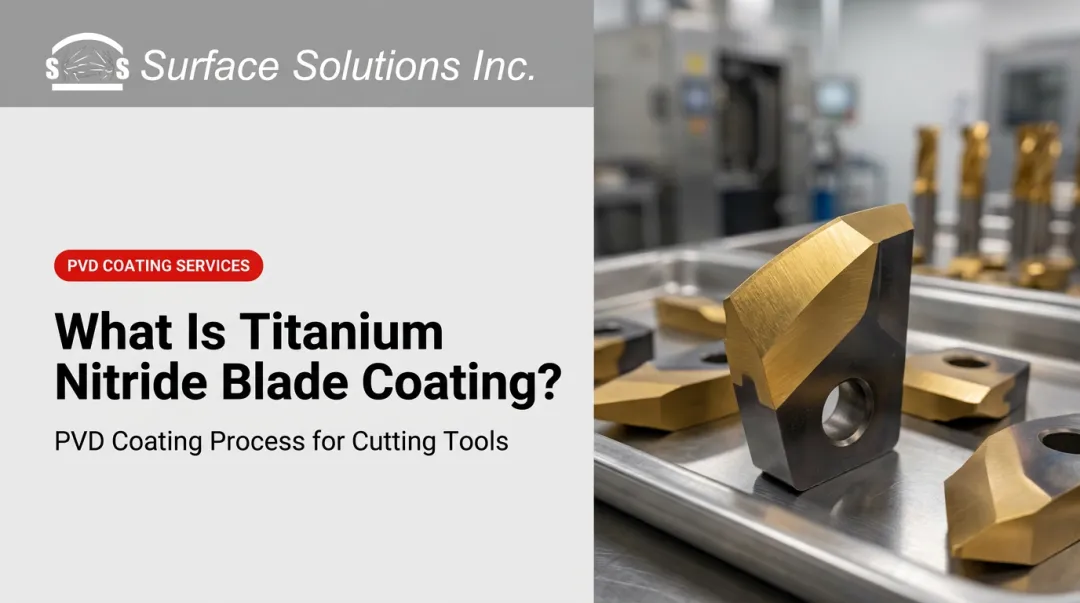
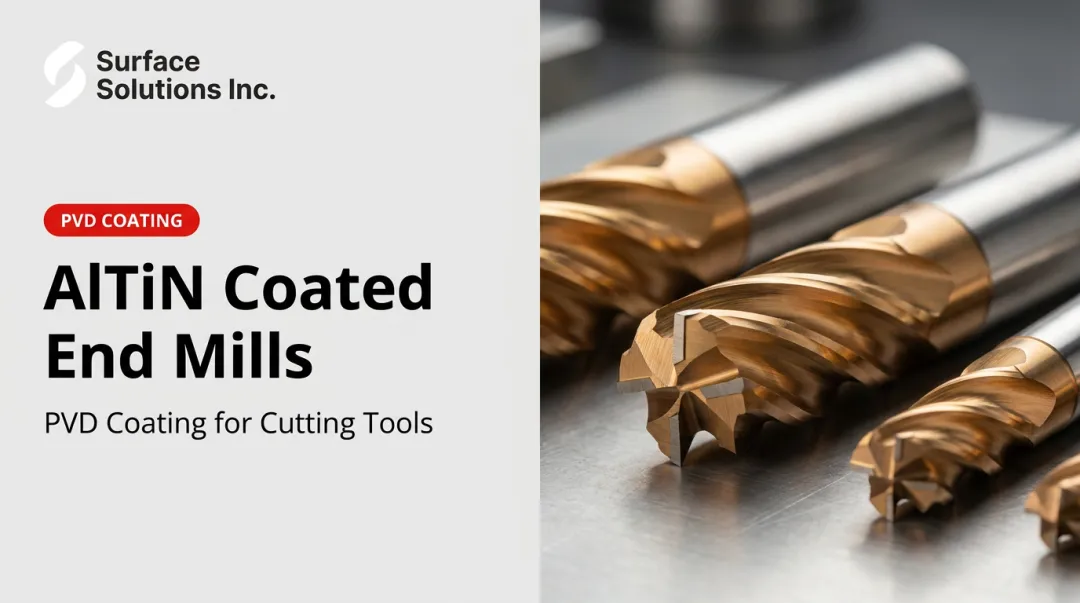
An end mill coating is a thin, hard layer, typically a titanium-, chromium-, aluminum-, or carbon-based compound, deposited onto a carbide or high-speed steel tool through Physical Vapor Deposition (PVD) or Chemical Vapor Deposition (CVD).
Uncoated carbide has a hardness ceiling. Manufacturer data from Kennametal and Sumitomo puts common carbide grades in roughly the 88.6-93.6 HRA range, depending on grain structure.
That's solid, but bare carbide heats up fast under cutting friction, and heat is what accelerates wear. A coating adds a protective barrier on top of that substrate without changing the tool's core toughness.
What a coating is not:
- A substitute for choosing the right carbide grade or flute geometry
- A decorative finish
- The same thing as heat-treating the base material
Even with modern carbide quality improvements, coatings still earn their keep. PVD coatings are reported to extend cutting-tool life by as much as 10x compared to uncoated tools, per Modern Machine Shop's reporting on medical-device tooling.
PVD vs. CVD: Why the Process Matters
The deposition method changes what the coating can do:
| Process | Temperature Range | What It Delivers |
|---|---|---|
| PVD | 400-600°C (as low as ~450°C by some estimates) | Keeps sharp cutting edges intact; dominates metal-cutting end mill coatings |
| CVD | 700-1,050°C | Produces thicker layers with strong adhesion; go-to for diamond coatings on graphite and composite tooling |
Surface Solutions, for example, applies PVD coatings like TiN, AlTiN, CrN, TiCN, and its proprietary Alpha™ formulation at 0.0001″-0.0002″ (2-5 microns) and a deposition temperature around 700-800°F. That thinness is the point: the coating doesn't change the tool's geometry or fit tolerances, it just changes what happens at the surface.

How Do End Mill Coatings Work?
Coatings don't do one job. They alter several surface properties at once, and each one targets a different failure mode.
Reducing Friction, Heat, and Built-Up Edge
A lower coefficient of friction means less heat generated as the tool cuts. Coating suppliers report friction figures around 0.55 for TiN, dropping to roughly 0.4 for AlTiN-based and amorphous diamond coatings when measured against steel.
At high temperatures, aluminum-rich coatings like AlTiN form a thin, stable oxide layer on the surface. That layer insulates the tool and pushes more heat into the chip instead of letting it soak into the cutting edge. A smoother coating surface also resists welding, which is what stops material from sticking to the flutes and forming built-up edge.
Increasing Surface Hardness and Wear Resistance
Friction control only solves part of the wear problem. Coating hardness matters just as much, and it dwarfs bare carbide's baseline strength. Supplier data shows:
- TiN: around 2,800 HV
- AlTiN-based coatings: roughly 34 GPa
- AlCrN-based coatings: around 3,400 HV
Different formulations trade hardness against heat resistance differently, which is exactly why material-specific selection isn't optional. A coating engineered for maximum hardness in hardened steel isn't automatically the right pick for a gummy, heat-sensitive alloy.
Translating Into Measurable Performance Gains
Put lower friction, better heat management, and higher hardness together, and the tool can run harder without failing early. On the shop floor, that shows up as:
- Fewer mid-run tool changes
- More consistent surface finish across a production run
- Lower tooling cost per part over the tool's working life
Types of End Mill Coatings and Which Material They're Best For
Coatings split into two families: those built for ferrous and exotic materials (steel, stainless, titanium, superalloys), and those built for non-ferrous or non-metallic work (aluminum, composites, graphite).
The Four Foundational Ferrous-Side Coatings
| Coating | Best For | Approx. Max Working Temp | Key Trait |
|---|---|---|---|
| TiN | General-purpose steel, entry-level jobs | ~600°C | Gold finish, ~2,800 HV hardness |
| TiCN | Stainless, higher speeds, some non-ferrous alloys | ~400°C | Added abrasion resistance |
| AlTiN / TiAlN | High-temp alloys, titanium, dry machining | ~900°C | Forms protective oxide layer |
| AlCrN | Hardened steels, exotic alloys | ~1,080°C | Highest oxidation resistance |
For stainless steel specifically, AlTiN or AlCrN generally outperform basic TiN. Their higher hardness and heat resistance hold up better at the elevated temperatures stainless generates during cutting. Surface Solutions' own case study on 304 stainless steel, using 3-corner carbide inserts, found AlTiN delivering 6x the tool life of TiN and noticeably better surface finish.

Non-Ferrous and Non-Metallic Coatings
Non-ferrous and non-metallic materials need an entirely different coating chemistry:
- TiB2: Low affinity to aluminum, prevents material build-up
- ZrN: Abrasion resistance suited to brass, copper, and bronze
- Diamond-based coatings (CVD, amorphous, PCD): Composites, graphite, and highly abrasive non-metallics
Here's the caveat that trips up a lot of shops: AlTiN and AlTiN Nano are not recommended for aluminum. Harvey Performance's coating documentation points to a high chemical affinity between AlTiN and aluminum, meaning the coating that's ideal for stainless can actually accelerate build-up on the softer metal.
This is exactly why Surface Solutions doesn't coat aluminum or zinc alloys at all. The process and chemistry simply aren't a fit for those substrates.
Coated vs. Uncoated End Mills: What Changes?
Uncoated carbide relies entirely on substrate hardness to survive the cut. In practice, that usually means:
- Lower achievable cutting speeds
- Heavier reliance on cutting fluid to manage heat
- Faster wear in abrasive or high-heat conditions
The ROI case for coatings: even at a higher price per tool, a coating that multiplies tool life often drops your per-part cost. PVD coatings typically run $2.50-$4.00 per tool depending on size, and Surface Solutions customers have seen up to 6x more parts produced before resharpening is needed. Do the math on a production run, and the coating pays for itself fast.
That said, uncoated tools still make sense in a few situations:
- Low-volume or hobbyist work, where tool life isn't the limiting factor
- Extremely soft materials that don't generate meaningful heat or abrasion
- Tools that get reground frequently anyway, where the coating would be stripped off before it ever wore out
Extending Tool Life: Recoating and Final Takeaways
Once a coating wears through, the exposed substrate underneath degrades fast. A lot of shops default to tossing the tool at that point rather than checking whether it's still a good recoating candidate.
Recoating is a practical middle step. Specialized PVD providers, Surface Solutions included, can strip a worn coating off a customer-supplied tool and reapply a fresh high-performance layer. That extends usable tool life without the cost of a new one. This is especially relevant for:
- Cutting tool manufacturers
- Tool resharpening services
- General metal forming and machining shops
Tony Deschenes, who owns a resharpening business called Special Tools, Inc., puts it simply: nearly everything his shop resharpens gets sent out for recoating afterward. Customers tell him the tools come back "working better than new."
That success comes with a caveat: substrate condition determines whether recoating is worth it. A worn coating on a sound substrate is an ideal recoating candidate. A tool with chipped edges, grinding damage, or surface oxides needs attention before recoating makes sense, since PVD coatings won't stick to oxides or old surface treatments like bluing.

Understanding what a coating does mechanically, not just its brand name, lets you match coatings to materials and stretch tool life further. That knowledge pays off whether you're buying new coated tools or recoating what's already in your crib.
Frequently Asked Questions
What is the best end mill coating for stainless steel?
AlTiN and AlCrN are generally preferred for stainless steel. Both hold their hardness and heat resistance at the elevated cutting temperatures stainless produces, outperforming basic TiN in most applications.
What are the key differences between coated and uncoated end mills?
Coated end mills run harder and hotter without failing, thanks to added surface hardness and lower friction at the cutting edge. This typically means higher achievable speeds, longer tool life, and less reliance on cutting fluid than uncoated carbide.
What are three common types of end mills?
Square (flat end), ball nose, and corner radius (bull-nose) are the three common end mill profiles. These describe tool shape, not coating, so any of them can be coated or left bare depending on the job.
What are the four types of coatings?
TiN, TiCN, AlTiN/TiAlN, and AlCrN are the four foundational general-purpose coatings referenced across the industry. Specialty variants like TiB2, ZrN, and diamond-based coatings exist for non-ferrous and non-metallic work.
Do coated end mills still need cutting fluid or coolant?
It depends on the coating. AlTiN often supports dry machining thanks to its oxidation resistance, but many ferrous applications still benefit from coolant for chip evacuation and extra heat control.
Can a worn end mill coating be reapplied or recoated?
Yes, as long as the underlying substrate is still sound. Providers like Surface Solutions can strip the worn layer and reapply a fresh coating, extending tool life at a fraction of the cost of buying new.