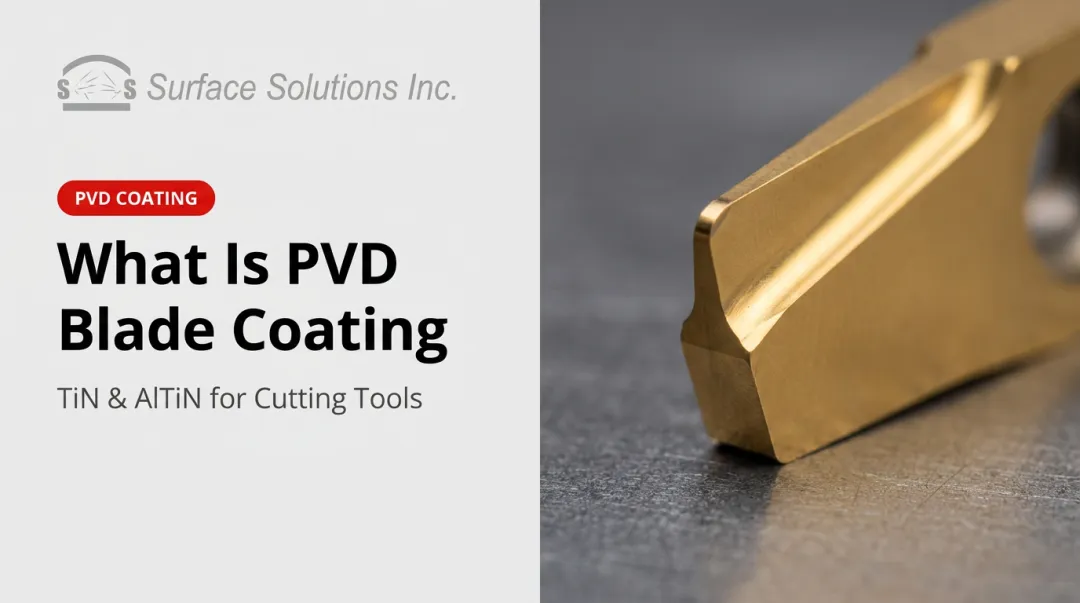
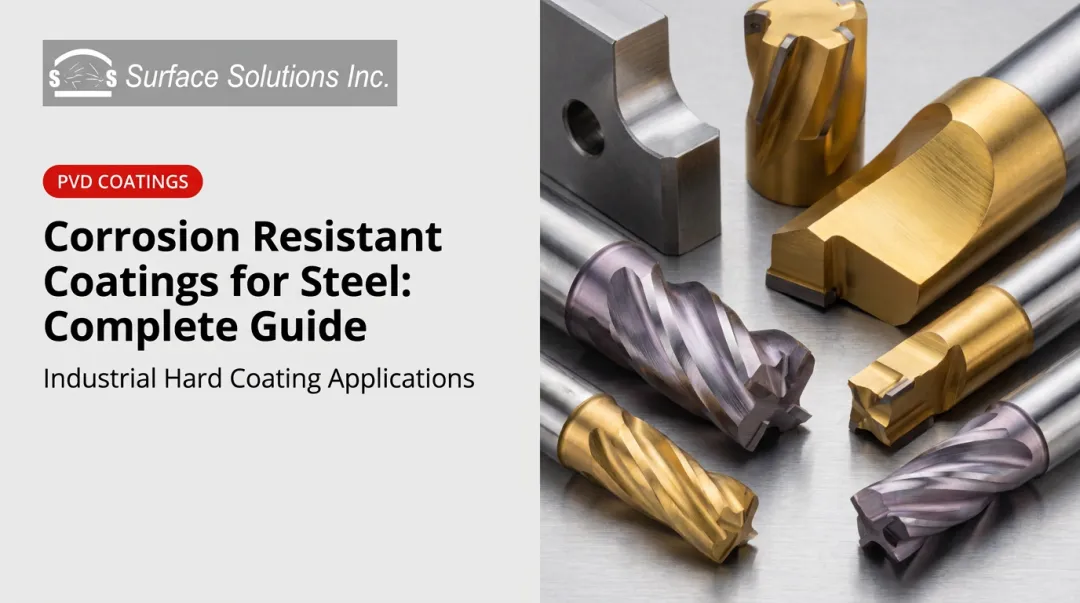
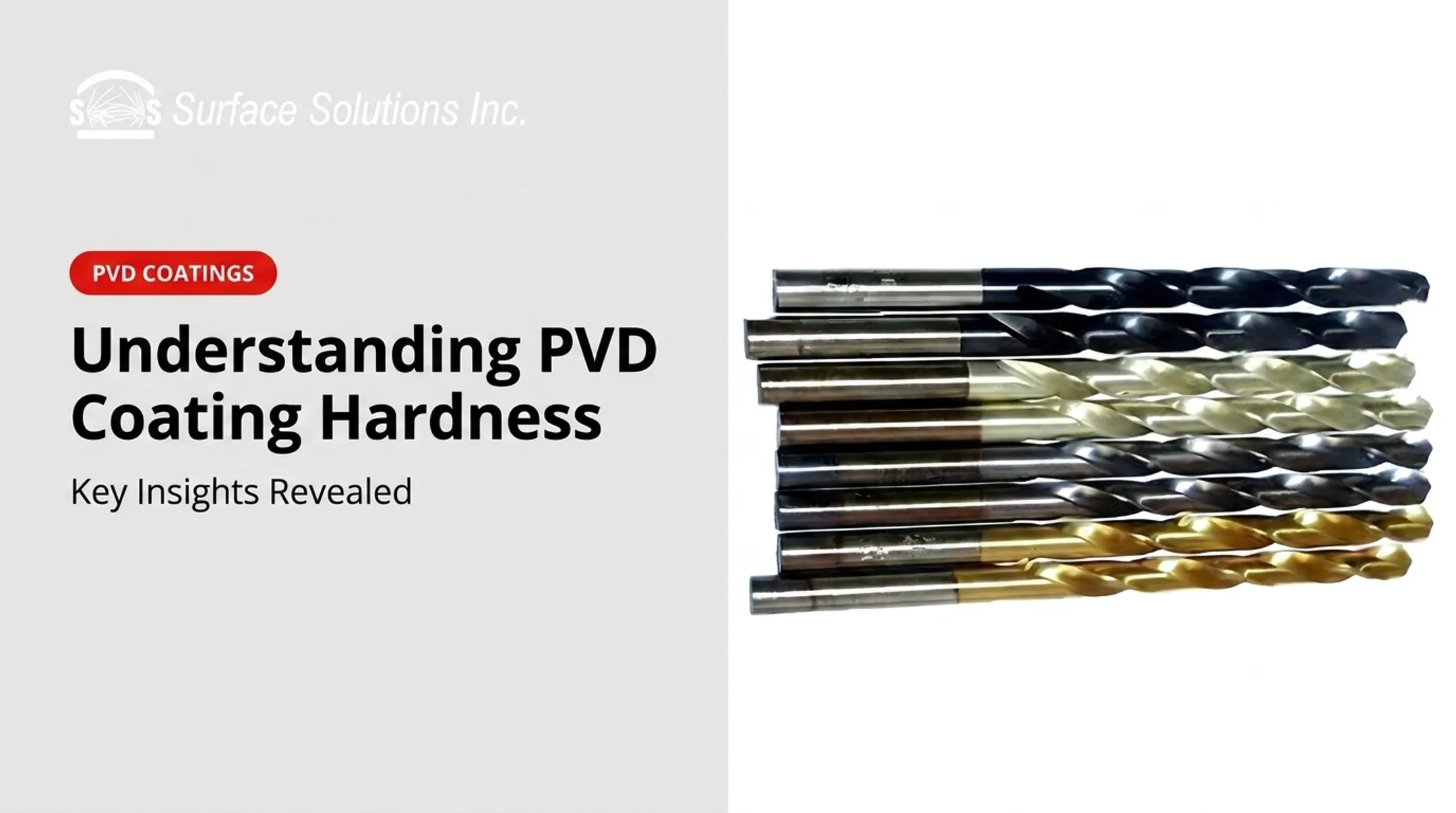
The usual culprit is surface hardness. Stainless steel's corrosion resistance is well-documented, but its hardness is not built for high-cycle, high-friction manufacturing environments. PVD coatings address this directly.
This guide compares PVD coating hardness against bare stainless steel — what the numbers actually mean, which coatings suit which applications, and when the investment in coating makes operational and financial sense.
Key Takeaways
- PVD coatings achieve surface hardness measured in thousands of HV — far beyond what any uncoated stainless steel grade can reach
- PVD enhances stainless steel; it doesn't replace it — the two work together, not against each other
- Coating selection is critical: CrN, AlTiN, TiN, and Alpha™ each target different wear mechanisms
- That hardness gap has a direct impact on how long tools last, how often they need resharpening, and what it costs you in labor
- High-cycle, abrasive, or metal-on-metal applications almost always justify the coating investment
PVD Coating Hardness vs. Stainless Steel: Quick Comparison
| Property | PVD Coating | Uncoated Stainless Steel |
|---|---|---|
| Surface Hardness | 1,750–8,000 HV depending on coating type | Austenitic grades: ~150–200 HV; hardened martensitic grades (410, 440C): ~600 HV range |
| Wear Resistance | Superior — atomic-level bond resists galling, abrasion, and sliding friction | Moderate — passive chromium oxide layer protects against corrosion but not abrasive wear |
| What It Is | 2–5 micron thin-film of vaporized metals deposited in a vacuum chamber | Iron-based alloy with ≥10.5% chromium; hardness set by grade and heat treatment |
| Tool Life | Significantly extended — 1.5–10x improvement in cutting tool applications (manufacturer benchmark) | Adequate for general use; degrades faster under abrasion and high-cycle loads |
| Cost Profile | Higher upfront; lower total cost of ownership through reduced replacement and labor | Lower initial cost; higher long-term maintenance in demanding applications |
The table above shows the broad gap between baseline stainless steel hardness and what PVD coatings deliver. The coating-by-coating breakdown below shows how specific formulations compare within that range.
Hardness by Coating Type
| Coating | Verified Hardness | Best For |
|---|---|---|
| TiN | ~2,800 HV | General-purpose cutting and punching |
| CrN | ~1,750 HV | Corrosion-intensive and stainless steel forming |
| TiAlN | ~2,800–3,300 HV | High-temperature cutting |
| AlTiN | ~4,000–4,500 HV | Extreme wear and high-speed cutting |
| DLC (ta-C) | 3,000–8,000 HV | Ultra-low friction, extreme hardness |

What Is PVD Coating Hardness?
Physical Vapor Deposition is a vacuum-based process, not a standalone material. A solid metal target — titanium, chromium, zirconium — is vaporized and deposited atom by atom onto a substrate as an ultra-thin metallic compound film. The result is extreme surface hardness without meaningful added thickness or weight.
Why PVD Achieves Such High Hardness
The deposition of nitride compounds like TiN or AlTiN at the atomic level creates a crystalline structure far harder than the substrate metal beneath it. Deposition occurs at 700–800°F (approximately 250–450°C), low enough to preserve the substrate's dimensions and existing heat treatment — critical for precision tooling where tolerances can't shift.
Surface Solutions, based in Fridley, Minnesota, applies coatings at this temperature range across their full portfolio. They publish a Rockwell C hardness vs. tempering temperature reference chart specifically so customers can verify their steel's temper won't be affected by the deposition process before submitting parts. That temperature constraint also shapes which coating type is the right fit — each option has a distinct hardness ceiling and performance profile.
PVD Coating Types and Their Hardness
| Coating | Hardness (HV) | Best For |
|---|---|---|
| TiN (Titanium Nitride) | ~2,800 | General-purpose cutting tools and punches; gold color |
| CrN (Chromium Nitride) | ~1,750 | Stainless steel forming and drawing; superior corrosion resistance |
| TiAlN / AlTiN | 2,800–4,500 (Surface Solutions: 4,000–4,200) | High-speed cutting; oxidation resistance to 800–900°C |
| DLC (ta-C) | 3,000–8,000 | Highest hardness; ultra-low friction applications |
How Hardness Translates to Operational Outcomes
Higher surface hardness means:
- Less friction between tool and workpiece, reducing heat generation
- Reduced galling on punches and forming dies — the mechanism that causes cold-welding and material transfer
- Less chip adhesion on cutting tools, extending edge sharpness
- Longer intervals between resharpening cycles, lowering labor costs

The coating itself is only 2–5 microns thick. It doesn't change part dimensions, but it changes how the surface performs under load.
Use Cases of PVD Coating in Manufacturing
PVD hardness delivers the highest return in applications where uncoated tooling fails fastest.
Where Coating Hardness Has the Greatest Impact
- Punching and blanking dies resist galling and edge wear caused by heat and material transfer during high-cycle contact
- Sheet metal forming dies withstand abrasive friction across draw radii that progressively erodes uncoated surfaces
- Cutting tools (drills, end mills, inserts) maintain edge integrity at high speeds where adhesive wear and thermal breakdown accelerate uncoated tool failure
- Medical device tooling benefits from PVD's inert surface chemistry for biocompatibility requirements, while the added wear resistance extends instrument service life
Documented Performance Evidence
The performance advantages across these applications are well-documented. A 2019 study on TiAlN PVD-coated stamping dies forming tinplate food packages recorded approximately 80,000 cycles between reconditioning operations in the highest-wear regions — a concrete service interval for a demanding adhesive-wear application.
At Surface Solutions, documented customer data reinforces this pattern. A customer running AlTiN-coated carbide inserts on 304 stainless steel achieved 6x the tool life compared to TiN-coated tools, with no adjustment to speeds or feeds and a coating cost of only $2.50–$4.00 per tool.
What Is Stainless Steel Hardness?
Stainless steel hardness is determined by alloy composition and heat treatment — not surface finishing. Whatever hardness a given grade delivers, that's what you're working with across the entire part cross-section.
Hardness by Grade
Producer data for stainless steel is commonly reported in Rockwell scales rather than Vickers HV. Approximate ranges based on published manufacturer data:
- 304/316 austenitic — relatively soft in austenitic form; low Vickers equivalent, generally estimated below 200 HV
- 440C martensitic (hardened) — approximately 60 HRC hardened (Carpenter producer values)
- D2 tool steel (for comparison) — approximately 58–62 HRC hardened (Uddeholm Sverker 21)
The Hardness Limitation That Matters
Stainless steel's corrosion resistance comes from its chromium oxide passive layer — thin, transparent, and self-repairing. That layer is a corrosion barrier, not a wear barrier.
A 2018 tribology study on 316L stainless steel observed adhesive wear, cracking, and a progression toward abrasive wear under test conditions — direct evidence that corrosion passivity and mechanical wear resistance are separate properties. Protecting a part from rust does nothing to protect its surface from abrasion.
Where Uncoated Stainless Steel Remains the Right Choice
- Structural components where surface wear is not a failure mode
- Fluid-handling systems prioritizing corrosion resistance over hardness
- Food processing equipment where hygiene and chemical resistance take precedence
- Applications where PVD coating cost isn't justified by cycle volume or wear rates
Grade selection still matters within these categories. 316L outperforms 304 in aggressive corrosive environments, and martensitic grades like 410 and 440C offer moderate wear improvement without requiring a coating.
PVD Coating vs. Stainless Steel Hardness: Which Performs Better?
The framing matters. PVD coating is not a replacement for stainless steel — it's an enhancement. The question isn't which material to choose, but when the hardness gap justifies the coating investment.
The Hardness Multiplier in Practice
A 2–5 micron PVD layer can multiply surface hardness by a factor of roughly 8–15x compared to untreated austenitic stainless steel. That gap has direct physical consequences:
- Friction drops because a harder surface resists micro-asperity deformation during sliding contact
- Heat generation decreases as a result — parts stay cooler, lubricant lasts longer
- Material adhesion (galling) becomes less likely because the hardness differential between tool and workpiece discourages cold-welding
Wear Failure Modes PVD Addresses That Stainless Steel Cannot
| Failure Mode | What Happens Without Coating | How PVD Hardness Helps |
|---|---|---|
| Galling | Metal surfaces cold-weld under pressure; material tears | Higher surface hardness reduces susceptibility |
| Adhesive wear | Material transfers from workpiece to tool surface | Hard coating resists material pickup |
| Abrasive wear | Hard particles scratch and groove tool surfaces | Coating hardness exceeds many workpiece materials |
| Edge chipping | Precision tool edges fracture under impact | Harder surface distributes stress more effectively |

When to Choose PVD-Coated Tooling
- High cycle volumes where resharpening accumulates into significant downtime
- Abrasive or hard workpiece materials (hardened steel, stainless steel)
- Metal-on-metal contact applications (forming, drawing, stamping)
- Operations where part quality consistency depends on edge condition
When to Retain Uncoated Stainless Steel
- Structural or fluid-contact components not subject to surface wear
- Lower-cycle applications where coating cost exceeds replacement cost savings
- Parts that will be re-welded, heavily machined, or otherwise reworked after initial use
One Important Limitation
Coating thickness is fixed at 2–5 microns. A worn, poorly prepared, or contaminated substrate undermines adhesion and shortens coating service life significantly. Surface oxides, EDM recast layers, and existing treatments like bluing must be removed before coating. The base metal's condition before coating is as important as the coating itself.
Real-World Impact: PVD Coating Hardness in Manufacturing
The Operational Challenge
A manufacturer running high-volume punching or forming operations faces a compounding problem: as tools wear, heat increases, lubricant consumption rises, and part quality becomes inconsistent. Each resharpening event costs time on and off the machine.
CrN in Stainless Steel Drawing
Surface Solutions documents a clear example from a sheet metal forming customer running a stainless steel drawing application. With Alpha™-coated tooling, the customer produced 15 parts before parts became too hot to handle. Switching to CrN produced over 500 parts, with parts only warm to the touch — a 33x improvement in output under identical conditions.
This result reflects CrN's thermal management characteristics. In stainless steel forming, where heat generation is a primary failure mechanism, which coating you select determines performance — not just whether you coat at all.
Alpha™ Coating: 6x Tool Life in High-Volume Punching
Customer Don Richardson documented a comparable output gain with Surface Solutions' proprietary Alpha™ coating. His baseline: resharpening required after every 10,000 parts. With Alpha™ applied, he ran a full order of 60,000 parts without a single resharpening event.
The math is straightforward. Each resharpening event takes 8 hours of labor to remove tools from the press, sharpen, and reinstall. Eliminating 6 resharpening cycles saves 48 hours of labor per production cycle — before counting reduced consumable costs and improved throughput.

A separate anonymous customer running M4 punches through 0.057" galvanized steel at one stroke per second ran for over 15 months and approximately 15 million parts before intervention was needed. Previously, uncoated D2 punches required sharpening every 3 weeks.
Coating Selection Determines Cost Per Part
The right coating — matched to application temperature, workpiece material, and cycle volume — reduces heat generation, cuts lubricant use, and holds part quality further into each production run. The per-part economics shift significantly once resharpening intervals are extended by a factor of six or more.
If you're running cutting, punching, forming, or drawing operations, calculating the cost of your current resharpening cycle against a coated alternative is a straightforward exercise. Contact Surface Solutions at info@tincoat.net or 763-785-9436 to identify the optimal coating for your tooling application.
Conclusion
PVD coatings deliver surface hardness that bare stainless steel cannot reach on its own — and in high-wear manufacturing environments, that gap has direct consequences for tool life, productivity, and cost. The right call comes down to what the surface must endure: static corrosion resistance, or repeated contact stress under load. Those are different problems, and they call for different solutions.
For manufacturers running cutting, punching, forming, or drawing operations, the clearest path to understanding ROI is comparing PVD coating hardness against the current costs of resharpening, downtime, and tool replacement. In high-cycle, high-friction applications, the comparison consistently favors coated tooling — often by a wide margin. If your operation is still running uncoated tools through high-contact cycles, that's worth running the numbers on.
Frequently Asked Questions
What is the hardness of PVD coating?
PVD coating hardness ranges from approximately 1,750 HV for CrN to 2,800–3,300 HV for TiAlN, 4,000–4,200 HV for AlTiN, and 3,000–8,000 HV for DLC (ta-C) variants. Even the lower end of that range substantially exceeds the hardness of uncoated austenitic stainless steel grades.
Is PVD steel the same as stainless steel?
PVD-coated stainless steel is stainless steel with a PVD surface treatment applied to it — the substrate and the finish are distinct. PVD enhances the stainless steel surface; it doesn't replace the base metal.
What is the Vickers hardness of stainless steel?
Austenitic grades like 304 and 316 fall in the lower hardness range, generally estimated below 200 HV. Hardened martensitic grades like 440C reach approximately 60 HRC when hardened — still well below the hardness achievable with any commercial PVD coating.
Which PVD coating is the hardest?
PVD ta-C (tetrahedral amorphous carbon, a DLC subtype) reaches the highest reported values at 6,000–8,000 HV. TiAlN and AlTiN follow for high-temperature cutting applications. Selecting the right coating requires matching the coating's wear resistance and thermal properties to the specific application, not just peak hardness.
Does PVD coating wear off on industrial tools?
PVD coatings are highly durable but will eventually wear under sustained use. Longevity depends on coating type, substrate prep quality, workpiece hardness, and cycle volume. Poor prep (oxides, EDM recast, or contamination) significantly shortens service life.
Can PVD coating be applied to all grades of stainless steel?
PVD can be applied to most stainless steel grades, but the passive oxide layer that makes stainless steel corrosion-resistant must be removed before coating for proper adhesion. Surface condition, cleanliness, and substrate preparation quality directly affect how well the coating bonds and how long it lasts.