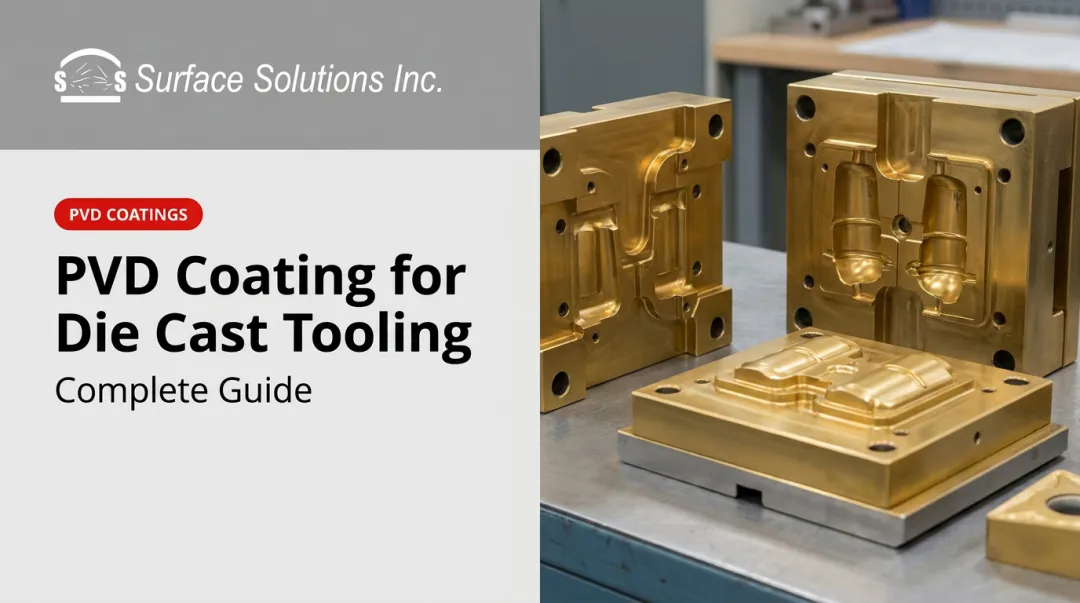
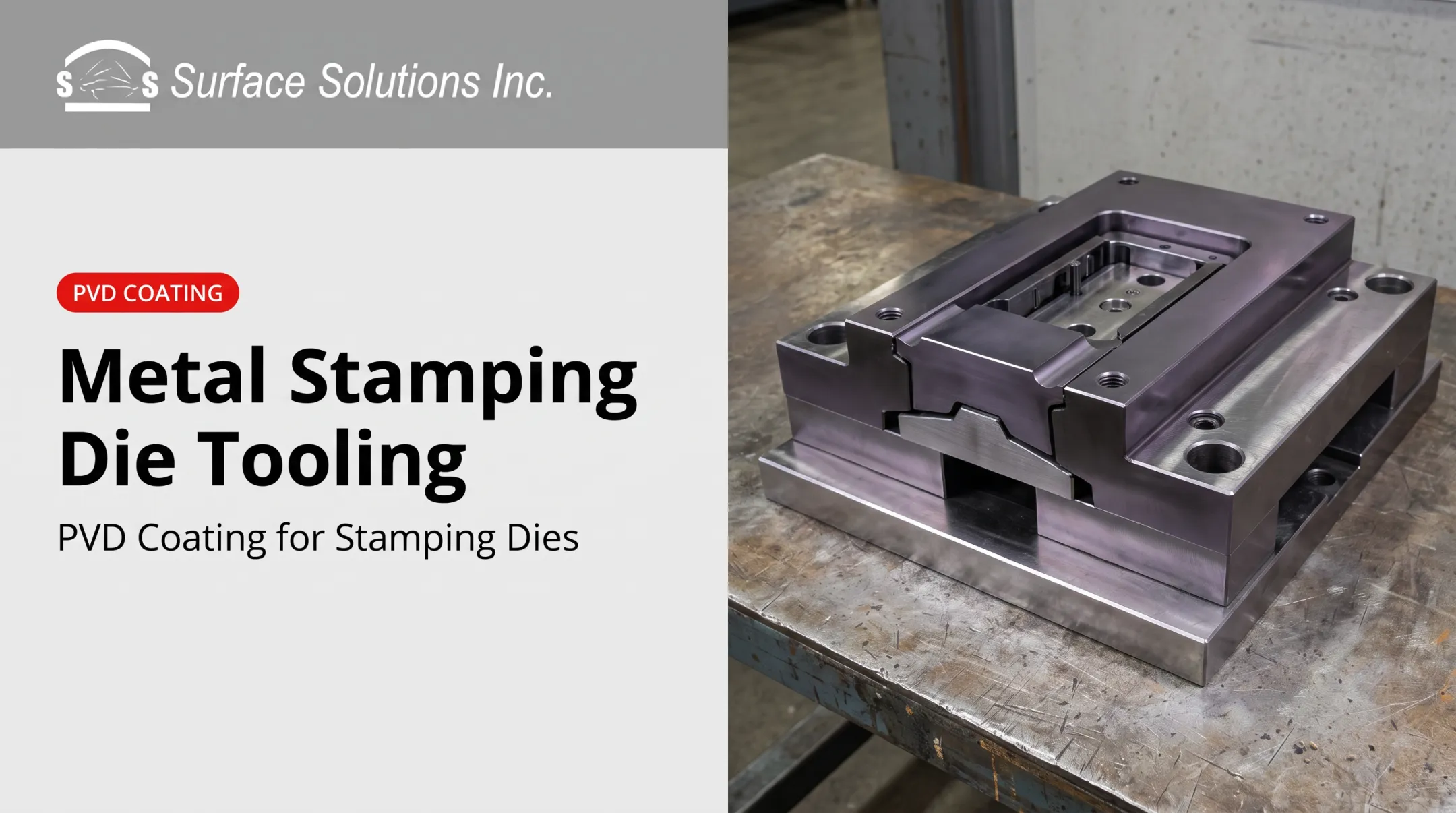
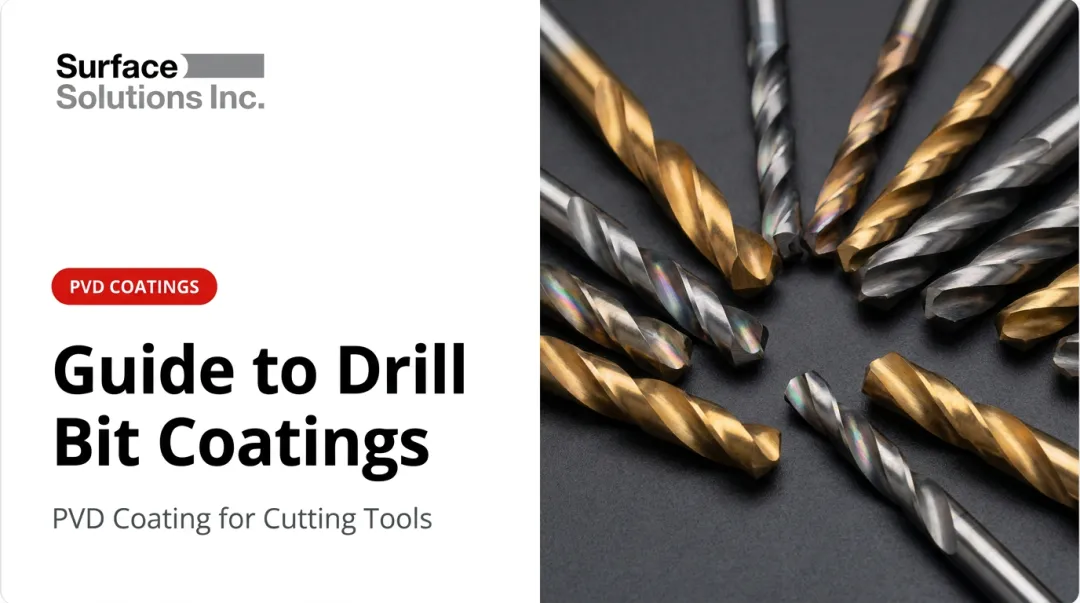
The right non-stick coating changes that equation. Choosing based on your adhesive type, run volume, and tooling format can eliminate most buildup problems before they start — and the difference between Die Slide and a PVD-grade coating isn't just performance, it's how often you're pulling dies off the press.
This guide breaks down every major coating category, explains how to match each one to your application, and helps you calculate whether the upfront cost is actually the cheaper option.
Key Takeaways
- Coating selection depends on adhesive aggressiveness, run volume, and tooling type — one size does not fit all
- Four main categories exist: Die Slide, DCT, Plasma, and PVD coatings
- PVD coatings (TiN, CrN, Alpha) offer the longest-lasting adhesive resistance for high-demand converting
- Choosing the right coating upfront consistently costs less than repeated mid-run maintenance stops
What Is a Rotary Die and Why Does Adhesive Buildup Happen?
Rotary Dies: A Quick Overview
A rotary die is a precision cylindrical cutting tool mounted on a converting press. As it rotates, the blades contact a continuous material web — cutting shapes from pressure-sensitive adhesives, foam, film, labels, and laminated products without stopping the line.
According to Maxcess, rotary die cutting is a process in which a cylindrical die cuts, perforates, creases, or forms a continuous web — making it the preferred method for high-volume label and flexible material converting.
The die's blades contact the substrate at high speed with every rotation. In kiss-cutting applications, the blade penetrates the facestock and adhesive layer while leaving the release liner intact — which means the blade edge is in constant, repeated contact with exposed adhesive.
Why Adhesive Sticks — and Why It's a Problem
Delta ModTech identifies several documented mechanisms behind adhesive buildup on rotary tooling:
- Cold flow — PSA material slowly migrating onto blade surfaces under pressure
- Adhesive ooze — adhesive squeezing out from substrate edges during the cut
- Whip or transfer — adhesive pulled from the web as the die rotates at speed
Certain adhesives make this worse than others. High-tack formulations, exposed adhesive edges, stringy or aggressive adhesives, and thick adhesive coat weights all accelerate transfer. Flexcon notes that heavy adhesive coat weight can dull a die, and that an excessively deep cut can push adhesive into the die strike — accelerating the consequences listed below.
Left unchecked, adhesive buildup causes:
- Contaminated cuts with ragged or incomplete edges
- Parts failing to eject cleanly from the die
- More frequent cleaning stoppages mid-run
- Accelerated blade wear from repeated manual scrubbing
- Unplanned press stoppages that compound into significant downtime
Types of Non-Stick Coatings for Rotary Dies
Four main coating categories are used on rotary tooling today, ranging from light-use options to semi-permanent solutions. Each involves trade-offs between durability, lead time, and how aggressively it resists adhesive transfer.
Die Slide Coating
Die Slide is a transparent, nearly invisible coating with no measurable impact on cutting depth. Because it doesn't alter blade geometry, it's compatible with all standard Wilson-style cutting die products — including flexible sheet dies where dimensional tolerance is tight. It's long-wearing, can be touched up as it shows wear, and is available in a food-safe version.
Best for: General-use applications with light- to medium-tack adhesives; preventing light adhesive buildup on flexible tooling surfaces.
DCT Non-Stick Coating
DCT is a thin white coating that adds minimal manufacturing time and has little to no impact on cutting depth. It can be removed and recoated as it wears, making it a serviceable, field-maintainable option.
Best for: Aggressive, stringy, or high-tack adhesives — particularly on engraved dies, adjustable lineals, and sheeters or perforators where Die Slide alone doesn't provide enough protection.
Plasma Coating
Plasma coating is the most durable traditional option — extremely hard, semi-permanent, and designed for the longest service life among surface-applied treatments. It adds significant manufacturing lead time, but outperforms Die Slide and DCT in the most demanding environments.
Best for: Exposed adhesive applications, high-volume long runs, and situations where Die Slide and DCT have already proven insufficient. Compatible with engraved dies, adjustable lineals, and sheeter/perforator systems.
PVD Coatings (TiN, CrN, and Alpha)
PVD (Physical Vapor Deposition) coatings are a premium category of thin-film hard coatings that fuse directly to the substrate, producing a surface that is harder and more adhesive-resistant than surface-applied treatments. Unlike Die Slide or DCT, PVD doesn't sit on top of the die — it becomes part of it.
Applied at a thickness of 0.0001"–0.0002" (2–5 microns), PVD coatings preserve blade geometry while improving non-stick performance and wear resistance measurably.
The three main PVD options for converting applications:
| Coating | Key Property | Best Application |
|---|---|---|
| TiN (Titanium Nitride) | High hardness, broad compatibility | General cutting tool improvement |
| CrN (Chromium Nitride) | Superior thermal management, corrosion resistance | High-heat, high-volume forming and cutting |
| Alpha™ | Anti-adhesion + wear resistance | High-tack adhesive environments, extended run cycles |

Surface Solutions (Fridley, Minnesota) offers CrN and their proprietary Alpha coating as part of their PVD service lineup. Real-world performance data shows distinct strengths for each:
CrN — thermal management: In a stainless steel drawing application, CrN-coated tooling produced over 500 parts with parts just warm to the touch. Uncoated tooling running the same job produced only 15 parts before tools became too hot to handle.
Alpha — adhesive resistance: In adhesive-heavy applications, Alpha produces virtually no galvanized buildup compared to TiN-coated tools. In one documented case, Alpha-coated tools ran 60,000 parts before requiring resharpening — six times the 10,000-part baseline for uncoated tools.
How to Choose the Right Non-Stick Coating for Your Application
Coating selection comes down to adhesive aggressiveness, run volume, and tooling type. Pick the wrong one and you're either paying for performance you don't need — or watching a coating fail mid-run on a long job.
Step 1: Identify Your Adhesive
Evaluate three factors:
- Tack level — light, medium, or high
- Adhesive exposure — is the adhesive fully covered by a liner, or are edges exposed during cutting?
- Behavior under cutting — does it string, cold-flow, or ooze at the blade?
High-tack, exposed, or stringy adhesives require DCT at minimum. Aggressive or hot-melt formulations should move directly to plasma or PVD.
Step 2: Assess Run Volume and Duration
- Short or infrequent runs: Die Slide or DCT — both can be touched up or recoated in the field
- Continuous high-volume production: Plasma or PVD — surface-applied coatings wear faster under sustained output
Surface-applied options work well for lower-frequency jobs. On long production runs, a mid-run maintenance stop is expensive enough to justify the higher upfront cost of a permanent coating.
Step 3: Match to Your Tooling Type
- Flexible sheet dies: Die Slide only. Its thin, transparent profile preserves blade relief and cutting depth — critical for flexible tooling precision.
- Engraved solid dies: All four coating types are compatible. Choose based on adhesive aggressiveness and run demands.
- Adjustable lineals and sheeters/perforators: Die Slide or DCT. DCT is preferred when adhesive aggressiveness is the primary concern.
Note: Incompatible coatings can alter cutting depth or blade geometry. PVD coatings at 2–5 microns preserve sharp edges and follow existing geometry — but always confirm compatibility with your tooling manufacturer for flexible die applications.
Step 4: Factor in Lead Time and Budget
| Coating | Lead Time Impact | Cost Profile |
|---|---|---|
| Die Slide | None | Lowest upfront cost |
| DCT | Minimal | Low to moderate |
| Plasma | Significant | Moderate to high |
| PVD (TiN, CrN, Alpha) | Separate service step | Higher upfront; lowest total cost over the tool's lifespan |

Weigh upfront coating cost against downtime cost. A plasma or PVD coating that adds a week to tooling lead time often pays back within the first long production run through avoided stops and extended resharpening intervals.
The ROI of Non-Stick Die Coatings
Non-stick coatings are a measurable productivity investment — not a tooling accessory. The cost of adhesive-related downtime, unplanned cleaning stops, and premature resharpening consistently exceeds the cost of the right coating applied at the start.
What the Numbers Look Like
The most compelling ROI evidence comes from PVD coating performance data. Customer Don Richardson documented a 6x increase in parts before resharpening after applying Alpha coating:
- Uncoated baseline: Resharpening required every 10,000 parts
- With Alpha coating: 60,000 parts with no resharpening needed
- Labor saved: Each resharpening cycle requires 8 hours to remove tools and complete the process — eliminating 6 cycles saved 48 hours of labor on a single production run
In a separate high-volume stamping operation, M4 punches with Alpha coating ran for over 15 months and approximately 15 million parts before sharpening. Uncoated D2 punches in the same operation required sharpening every 3 weeks — each event consuming a minimum of 4 hours for removal, sharpening, and reinstallation. That's roughly 26 maintenance cycles versus one.

Beyond Sharpening Intervals
Alpha coating customers also report:
- Eliminated mid-run polish stops — one metal forming customer went from polishing multiple times per run to zero polishing stops after coating
- Reduced lubricant consumption — less friction means less lubricant needed per cycle
- Better-looking output — sharper tools produce cleaner cuts throughout longer runs
Tony Deschenes of Special Tools, Inc. — a cutting tool resharpening service — put it plainly: "His tools are working better than new. It's like night and day."
Across metal forming, stamping, and cutting applications, the outcome holds: coated tools run longer, need less attention, and deliver better cut quality than uncoated counterparts.
Frequently Asked Questions
What is a rotary die?
A rotary die is a cylindrical precision cutting tool mounted on a converting press that rotates continuously to cut shapes from flexible materials — including adhesive films, foam, paper, and labels. It's the primary cutting method in high-volume label converting and flexible material manufacturing.
What is die coating?
In rotary die cutting, non-stick die coatings prevent adhesive from transferring onto the die surface during cutting, reducing buildup and extending productive run time between cleaning stops.
How do I know if my rotary die needs a non-stick coating?
Key signs include adhesive residue accumulating on the die between runs, parts failing to eject cleanly, visible stringing at the cut edge, increasing cleaning frequency as a run progresses, and degrading cut quality toward the end of a job.
Can non-stick coatings be reapplied or touched up?
Die Slide and DCT can be touched up or recoated as they wear. Plasma coatings are semi-permanent and require professional reapplication. PVD coatings are applied as a separate service and can typically be recoated when the tool is sent in for resharpening.
What is the difference between PVD coatings and traditional non-stick coatings like Die Slide or DCT?
Traditional coatings (Die Slide, DCT) are surface-applied treatments that coat the outer layer of the die. PVD coatings bond at a molecular level, creating a harder, thinner, and more durable non-stick surface with greater adhesive resistance and longer tool life on high-tack adhesive runs.
How long do non-stick coatings last on rotary dies?
Longevity depends on coating type and adhesive aggressiveness. Die Slide may need touchups during a run; DCT lasts longer but will eventually wear; plasma offers the longest traditional life. PVD coatings typically last through multiple resharpening cycles, making them the most durable long-term option for high-volume converting.