A thin, gold-colored coating might be the fix you haven't tried yet.
Titanium Nitride (TiN) is a ceramic coating applied through Physical Vapor Deposition (PVD). It adds hardness and wear resistance to punches, dies, and cutting tools without changing part dimensions. This article covers what TiN is, how it's applied, its real benefits and limits, typical costs, and when a different coating might serve you better.
Key Takeaways
- TiN is a PVD ceramic coating that boosts surface hardness and cuts wear on tools and dies
- Coating thickness runs 2-5 microns, thin enough to preserve tight tolerances
- General cutting and punching benefit from TiN, though it struggles with galvanized steel and high-heat forming
- Alpha and CrN coatings from Surface Solutions outperform TiN in specific high-friction or high-heat jobs
- Pricing depends on part size, volume, and geometry, not a flat rate
What Is Titanium Nitride (TiN) Coating?
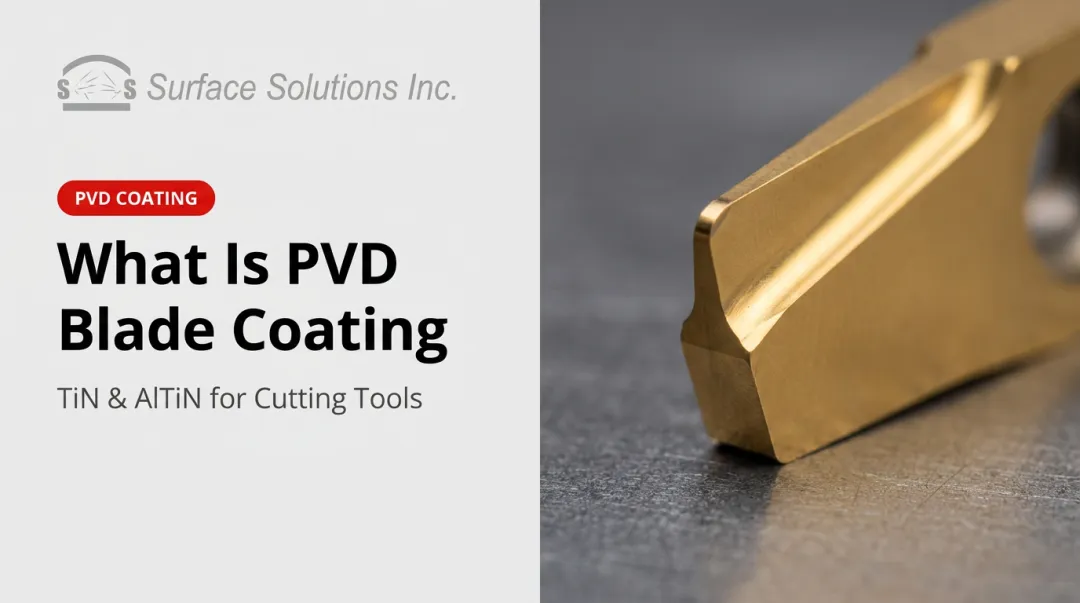
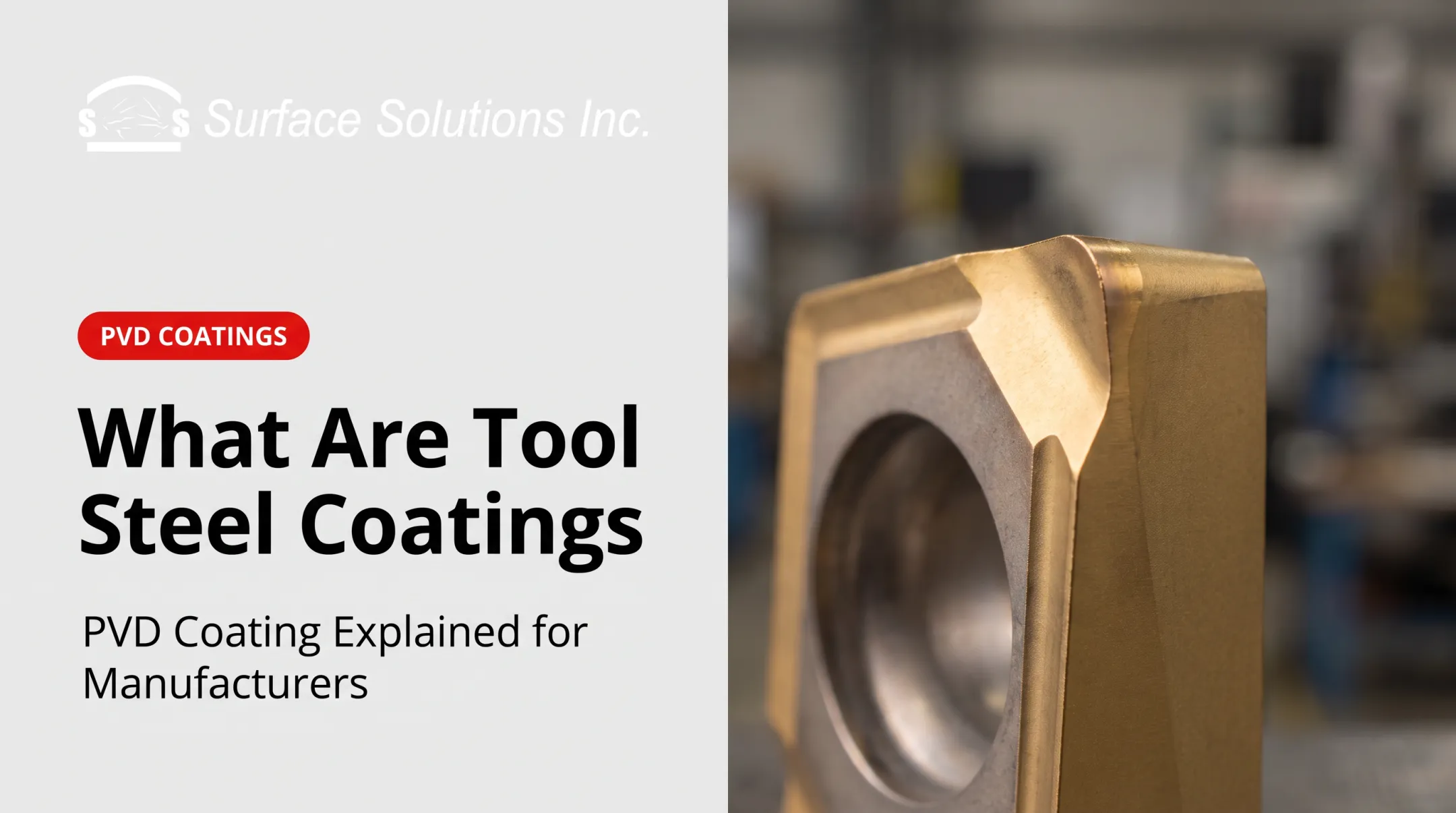
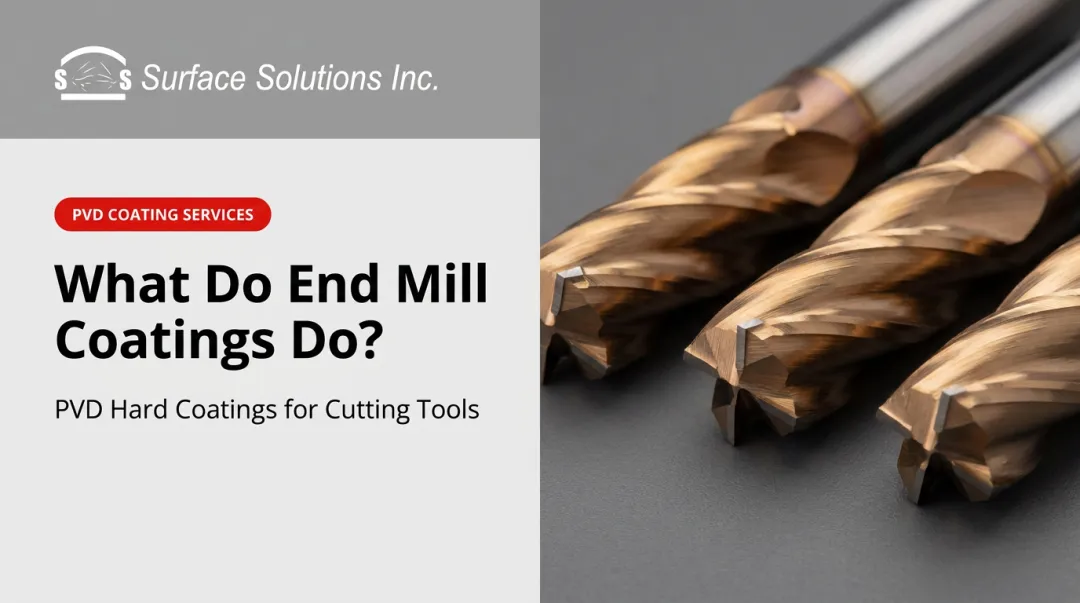
TiN is a ceramic compound made from titanium and nitrogen, deposited as a thin film through PVD. Once applied, it gives tools that signature gold-yellow finish you've probably seen on drill bits and punches.
Physical properties that matter for tooling:
- Microhardness rated at 2,800 HV for standard arc-deposited TiN products, according to Ionbond's TiN coating specifications
- Friction coefficient around 0.5 against steel, per the same Ionbond data
- Service temperature rated to 500°C (932°F) before performance starts to degrade
Those numbers come from one manufacturer's product testing, not a universal constant. Different PVD shops can produce slightly different results depending on their process controls.
TiN was one of the first PVD coatings developed for industrial tooling back in the 1980s. It's still the entry point most shops use before moving into more specialized coatings like AlTiN or CrN.
Where TiN Coating Gets Used
TiN shows up across a wide range of tooling:
- Punches and blanking dies
- Forming tools for sheet metal
- Cutting inserts and drill bits
- Rotating-shank tools and mills
It's also common in medical device manufacturing. A peer-reviewed cytotoxicity study using ISO 10993-5 methods found TiN-coated surgical instruments (drills, burrs, scalpels) showed cell death rates below 3% across all tested conditions, according to a cytotoxicity study published in PMC.
That's a strong biocompatibility signal, though it reflects the specific coating system tested rather than every TiN application on the market.
How Is Titanium Nitride Blade Coating Applied?
The PVD process happens inside a vacuum chamber, and it's more precise than most people expect.
The basic steps:
- Clean the parts — Any oxide, grease, or scale gets stripped so the coating can bond properly
- Load the vacuum chamber — Parts get fixtured and placed inside
- Vaporize the titanium — A solid titanium target is turned into vapor using either arc evaporation or sputtering
- Introduce nitrogen gas — The gas reacts with the titanium vapor, forming titanium nitride on the part surface
- Cool and inspect — Parts come out with a thin, uniform TiN layer

Cathodic Arc vs. Sputter Deposition
Two techniques dominate industrial PVD work:
| Method | How it works | Trade-off |
|---|---|---|
| Cathodic arc | An electric arc evaporates titanium, producing high ionization | Faster and stronger adhesion, but can leave small droplet defects on the surface |
| Sputtering | Argon ions knock titanium atoms off the target | Smoother finish, no droplets, but slower and less ionized |
According to VaporTech's comparison of the two processes, the choice often comes down to whether surface finish or deposition speed matters more for a given part.
Thickness and Temperature Requirements
TiN coatings typically run 2 to 5 microns thick — thin enough that they don't interfere with how machined parts fit together. Surface Solutions applies coatings in the 0.0001" to 0.0002" range for exactly this reason: precision components need to keep their tolerances after coating.
Temperature control matters just as much. PVD deposition happens at roughly 700°F to 800°F. That number isn't arbitrary.
Tool steels lose hardness once they're heated past their original tempering temperature, so the coating process has to stay below that threshold. Push past it, and you risk undoing the heat treatment that made the tool hard in the first place.
This temperature ceiling explains why Surface Solutions holds the same tight process controls across its full coating lineup — TiN, AlTiN, CrN, TiCN, and proprietary Alpha — regardless of whether the part is a cutting tool, medical instrument, or stamping die.
Are Titanium Nitride-Coated Tools Better? Key Performance Benefits
Yes, generally, TiN-coated tools outperform bare steel in wear resistance and edge retention. But "better" depends heavily on what you're cutting or forming.
Uncoated steel vs. TiN-coated steel:
| Factor | Uncoated Tool Steel | TiN-Coated Tool Steel |
|---|---|---|
| Surface hardness | Baseline (steel hardness only) | Higher, ~2,800 HV |
| Friction against steel | Higher | Lower (~0.5 coefficient) |
| Wear resistance | Standard | Improved adhesive wear resistance |
| Visual wear indicator | None | Gold color fades as coating wears |
Lower friction means tools run cooler and need less lubricant during punching and forming. That translates to less material buildup on the tool face over a production run.
There's also a practical side benefit: the gold color itself acts as a wear gauge. As TiN wears away, the base steel starts showing through, giving maintenance teams a visual cue that it's time to recondition the tool before it fails mid-run.

These benefits apply most strongly to general-purpose punching, forming, and cutting work. Highly abrasive materials or galling-prone metals like galvanized steel are a different story, which brings us to where TiN starts to fall short.
Limitations of TiN Coating & When to Consider Alpha or CrN Instead
TiN isn't the right answer for every job. Its friction coefficient, while better than bare steel, is still higher than premium PVD options. On punches running galvanized sheet metal, that difference shows up as material buildup on the punch face.
One customer running M4 punches through .057" galvanized steel side by side (one punch coated in Alpha, one in standard TiN) put it plainly:
"The Alpha does have almost no galvanized build-up and the TiN has much more."
Alpha Coating for Galling-Prone Applications
Surface Solutions developed Alpha specifically to address this gap. The formulation targets the friction and adhesion issues that let galvanized coating stick to standard TiN surfaces. Compared to standard TiN, it:
- Reduces galvanized buildup in real-world stamping tests
- Cuts down on punch chipping, which keeps punches sharper and reduces stress on mating dies
- Extends resharpening intervals in one documented case from every 10,000 parts to 60,000 parts, saving 48 hours of labor per production run
That's a six-fold improvement in run length before resharpening was needed, based on direct customer testing, and it translates directly into fewer changeovers on the shop floor.
CrN Coating for High-Heat Cutting
When heat is the enemy rather than galling, CrN often wins. In a stainless steel drawing operation, Alpha-coated tooling produced just 15 parts before overheating. The same job run with CrN produced over 500 parts with the tooling staying only warm to the touch.
The takeaway: don't default to TiN for every job. Talk to a coating specialist about your material, process speed, and part geometry before choosing a coating. What works for mild steel punching may not hold up on galvanized sheet or high-friction draws.
How Much Does Titanium Nitride Coating Cost?
There's no flat rate for TiN coating. Pricing depends on:
- Part size and geometry: Complex shapes with tight bores or channels take longer to fixture and mask
- Coating thickness: Thicker coatings mean longer chamber time
- Order volume: Larger batches typically bring down the per-part cost
- Turnaround time: Rush orders usually carry a premium
TiN is generally one of the more budget-friendly PVD coatings available, which makes it a common starting point for shops testing coated tooling for the first time. For reference, premium coatings like AlTiN run roughly $2.50 to $4.00 per tool depending on size.
The most reliable way to get an accurate number is a custom quote. Surface Solutions evaluates tool type, material, and application before pricing any job. Reach out at 763-785-9436 or info@tincoat.net to request one.
Industries and Tools That Benefit Most from TiN Coating
TiN pays off fastest in industries running high-volume, repetitive tool cycles:
- Metal forming and stamping — Dies and punches subject to constant contact wear
- Punching operations — High-frequency stamping lines where downtime is expensive
- Sheet metal drawing — Forming tools that see repeated friction cycles
- Tool resharpening services — Shops that recoat tools after each regrind cycle
- General manufacturing — Cutting inserts, drill bits, and mill tooling

Tools with the biggest ROI tend to be stamping dies, blanking punches, and cutting inserts that go through thousands of cycles per run. Companies running high-volume production see the fastest payback, since cutting resharpening labor by up to 48 hours per cycle adds up quickly across multiple shifts.
Frequently Asked Questions
Are titanium nitride-coated blades better?
Yes, TiN-coated blades outperform uncoated steel in wear resistance and service life for most general cutting and punching work. For high-friction or high-heat jobs, premium coatings like Alpha or CrN often perform better.
How much does titanium nitride coating cost?
Cost depends on part size, order volume, and turnaround time rather than a fixed rate. Request a custom quote from Surface Solutions' team for accurate pricing.
How is titanium nitride blade coating applied?
Parts are cleaned and placed in a vacuum chamber, where titanium is vaporized and reacted with nitrogen gas. This forms a thin, hard ceramic layer roughly 2 to 5 microns thick.
How long does a TiN coating typically last before it needs to be reapplied?
Lifespan depends on the material being processed and how intensively the tool is used. Once a tool is reconditioned, the old coating can be stripped and TiN reapplied.
Is titanium nitride coating safe for food contact or medical device applications?
TiN is proven biocompatible under ISO 10993-5 cytotoxicity testing, making it a trusted choice for surgical instruments and food-contact equipment surfaces alike. Its corrosion resistance and inert surface hold up well in both settings.
How can I tell if a tool or blade has a genuine TiN coating?
The distinctive gold-yellow color is the easiest visual identifier. That said, color alone doesn't confirm coating quality, thickness, or adhesion, so request thickness and adhesion specs directly from your coating provider.