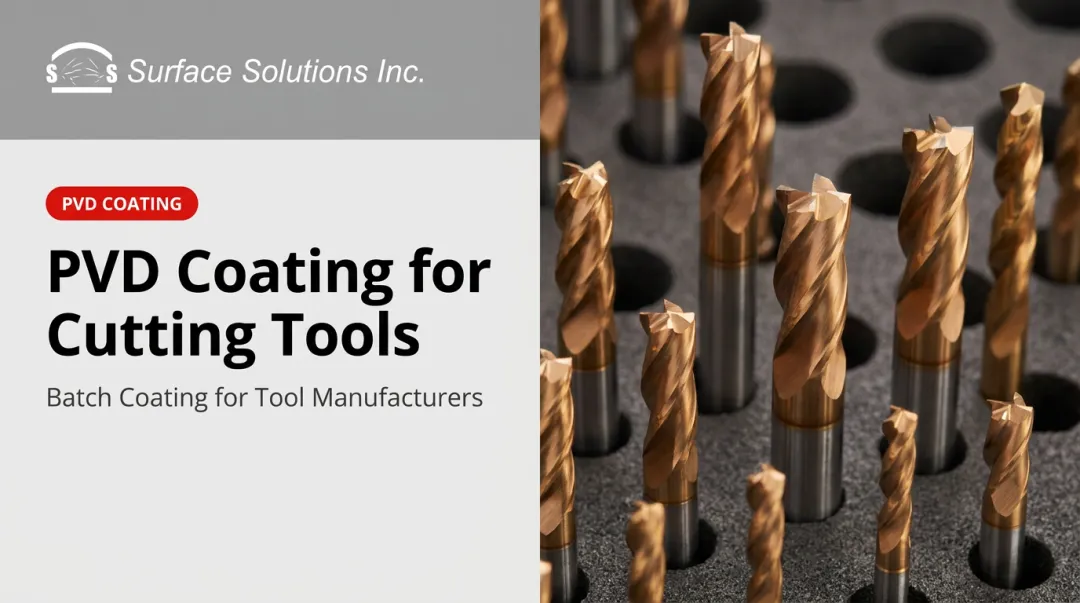
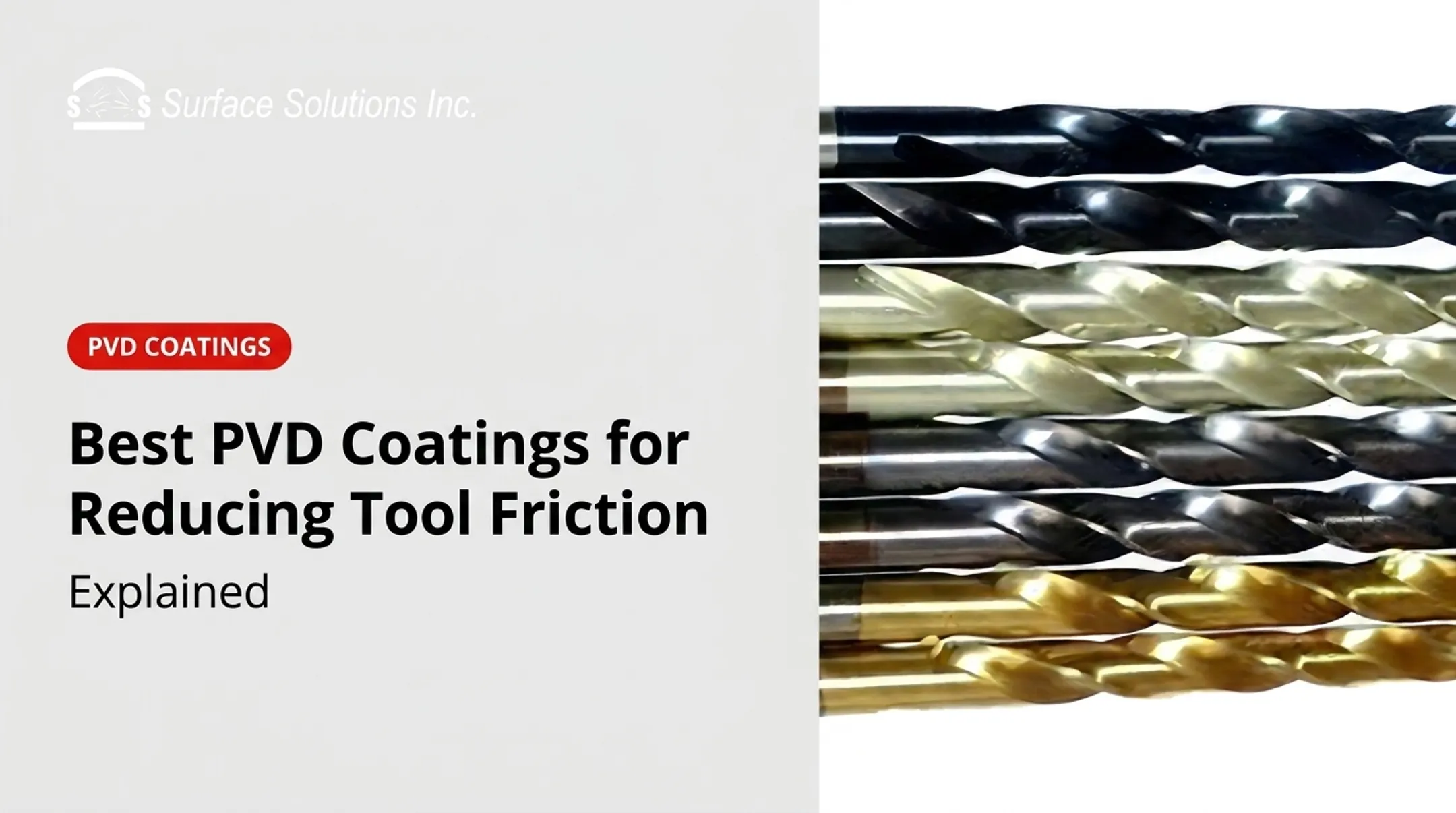
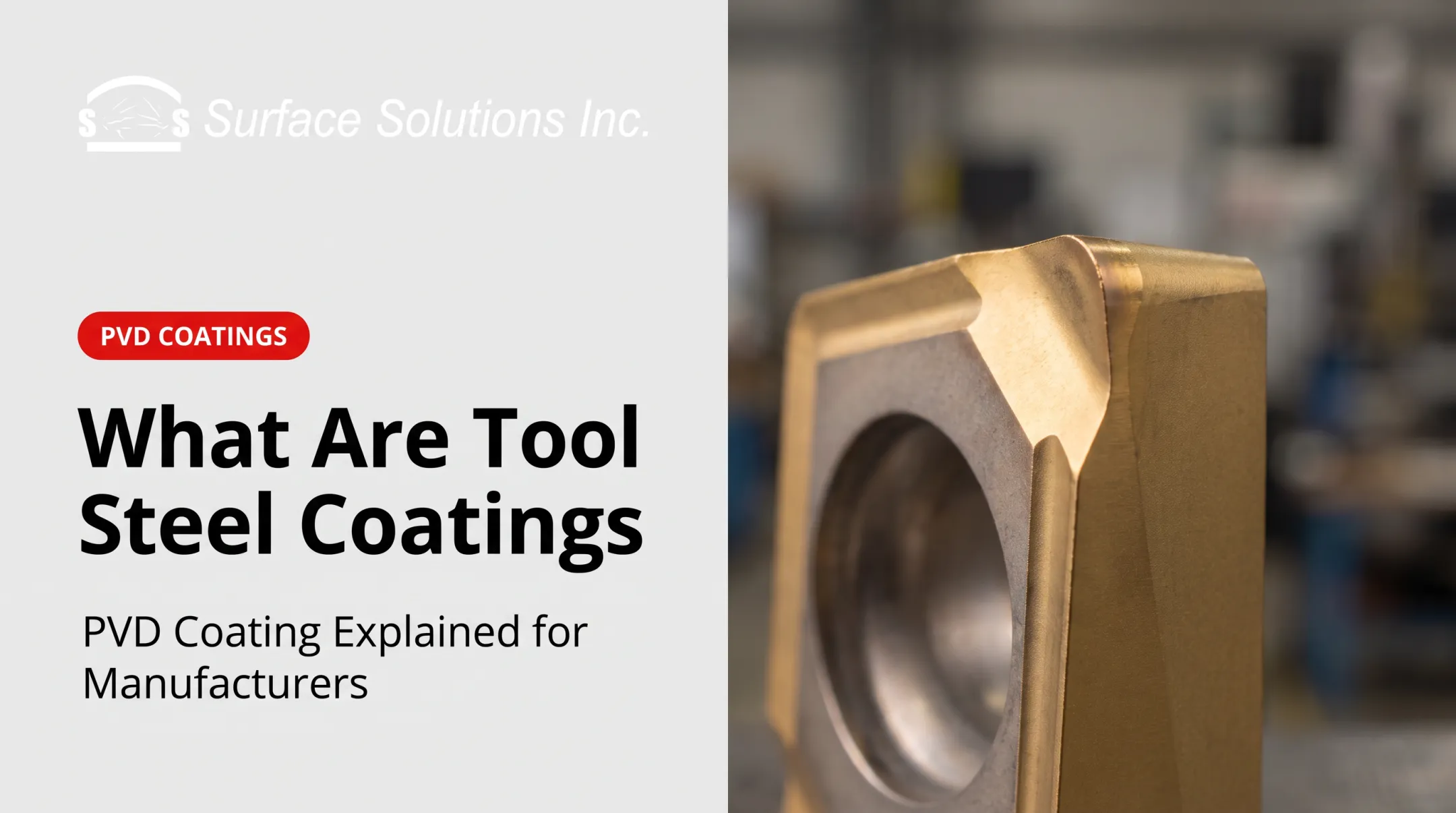
Uncoated tool steel doesn't hold up well under repeated cycles. Abrasion wears down cutting edges. Galling builds up on punches running sticky or galvanized material. Friction generates heat that softens the surface, which speeds up everything else. The result: more lubricant, more maintenance, and tools spending more time off the line than on it.
Hard PVD coatings change that equation. One Surface Solutions customer ran 60,000 parts on Alpha™-coated tooling before a single resharpening was needed, compared with a normal interval of 10,000 parts—a sixfold jump that saved roughly 48 hours of labor across the avoided sharpening cycles. This article covers how PVD coatings work, which type fits which job, and how to prep tool steel to get results like that.
Key Takeaways
- PVD adds a 1–5 micron hard film that boosts hardness and cuts friction without changing geometry
- Match TiN, TiCN, TiAlN, or CrN to the wear mode—not the highest hardness number
- Correct heat treat and surface finish first; PVD will not fix bad tempering or hide defects
- Forming favors CrN or Alpha; cutting favors TiCN or TiAlN; medical work needs tight tolerances
- Match coating chemistry, process temperature, and substrate to the end use before you coat
What Is PVD Coating and How Does It Protect Tool Steel?
Physical vapor deposition applies a coating to tool steel inside a vacuum chamber. The coating metal, whether titanium, chromium, or an alloy blend, gets vaporized and ionized, then deposits as a thin film across the tool's surface, including edges and contours that a spray or dip process would struggle to reach evenly.
That film is thin by design. Industry sources put typical PVD tool coatings at roughly 1.5 to 4 microns thick, which lines up with Surface Solutions' own coating range of 2 to 5 microns (0.0001-0.0002 inches). At that thickness, the coating adds almost nothing to part dimensions. Sharp edges stay sharp, and tight tolerances stay tight.
Coating tool steel changes three things about how the surface behaves:
- Surface hardness increases substantially, letting the coating resist abrasion the base steel can't handle alone
- Coefficient of friction drops, reducing galling and material buildup on forming and cutting tools
- Thermal stability improves, so tools hold their edge instead of softening under frictional heat
Each property targets a common failure mode. Abrasive wear grinds down a soft surface; a harder coating resists it. Galling starts when work material sticks and tears at the tool; lower friction cuts that risk. Heat softens steel over time; thermal stability slows the damage. A hard coating leaves the tool's core unchanged and hardens how the surface takes wear, heat, and friction.
PVD vs. CVD: Why Process Temperature Matters
Chemical vapor deposition runs hotter than PVD. That extra heat can disturb a tool steel's existing heat treatment, risking distortion in parts already hardened and tempered. PVD runs cooler (Surface Solutions applies coatings around 700-800°F), so the substrate's heat treatment stays intact. The film is also thinner than typical CVD layers, which helps preserve a sharper cutting edge.

Types of Hard PVD Coatings for Tool Steels
Not every hard coating solves the same wear problem. Picking the right chemistry means matching it to what's actually damaging your tools.
Titanium Nitride (TiN)
TiN is the coating most people recognize by its gold color. It's a general-purpose workhorse, delivering solid wear resistance for punches, drills, and basic forming tools. It's a reliable starting point, though it doesn't hold heat resistance as well as aluminum-bearing coatings when things get hot.
Titanium Carbonitride (TiCN)
TiCN adds carbon to the mix, producing a tougher, lower-friction coating than TiN. It performs well on stainless steel, tapping operations, and other sticky-material applications where built-up edge is a constant fight.
Titanium Aluminum Nitride (TiAlN)
The aluminum in TiAlN forms a protective oxide layer at high temperatures, giving it strong oxidation resistance. That makes it a natural fit for high-heat dry machining and hardened steel work.
A 2016 materials study comparing these coatings measured TiAlN at 3,300 HV, versus 2,500 HV for TiN and 2,350 HV for CrN. Useful context, though hardness alone shouldn't drive your selection.
Chromium Nitride (CrN)
CrN shines in low-alloy steel and aluminum forming, with minimal built-up edge formation. In one stainless steel drawing application, switching a tool from a different coating to CrN took production from just 15 parts before the tool overheated to more than 500 parts while staying just warm to the touch.
Alpha™ Coating
Alpha is Surface Solutions' proprietary formulation, built for applications where standard coatings hit a ceiling. Documented results include:
- Delayed sharpening: Alpha-coated M4 punches ran 15+ months (~15 million parts) in 0.057-inch galvanized steel; uncoated D2 needed sharpening every three weeks
- Near-zero galvanized buildup versus TiN-coated punches in the same application
- Reduced punch chipping, with sharper edges and less wear on mating dies
- No polishing required: a customer forming 3/8-inch grade 80 hot-rolled steel stopped polishing entirely after switching to Alpha

Key Benefits of Hard PVD Coatings for Tool Steel Performance
The properties above translate into measurable gains on the shop floor. A 2018 trade report on PVD-coated cutting tools cited life improvements as much as 10 times that of uncoated tools—an upper-end figure, but consistent with what coated tool users report.
Typical shop-floor results include:
- 6x more parts before resharpening—one customer went from 10,000 to 60,000 parts on a single tooling set
- ~48 hours of labor saved by skipping six sharpening cycles at roughly 8 hours each
- Longer die runs between basic maintenance, so tools leave the press less often
- Less lubricant in forming; one shop running grade 80 hot-rolled steel into a tight channel cut lubricant use noticeably after coating
- Cleaner, more consistent parts with fewer galling and built-up-edge defects
- Less chipping and galling, so tools last longer beyond wear resistance alone
A St. Francis, Minnesota, resharpening shop put it simply: once a customer tried coated tools, they wanted everything coated because the tools were "working better than new."
Choosing the Right PVD Coating for Your Application
The right coating depends heavily on what the tool actually does day to day.
Metal forming, punching, and drawing applications CrN and Alpha coatings work best here, thanks to their anti-galling properties and minimal material buildup. Both hold up well against the repetitive contact stress of forming and drawing operations.
Cutting tools and tool resharpening services TiCN or AlTiN generally deliver better wear resistance in high-speed or abrasive cutting operations. AlTiN's heat resistance makes it especially useful for dry, high-heat machining setups.
Medical device manufacturing Tooling here needs smooth, defect-free finishes and tight tolerance retention, since even minor surface flaws carry through to the finished device. PVD's thin film preserves the original tolerances that medical tooling depends on.
There's no universal rule that fits every steel grade or shop. Match coating chemistry to your specific failure mode, then confirm the choice with your coating provider.

Preparing Tool Steel for Successful PVD Coating
Getting a hard PVD coating to perform starts well before the tool reaches the coating chamber.
- Match tempering temperatures to the coating process (roughly 700-800°F at Surface Solutions) so the cycle doesn't distort or soften a hardened tool
- Remove oxides, EDM recast, and bluing first—PVD film is too thin to hide defects or polish a rough surface
- Confirm tool steel and coating compatibility before the job goes into the chamber
Skipping prep work is the most common reason a coating underperforms. Get the substrate right, and the coating does the rest.
Frequently Asked Questions
What does PVD steel mean?
"PVD steel" usually means tool steel with a physical vapor deposition coating: a thin, hard, wear-resistant surface layer on the existing steel grade.
How long does PVD last on stainless steel?
PVD coatings can last years under normal use, though actual lifespan depends on the application, load, and how well the tool is maintained. When a coating does wear through, recoating is often possible after proper stripping and prep.
What is the hardest PVD coating for tool steel?
In lab testing, AlTiN measures harder than TiN and CrN. Hardness alone rarely decides performance; friction, heat resistance, and application fit usually matter more in the shop.
Can PVD coatings be applied to tools that have already been resharpened or used?
Yes. Used tools can typically be stripped, reconditioned, and recoated, as long as the surface meets prep standards beforehand. Oxides and other contaminants need to be removed for the coating to adhere.
What's the difference between PVD and CVD coatings for tool steel?
PVD runs at a lower processing temperature and produces a thinner film, which helps preserve dimensional accuracy and edge sharpness. CVD's higher heat and thicker coating can affect existing heat treatment and round over fine edges.
How much does PVD coating typically cost for tool steel components?
Cost varies by coating type, part size, and order volume. Small carbide tooling, for example, can run in the low single dollars per piece depending on size. Request a quote for pricing specific to your parts.