Now firearms manufacturers are exploring the same properties, but there's a persistent mix-up worth clearing up: a solid titanium barrel and a titanium nitride (TiN) coated barrel are not the same product. One is machined entirely from a titanium billet. The other starts as a steel barrel and gets a few microns of ceramic-hard coating applied to its surface.
That distinction matters for anyone comparing weight, cost, and durability claims. This article breaks down the metallurgy, weighs the real advantages and drawbacks of each approach, looks at actual guns using both technologies, and explains why PVD coating has become the more practical route for most shooters and manufacturers.
Key Takeaways
- Solid titanium barrels cut weight substantially but require far longer machining time
- Grade 5 titanium (Ti-6Al-4V) remains the benchmark alloy for aerospace and firearm parts
- TiN coating adds a 2-5 micron ceramic layer, boosting hardness without changing bore dimensions
- Coated steel barrels deliver better value than solid titanium for most shooters
- Surface prep and material type determine barrel eligibility for PVD coating
Understanding Titanium: The Properties Behind the Hype
Titanium sits between steel and aluminum on the engineering usefulness scale. The U.S. Geological Survey notes titanium is roughly as strong as steel but 45% lighter, while running about twice as strong as aluminum (USGS).
That ratio explains why aerospace consumes more than 40% of global titanium demand, and why the material keeps showing up in firearm components.
Corrosion Resistance That Matters at the Range
Titanium forms a thin oxide layer the instant it meets air or moisture, and that layer rebuilds itself if scratched. This matters for barrels exposed to:
- Humid storage conditions and seasonal moisture
- Chlorine-based bore cleaners and solvents
- Sweat, oils, and handling residue during range sessions
Titanium resists corrosion well in moist chloride environments, though manufacturer data shows dry chlorine exposure behaves differently. Highly stressed titanium parts with existing cracks can also become vulnerable to stress-corrosion cracking.
Manufacturers sometimes add PVD coatings like TiN or CrN over titanium components, creating an extra barrier against the surface flaws that trigger stress-corrosion cracking, while leaving the metal's natural oxide layer intact underneath.
Heat Tolerance and the Grade 5 Standard
Titanium's melting range runs roughly 1,604°C to 1,660°C, far above anything a firearm barrel experiences during normal firing cycles. That headroom is why manufacturers reach for Grade 5 titanium (Ti-6Al-4V) for demanding parts.
This alloy blends around 6% aluminum and 4% vanadium with titanium, delivering a density near 4.43 g/cc and a yield strength around 880 MPa.
That strength comes with a tradeoff. Under certain stress conditions, titanium alloys behave less forgivingly than steel, tending toward brittleness at flaws or notches rather than deforming gradually. That single trait drives much of the manufacturing debate covered next.

Solid Titanium Barrels vs. Titanium Nitride (TiN) Coated Barrels
Shooters researching titanium barrels usually land on one of two very different products. Knowing which is which prevents wasted money.
Solid Titanium Barrels
Longthorne Gunmakers builds its shotgun barrels by CNC machining an entire barrel, top rib, and forend loop from a single titanium billet weighing about 27 kg. The finished barrel set weighs roughly 1.3 kg, a reduction reported at approximately 45% compared to steel equivalents (ShootingUK).
That weight savings comes at a cost. Longthorne's James Stewart has stated that machining a titanium barrel takes roughly 10 times longer than producing a steel one, since titanium cuts slowly and generates heat that stays in the tool rather than the chip.
Solid titanium also has a wear problem inside the bore. Uncoated titanium tends to gall and seize under sliding contact, exactly the friction environment a bullet creates.
MER Corporation addressed this by building a titanium barrel around a functionally graded titanium carbonitride (TiCN) liner using plasma transferred arc manufacturing, projecting weight savings over 40% versus steel (MER Corporation). It's a research concept rather than a mass-production method, but it shows why solid titanium bores generally need a secondary hard surface to survive.
Titanium Nitride (TiN) Coated Barrels
TiN coating takes an entirely different path. Instead of machining titanium, manufacturers apply a thin ceramic layer to a conventional steel barrel using physical vapor deposition, or PVD.
The process happens inside a vacuum chamber, where titanium is vaporized and reacted with nitrogen gas to bond a hard ceramic film onto the steel surface, typically at temperatures between 700°F and 800°F.
The result changes the barrel's surface properties without changing its core material:
- Increases surface hardness to rival or exceed hardened tool steel
- Reduces friction between bore and bullet
- Eases cleaning by limiting carbon and copper fouling buildup
- Lowers lubrication requirements
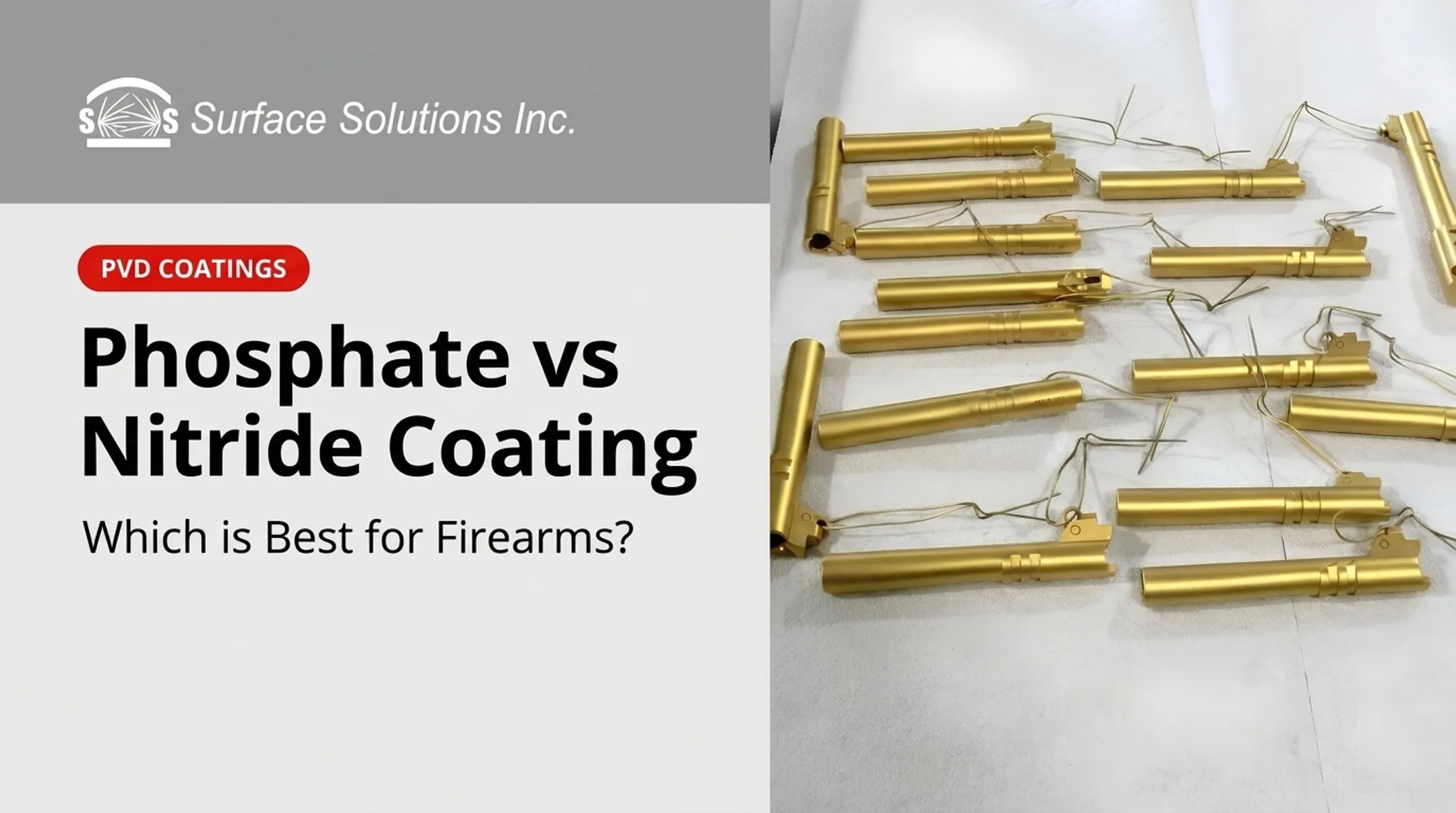
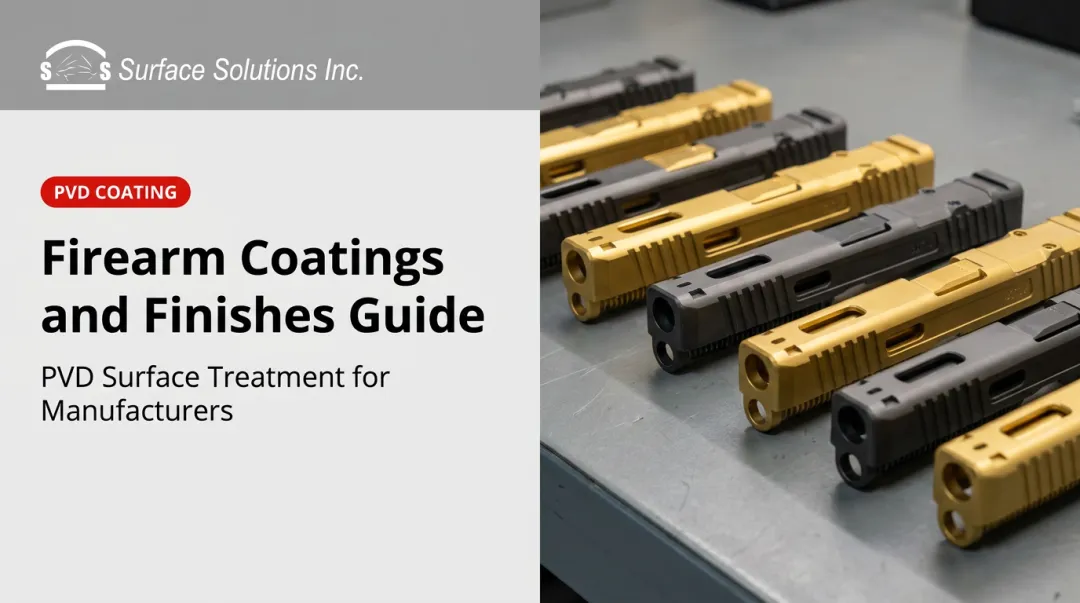
- Adds a distinctive gold finish that doubles as a wear indicator
Because the base barrel stays steel, machining stays conventional. Turnaround time and cost stay closer to a standard barrel with an added coating step, rather than the extended machining cycle solid titanium demands.

Weighing the Pros and Cons
Every titanium application, solid or coated, trades on the same core strengths.
Shared advantages:
- Lightweight handling that reduces fatigue during extended carry or firing strings
- Corrosion resistance against moisture, solvents, and storage conditions
- Heat tolerance well beyond what firearm cycling produces
- Extended part life for surfaces subject to friction and wear
Shared disadvantages:
- High material and machining costs, especially for solid titanium
- Specialized equipment and expertise required for machining or coating
- Potential brittleness at stress points under certain firing loads
- Longer production timelines for fully machined titanium parts
Machining data helps explain the cost gap. Titanium cuts far more slowly than steel because heat stays concentrated in the cutting tool instead of transferring away in the chip. That buildup accelerates tool wear and slows cutting speeds, explaining why titanium parts can take up to 10 times longer to machine than steel.
That production burden is exactly why PVD coatings like TiN have become the practical middle ground. Applying a few microns of ceramic to an already-machined steel barrel sidesteps the slow cutting speeds and tool wear that make solid titanium expensive. Shooters get:
- Most of titanium's wear resistance without the machining penalty
- Corrosion protection extended to the coating surface
- No brittleness risk, since the load-bearing structure stays steel
Coated steel barrels routinely outperform bare steel in wear resistance, and they do it without the seizing tendency uncoated titanium bores can develop. For most applications, that combination beats what a solid titanium barrel offers at a fraction of the investment.
Real-World Examples: Guns Using Titanium and TiN Technology
Longthorne Gunmakers remains the clearest solid-titanium example on the market. Its one-piece billet construction has produced barrel sets reported at roughly 45% lighter than steel counterparts, with specific models like the Berkley 28-bore weighing 5 lb 2 oz and the Valkyrie at 6 lb 4 oz.
TiN coating shows up far more often across the aftermarket. Companies apply gold TiN finishes to drop-in barrels for several popular pistol platforms:
- Glock-compatible barrels finished in 416R stainless steel with a TiN PVD coating
- Sig Sauer-compatible threaded barrels using the same stainless-plus-TiN approach
- Springfield Armory-compatible barrels offered with a certified stainless substrate and a TiN option
These are aftermarket products built to fit factory platforms rather than parts shipped from Glock, Sig, or Springfield themselves, but they show how widely TiN has been adopted as a barrel finish.
Titanium components beyond the barrel are becoming common too, showing up in cylinders, firing pins, and coated components across the industry:
- Smith & Wesson uses a titanium cylinder in its Model 432 revolver to cut weight for concealed carry
- Wilson Combat and Volquartsen both offer titanium firing pins, citing reduced mass for faster lock time
- Surface Solutions applies PVD finishes, including TiN, CrN, and Alpha coatings, to firearm barrels and components for manufacturers producing multiple parts at a time
Is Titanium Nitride Coating Right for Your Barrel?
For most gun owners, competitive shooters, and manufacturers, a PVD coating delivers the better balance of performance, durability, and price. You get a substantial portion of titanium's surface benefits without the machining time, cost, or brittleness risk that comes with a fully solid titanium barrel.
Surface Solutions applies TiN, CrN, TiCN, and Alpha™ PVD coatings to firearm barrels and components for manufacturers producing multiple parts at a time. Each coating serves a slightly different purpose:
- TiN – the standard gold finish, balancing hardness and wear resistance
- CrN – a metallic finish built for superior corrosion resistance in humid or harsh storage conditions
- Alpha™ – a proprietary formulation showing roughly double the wear life of standard TiN coatings in comparable wear applications
- TiCN – among the hardest coatings available, suited to high-stress, high-friction applications

Coatings are applied at roughly 2 to 5 microns thick, thin enough that bore dimensions and fit typically stay unaffected. Beyond the barrel itself, manufacturers use these same coatings to cut lubrication needs, reduce wear on moving components, and extend service life before parts need replacing or resharpening.
These efficiency gains apply at the production level, which is why Surface Solutions works with manufacturers and companies coating multiple parts per batch, rather than individual consumers. The company serves clients across the U.S., Canada, and Mexico from its Fridley, Minnesota facility. If you're a manufacturer evaluating PVD coating for barrels or other firearm components, contact Surface Solutions at 763-785-9436 or info@tincoat.net to discuss a coating consultation.
Frequently Asked Questions
Are titanium gun barrels legal to own and use?
Yes. Federal firearm regulations classify guns by function and configuration, not barrel material, so titanium barrels face the same rules as steel ones. Standard barrel length and configuration requirements still apply.
Do titanium barrels wear out faster than steel barrels?
Uncoated titanium can gall or seize under sliding friction inside the bore, which is a real concern. Coated or properly alloyed titanium barrels, however, can match or exceed steel's wear resistance.
Is titanium nitride coating the same thing as a solid titanium barrel?
No. TiN coating is a thin ceramic layer, typically 2-5 microns, applied via PVD to a steel or other metal substrate. A solid titanium barrel is machined entirely from titanium with no separate base metal.
Can any gun or rifle barrel be coated with titanium nitride?
Most steel barrels are compatible, but existing bluing, oxides, or EDM recast layers must be removed before coating for proper adhesion. A coating specialist should evaluate surface prep needs beforehand.
How does the cost of a titanium barrel compare to a TiN-coated steel barrel?
Solid titanium barrels involve far higher material costs and longer machining time, sometimes reported at roughly 10 times longer to produce. TiN coating adds similar surface benefits to a steel barrel at a fraction of that cost.
Does a TiN coating affect a barrel's accuracy or performance?
TiN coatings are applied in layers just a few microns thick, generally too thin to meaningfully change bore dimensions. They typically improve friction and heat characteristics without altering accuracy.