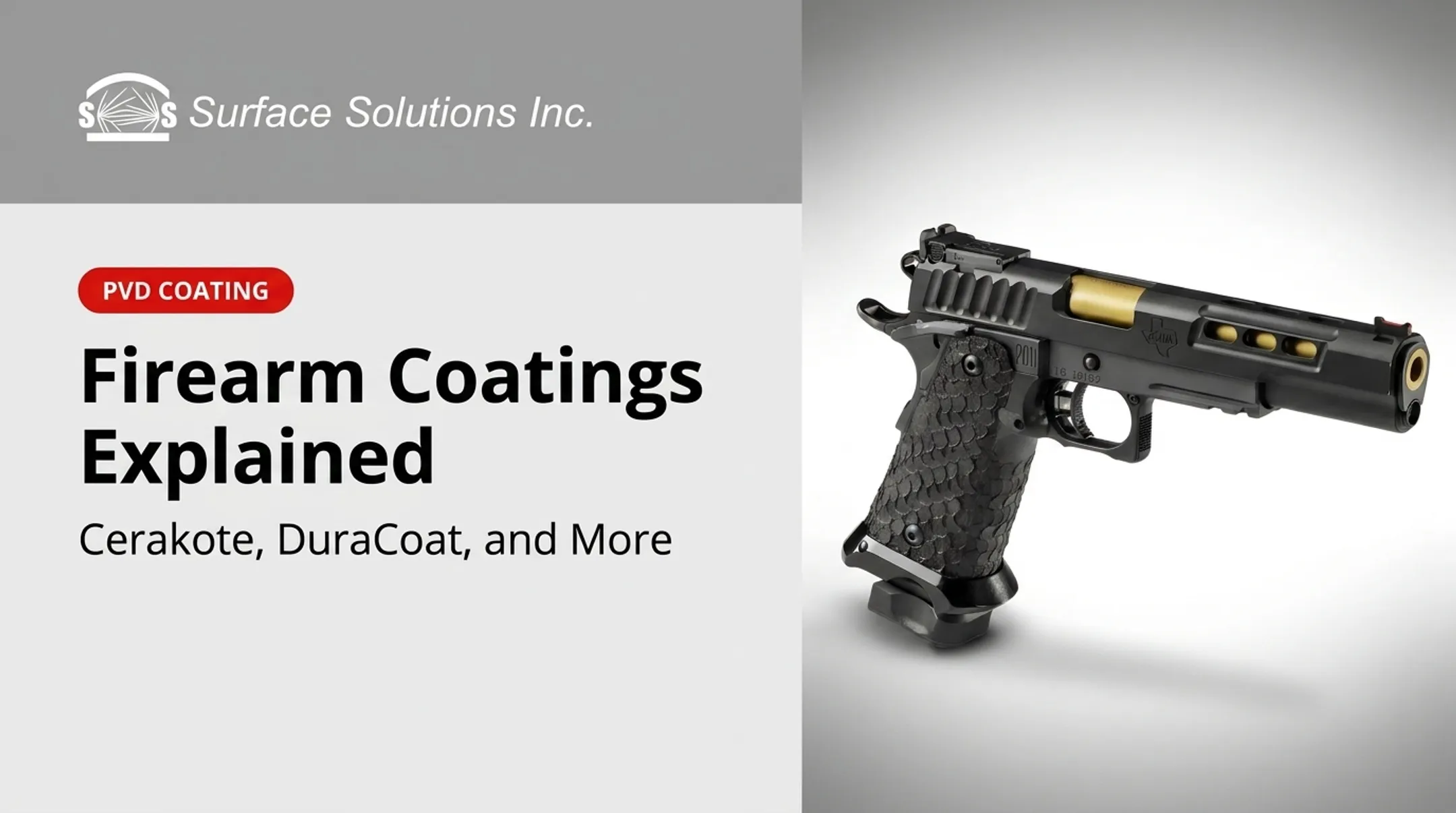
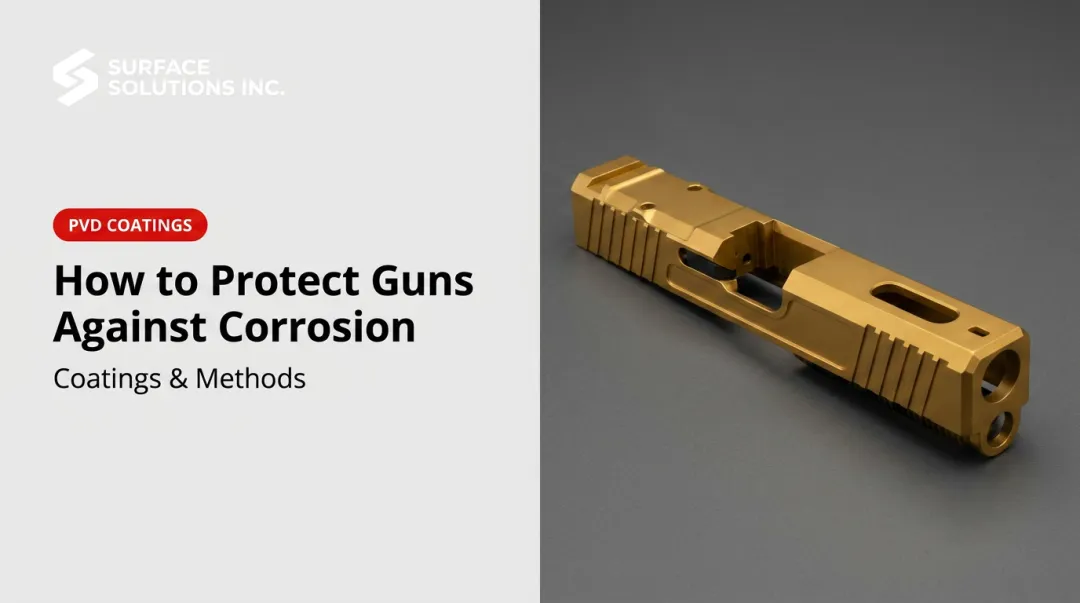
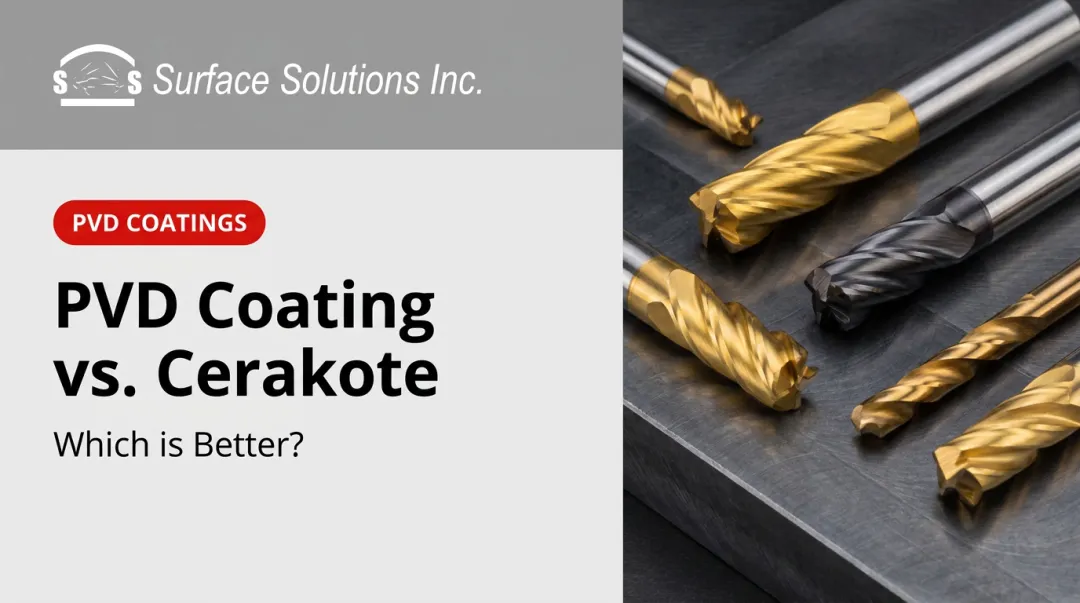
Today's options include ceramic-polymer sprays, vacuum-deposited industrial coatings, and diffusion-hardened steel surfaces, each with its own performance profile. Many gun owners get stuck comparing names like Cerakote, Parkerizing, and PVD without understanding what actually happens to the metal underneath.
This guide breaks down the major firearm coatings, compares their durability and cost, and gives you a straightforward way to pick the right finish for your climate, use case, and maintenance tolerance.
Key Takeaways
- Bluing and Parkerizing cost less, look classic, but need frequent oiling and offer weak corrosion resistance.
- Cerakote leads modern finishes, offering custom colors and strong abrasion resistance.
- Nitride and PVD treatments offer the highest hardness, ideal for barrels, bolts, and other high-wear parts.
- Your best finish depends on climate, use, and how much upkeep you can commit to.
Common Types of Firearm Coatings and Finishes
Decades ago, bluing and nickel plating covered almost every option on the market. Now manufacturers pull from chemical conversion processes, ceramic sprays, and vacuum-deposition technology, each suited to different substrates and applications.
Bluing
Hot bluing and rust bluing both convert the surface iron in steel into black magnetite through controlled oxidation. Birchwood Casey's own refinishing guide instructs users to saturate freshly blued metal with rust protectant, let it cure overnight, and reapply "from time to time or after each shooting session."
That maintenance requirement isn't optional. Outdoor Life calls bluing the least effective common shotgun finish, noting a blued shotgun stored zipped in its case through a humid summer can rust before you ever take it back out. Bluing earns its keep on looks and price, not on protection.
Parkerizing (Phosphating)
Parkerizing immerses steel in a phosphoric acid bath, forming a gray-black matte layer that's rougher and more porous than blued steel. Military spec MIL-DTL-16232 covers this process using manganese or zinc phosphate bases and calls for a supplementary oil treatment on Class 1 finishes.
That oil dependency matters. Phosphate coatings hold lubricant in their microscopic pores, which improves corrosion resistance over bare bluing, but the finish still isn't self-sufficient. Skip the oil, and Parkerizing's advantage shrinks fast.
Stainless Steel
Stainless steel is a material choice, not an applied coating. Chromium in the alloy forms a self-renewing passive oxide layer, which is what gives stainless steel its corrosion resistance.
Manufacturers frequently bead-blast stainless parts to create a glare-reducing matte surface, a technique also used on sights and slides. Stainless isn't immune to aggressive chloride exposure, though, so waterfowl hunting or coastal storage still calls for basic care.
Anodizing
Anodizing is an electrochemical process used almost exclusively on aluminum receivers and handguards. It thickens the natural oxide layer on the aluminum surface, creating a harder, low-glare finish than bare metal.
Type III "hard anodizing," the grade most common on AR-pattern receivers, runs roughly 0.002 inch thick. FN America specifies hard-coat anodizing to military standard on its FN 15 Patrol receivers, an example of how seriously manufacturers take this wear-resistant treatment.
Cerakote
Cerakote is a ceramic-polymer coating sprayed on in a thin film, then cured to bond with metal, polymer, or composite substrates. It resists abrasion, corrosion, and extreme heat far better than traditional conversion finishes.
Outdoor Life reported in 2021 that Cerakote was used by more firearm manufacturers than any other coating, offering more than 90 ceramic colors and finishes. Browning's Maxus Wicked Wing shotgun is one factory example of the coating's growing adoption.
PVD Coatings (TiN, CrN, AlTiN)
While Cerakote sprays onto a surface, PVD coatings take a different route: vacuum deposition. The process bonds titanium nitride (TiN), chromium nitride (CrN), or aluminum titanium nitride (AlTiN) to metal parts inside a vacuum chamber heated to roughly 700-800°F. The resulting coating measures just 2 to 5 microns thick but tests harder than hardened tool steel.
That thinness makes PVD best suited to precision components like bolt carriers, pins, and small internal parts rather than full-size assemblies or aluminum receivers. Surface Solutions and similar coating providers apply TiN, CrN, and AlTiN as a service to firearm manufacturers, adding wear resistance without the bulk of thicker finishes.
Nitride / Black Nitride (Melonite)
Nitride treatments, sometimes branded Melonite, use ferritic nitrocarburizing to diffuse nitrogen and carbon directly into the metal's surface. This process chemically transforms the steel itself rather than sitting on top as an applied layer, which is why it holds up so well on barrels and internal components that see constant friction.
Firearm heat treater Paulo reports nitrided stainless typically tops out near 850 HV, though its own processes have achieved as high as 2,000 HV in testing. That hardness makes nitride a favorite for slides, flash hiders, and muzzle brakes.

Comparing Firearm Coatings: Durability, Cost & Best Use Cases
Here's how the major finishes stack up side by side:
| Finish | Durability | Relative Cost | Maintenance | Best Use Case |
|---|---|---|---|---|
| Bluing | Low | $ | High (regular oiling) | Classic-look range guns, dry climates |
| Parkerizing | Moderate | $ | Moderate (oil-dependent) | Military-style rifles, budget durability |
| Stainless steel | Moderate-High | $$ | Low-Moderate | Marine/coastal use, low-glare needs |
| Anodizing | High (aluminum only) | $$ | Low | AR receivers, handguards |
| Cerakote | High | $$-$$$ | Low | Hunting, duty, custom aesthetics |
| Nitride | Very High | $$-$$$ | Low | Barrels, slides, internals |
| PVD | Very High | $$$ (OEM-level) | Very Low | Bolts, pins, trigger components |
For a shotgun exposed to field conditions, Cerakote and nitride both outperform bluing by a wide margin. Cerakote's own comparison against ASTM B117 salt-spray testing showed bluing corroding within 24 hours, phosphate within 48 hours, and Cerakote lasting over 2,034 hours before initial corrosion appeared. That's a controlled lab result, not a guaranteed field lifespan, but the gap is telling.
Cerakote pricing for a shotgun typically runs:
- $210 for metal-only application at smaller aftermarket shops
- $275-$475 for a complete single-color job including barrel and receiver, with disassembly sometimes billed separately
- Factory-applied Cerakote guns, like Mossberg's 590R Stand-Off, carry the coating cost baked into the MSRP rather than as a separate line item
Climate matters more than most buyers realize. A duck hunter working saltwater marshes needs a different priority list than someone shooting an inland range gun in a dry climate. Humid or coastal exposure pushes the decision toward Cerakote, nitride, or stainless. Dry inland use gives bluing and Parkerizing more room to perform acceptably with basic care.
Coating thickness is another trade-off to weigh: it competes directly with tight tolerances. Cerakote adds measurable film thickness, which works fine on exterior surfaces but can interfere with precision-fit internal parts.
That's exactly the gap PVD coatings were built to fill. Surface Solutions applies PVD coatings like TiN and CrN to firearm bolts, pins, and trigger components for manufacturers producing multiple units, where thin-film precision matters most.
PVD Coatings: The Industrial-Grade Option for Firearm Components
Physical Vapor Deposition (PVD) is a vacuum-based process that deposits ultra-thin, extremely hard coatings like titanium nitride (TiN) and chromium nitride (CrN) directly onto metal. It was originally developed for industrial cutting and forming tools long before firearm manufacturers adopted it.
The hardness numbers explain the appeal. Kyocera's firearm coating guide reports some PVD coatings reaching 3,500+ HV, applied at a film thickness of just 1-5 microns. Compare that to Cerakote's pencil-hardness rating, which tops out around 9H on a completely different testing scale. The two aren't numerically interchangeable, but PVD's near-zero dimensional buildup is the real advantage for tight-tolerance parts.

Why Manufacturers Choose PVD for Small Components
Bolts, pins, firing pins, extractors, and trigger components all share one problem: they need hardness without added bulk. A coating that's too thick throws off the fit between mating parts.
PVD solves this with a film so thin it doesn't meaningfully change dimensions, while still delivering:
- Reduced friction between moving parts, cutting down on lubricant needs
- Extended wear life on components that cycle thousands of times per year
- Improved corrosion resistance on small, high-wear parts exposed to sweat, moisture, and powder residue
This is where Surface Solutions Inc., a Fridley, Minnesota-based PVD coating provider, fits into the firearm supply chain. The company applies coatings like Alpha and CrN to metal components at a thickness of 0.0001″ to 0.0002″ (2 to 5 microns), for manufacturers producing precision parts used across cutting tools, medical instruments, and firearm components alike.
A few technical notes worth knowing if you're a manufacturer evaluating PVD:
- Coatings apply at roughly 700°F to 800°F, so base metal heat treatment must tolerate that temperature
- Parts must be solid, single-piece metal; assemblies, pressed-in parts, and plastic inserts aren't compatible
- Aluminum and zinc alloys fall outside the coatable range
- Surfaces need to be pre-polished, since PVD replicates whatever finish is already there rather than improving it
An OEM Process, Not a Retail Refinish
Here's the key distinction: PVD is typically applied at the manufacturing level, not as a consumer aftermarket service. Surface Solutions, for example, now works exclusively with manufacturers and companies coating multiple parts in a batch, having discontinued single-part consumer coating altogether.
That's different from Cerakote's business model, where individual gun owners regularly send a single shotgun or pistol to a local applicator. If you're a manufacturer sourcing coated bolts, pins, or trigger components for production runs, PVD providers like Surface Solutions are built for that volume.
If you're a consumer wanting a one-off custom finish, Cerakote's retail network remains the more accessible route.
Choosing and Maintaining the Right Finish for Your Firearm
Picking a finish comes down to three questions:
- What's the primary use? Range guns can tolerate more maintenance; duty and hunting guns benefit from lower-upkeep coatings.
- What's the climate exposure? Humid, coastal, or marsh environments push you toward Cerakote, nitride, or stainless.
- How much maintenance will you actually do? Be honest here. Bluing looks great on a shelf but punishes neglect.
Maintenance expectations by category:
- Bluing and Parkerizing need regular light oiling, ideally after every range session or cleaning
- Stainless and anodized parts need only basic cleaning, though stainless still benefits from periodic wipe-downs in salt air
- Cerakote, nitride, and PVD finishes require minimal upkeep beyond standard cleaning of the action and bore

No finish eliminates cleaning entirely. Even Cerakote-heavy shotguns like the Benelli SBE3 leave certain parts, such as the receiver and carbon-fiber rib, outside the coated area. Damp, gritty hunting conditions still call for extra attention regardless of finish.
Since a finish only performs as well as the hands that applied it, choosing the right applicator matters as much as choosing the right coating. Before committing to a refinish, verify the applicator's warranty terms and track record. A cheap Cerakote job from an inexperienced sprayer performs worse than a well-maintained blued finish.
Frequently Asked Questions
What is the best coating for a shotgun?
Cerakote and nitride-based finishes generally offer the best field durability for shotguns facing wet or rough conditions. Bluing remains popular for its classic look but requires much more upkeep to avoid rust.
Is Cerakote worth it on a shotgun?
For hunters facing wet or abrasive conditions, yes. Cerakote's corrosion and abrasion resistance, plus color customization, typically justifies the added cost over bare bluing.
How much does Cerakote cost for a shotgun?
Aftermarket pricing generally ranges from $210 for metal-only application to $475 for a complete single-color job, with disassembly sometimes billed as an extra fee.
What is the coating on a gun called?
"Gun coating" is a general term covering several distinct processes, including bluing, Parkerizing, Cerakote, nitride, and PVD. Each name refers to a specific chemical or mechanical process, not one universal finish.
What is the most durable firearm finish?
PVD and nitride-based finishes typically test hardest on industry hardness scales, with some PVD coatings reaching 3,500+ HV. Both outperform bluing and Parkerizing by a wide margin in wear resistance.
Can PVD coating be applied to firearm parts?
Yes. PVD coatings like TiN and CrN are increasingly used on internal firearm components such as bolts, pins, and triggers. Providers like Surface Solutions supply these coatings to manufacturers producing precision parts for the firearm supply chain.