The pain point is familiar to anyone running a resharpening budget: uncoated or poorly coated tools wear quickly, chip under heat, and need resharpening far more often than they should. Every extra trip to the sharpening bench means downtime, labor cost, and inconsistent part quality.
This guide breaks down what AlTiN coating actually is, where it earns its keep, how it stacks up against TiAlN, TiN, and AlCrN, and what to look for in a coating partner.
Key Takeaways
- AlTiN is a PVD coating that boosts hardness and heat resistance on ferrous cutting tools.
- It excels in dry, high-heat cutting of titanium, stainless, Inconel, and cast iron.
- Aluminum and non-ferrous alloys need a different coating, such as TiB2 or ZrN.
- Properly applied AlTiN multiplies tool life, cutting resharpening frequency and labor costs.
- The aluminum-to-titanium ratio is what separates AlTiN from its close cousin, TiAlN.
What Is AlTiN Coating?
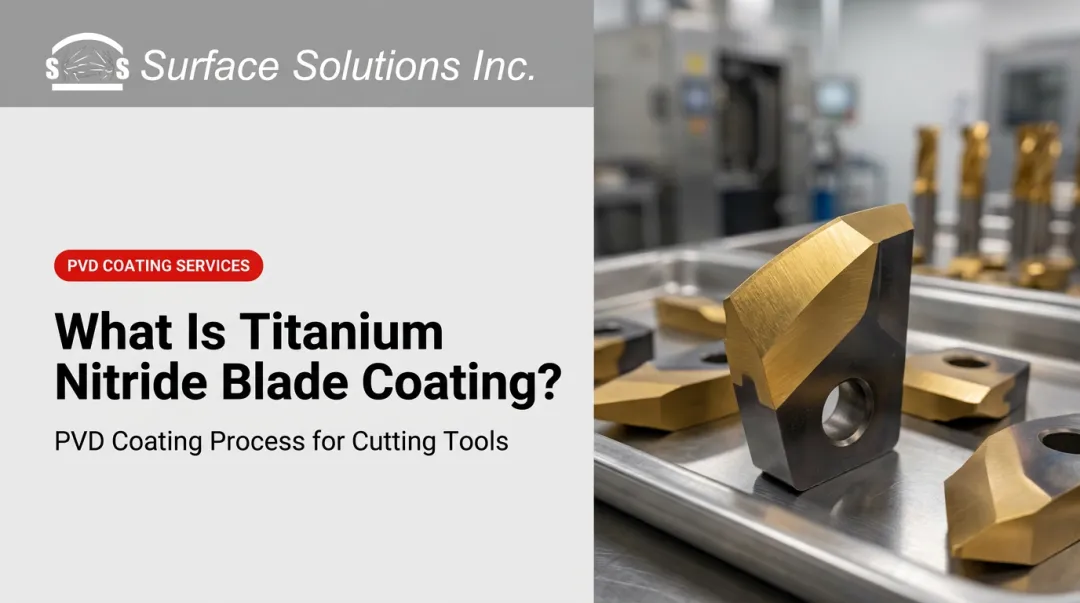
AlTiN stands for Aluminum Titanium Nitride, a ceramic coating applied to carbide tools using physical vapor deposition (PVD).
The name itself tells you something: when aluminum content exceeds titanium content in the compound, the coating is classified as AlTiN. Flip that ratio, and you get TiAlN instead. Same three elements, different balance, different performance profile.
How the PVD Process Works
Inside a vacuum chamber, solid metal source material is vaporized and ionized. Those ions travel through the chamber and bond to the tool's surface, building up a thin, dense, uniform layer.
No chemical reaction bath, no high-temperature soak — just controlled vapor deposition at a much lower thermal load than older chemical coating methods.
Typical process parameters for AlTiN:
- Coating thickness: 2 to 5 microns (0.0001″–0.0002″), consistent with the general PVD range reported by coating manufacturers
- Deposition temperature: roughly 700°–800°F, low enough to avoid distorting most hardened tool substrates
- Finish: a distinctive black or charcoal appearance
The Heat Barrier Effect
Here's the part that matters most on the shop floor. At elevated cutting temperatures, the aluminum in the coating oxidizes and forms a thin layer of aluminum oxide on the surface.
That oxide layer acts as a thermal barrier, redirecting heat into the chip rather than letting it soak into the tool. This is the mechanism behind AlTiN's reputation for holding an edge in hot, dry cuts.
AlTiN coatings applied at Surface Solutions run 4,000–4,200 Hv in hardness and hold oxidation resistance up to 800–900°C in service, well beyond what an uncoated carbide edge can tolerate before it starts degrading.
PVD also runs cooler and uses fewer hazardous chemicals than older chemical vapor deposition (CVD) methods. The exact environmental footprint still depends on batch size and process specifics, so treat it as a general trend rather than a guarantee.

Key Benefits of AlTiN Coated End Mills
The value of AlTiN comes down to four measurable advantages over bare carbide.
Hardness and Wear Resistance
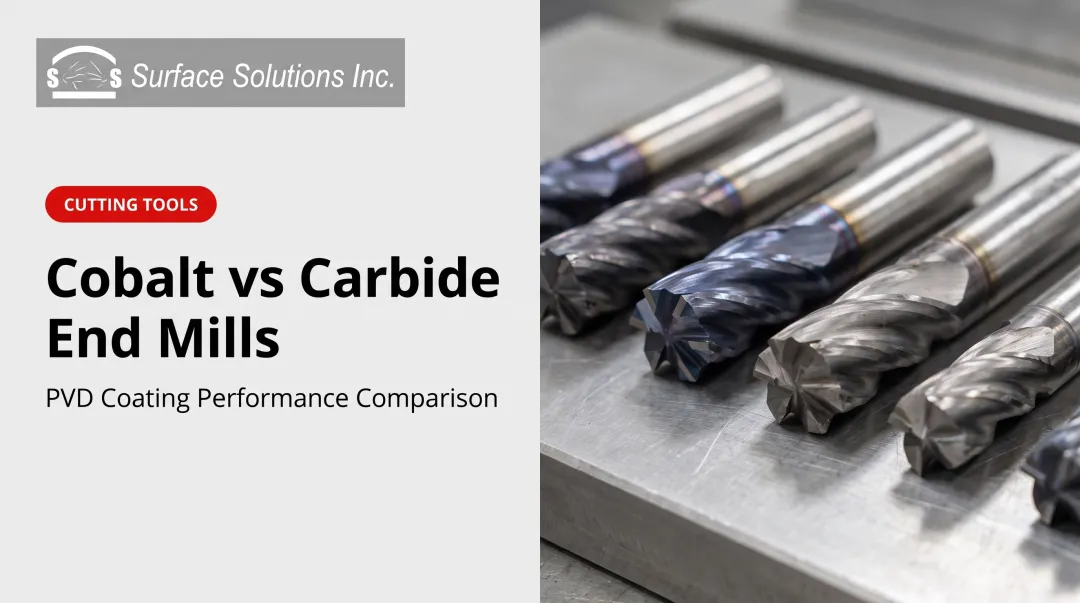
Uncoated carbide typically measures 1,300–1,900 HV at room temperature, according to Cutting Tool Engineering. AlTiN coatings sit well above that range, which translates directly into slower flank wear and longer intervals between sharpenings — especially in abrasive, heat-generating cuts.
Thermal Stability
This is AlTiN's signature strength. Reported maximum working temperatures put AlTiN around 1,400°F, compared to roughly 1,000°F for standard TiN coatings. That 400-degree gap matters in high-speed, high-heat ferrous cuts where a standard coating would already be breaking down.
Reduced Friction and Built-Up Edge
A smoother coated surface reduces the tendency for chips to weld onto the cutting edge. Less built-up edge (BUE) means:
- Cleaner chip evacuation
- Better surface finish on the finished part
- More consistent dimensional accuracy across a longer tool run
Productivity and Cost Impact
Coating performance also translates into real shop numbers. In one Surface Solutions case study, an AlTiN-coated carbide insert (the same coating chemistry used in end mills) machined 304 stainless steel.
The coated insert ran 6x longer than an uncoated TiN tool, with no change to speeds or feeds and better surface finish. That kind of gain compounds fast: fewer tool changes, fewer resharpening trips, more spindle-on time.
Similar multiplier effects show up across Surface Solutions' broader coating work. One press-tooling customer went from resharpening every 10,000 parts to running 60,000 parts on a single sharpening cycle, saving roughly 48 hours of labor across the avoided resharpening trips.
The mechanism is the same principle at play in coated end mills: harder edges hold their geometry longer under repeated cutting cycles.
Best Applications for AlTiN Coated End Mills
AlTiN isn't a universal coating. It's built for a specific job, and it does that job well.
Materials Where AlTiN Excels
- Titanium alloys — heat-generating, gummy, and hard on tool edges
- Stainless steel — work-hardens quickly and punishes uncoated tools
- Inconel and nickel superalloys — extreme heat and abrasion resistance demands
- Cast iron — abrasive material that chews through unprotected carbide
AlTiN's oxide-based heat barrier is what makes it suited to these materials. They all generate significant cutting-zone heat, and that's exactly the condition AlTiN is designed to manage.
That same heat tolerance is why AlTiN performs best in dry or thermally stable operations. Repeated coolant on/off cycling creates thermal shock at the cutting edge, a heating-and-cooling stress that can promote micro-cracking over time. Running dry, where the process allows it, keeps the tool in the steady-heat zone where AlTiN's oxide barrier is most effective.
Industries that lean on this combination most: medical device manufacturing, mold and die work, and general precision machining shops running ferrous alloys day in and day out.
Where AlTiN Falls Short
AlTiN is not recommended for aluminum or other non-ferrous alloys. Aluminum has a high chemical affinity for the coating, which promotes built-up edge instead of preventing it.
For aluminum and non-ferrous work, better options include:
- TiB2: Very low affinity to aluminum and magnesium, reducing chip sticking
- ZrN: General-purpose coating that handles abrasive aluminum alloys well
Beyond end mills, this same coating chemistry gets applied to drills, taps, and turning inserts wherever the material and heat profile call for it.

AlTiN vs. Other Popular End Mill Coatings
Choosing between coatings comes down to matching the chemistry to your material and heat profile. Here's how the major options compare:
| Coating | Strength | Trade-off |
|---|---|---|
| AlTiN | Superior oxidation and high-temperature resistance | Slightly lower hardness than TiAlN in some formulations |
| TiAlN | Higher hardness, lower friction | Less oxidation resistance at peak temperatures |
| TiN | Reliable general-purpose baseline | Working temperature caps around 1,000°F |
| AlCrN | Excellent thermal stability, resists built-up edge | Higher cost, application-specific benefit |
AlTiN vs. TiAlN
These two coatings are close relatives with different strengths. Oerlikon's technical comparison notes that AlTiN delivers greater oxidation resistance and withstands higher temperatures, while TiAlN offers higher hardness and lower friction.
In practice: pick AlTiN for sustained high-heat dry milling, and TiAlN where friction control matters more than peak temperature survival.
AlTiN vs. TiN
TiN is the industry baseline — reliable, affordable, but limited. AlTiN's higher working temperature (roughly 1,400°F versus 1,000°F for TiN) makes it the clear step-up for ferrous machining that generates real cutting-zone heat.
AlTiN vs. AlCrN/CrN
Chromium-based coatings bring their own advantage: thermal stability and reduced built-up edge in certain applications.
In one Surface Solutions customer example on a stainless steel drawing operation, switching to a chromium-based coating changed output dramatically. Parts went from 15 pieces (too hot to touch) to over 500 pieces (just warm to the touch) on the same tooling setup. That's the kind of thermal management gain that makes CrN worth evaluating for specific high-friction, high-heat jobs.
Choosing the Right AlTiN Coating Partner
Not every coating provider delivers the same result from the same coating chemistry. A handful of factors separate a reliable partner from a costly mistake.
What to evaluate:
- Turnaround time: how quickly parts move through receiving, coating, inspection, and return shipping
- Adhesion and thickness consistency: batch-to-batch uniformity matters more than a single good sample
- Substrate compatibility: confirm the provider works with your specific tool steel or carbide grade
- Multi-region service: shops with distributed operations need a partner who can handle volume across locations without delays
Warning signs of a subpar provider:
- Inconsistent coating thickness from batch to batch
- Visible built-up material or galling on returned tools
- Limited geographic reach that turns a routine coating job into a week of shipping delays
Judged against those standards, Surface Solutions, based in Fridley, Minnesota, coats parts for shops across the Upper Midwest, California, New York, Florida, Canada, and Mexico. Shipping logistics from the Fridley facility typically get a coated tool back to most of the continental U.S. within four to six business days round-trip via UPS Ground, before factoring in coating processing time.
The company has built a track record on reasonable turnaround and competitive pricing against larger providers. That combination matters as much for a single-location shop as it does for a multi-plant operation juggling tooling across states.

Frequently Asked Questions
What are the differences between AlTiN and TiAlN end mill coatings?
The difference comes down to which element dominates: more aluminum makes it AlTiN, more titanium makes it TiAlN. AlTiN offers better oxidation and high-temperature resistance, while TiAlN typically runs harder with lower friction.
What is AlTiN coating good for on end mills?
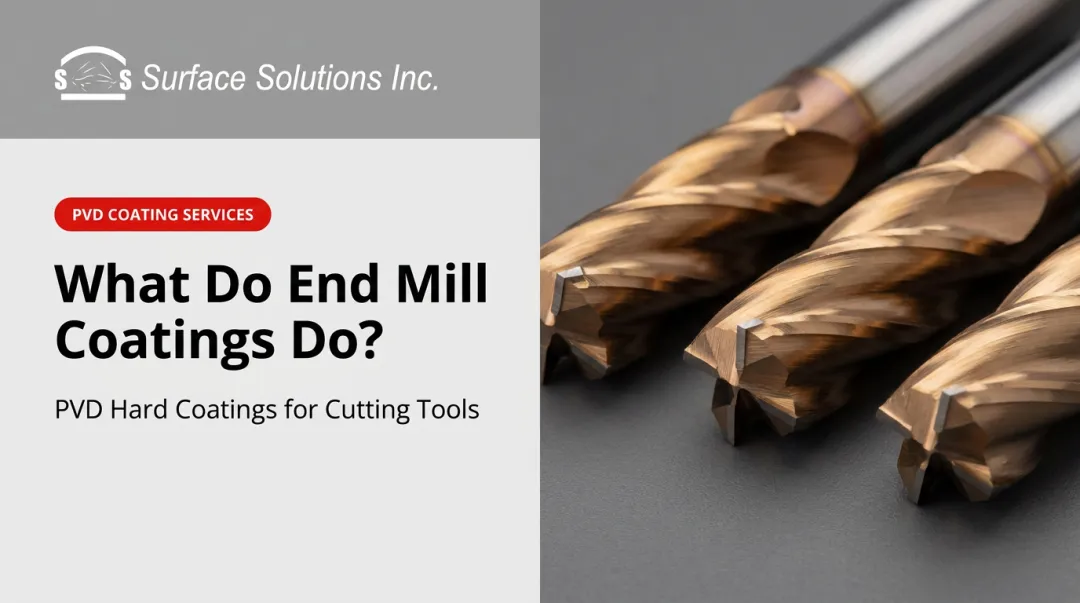
AlTiN is built for ferrous and heat-generating materials, including stainless steel, cast iron, titanium alloys, and Inconel, especially in dry, high-speed machining. Its oxide layer protects the edge by redirecting heat into the chip.
What are the best coatings for end mills?
It depends entirely on the material. AlTiN suits ferrous metals, TiB2 or ZrN work better for aluminum and other non-ferrous alloys, and diamond coatings are the go-to for composites and graphite.
What is AlTiN coating for end mills?
It's a PVD ceramic coating made of aluminum, titanium, and nitrogen, applied in a vacuum chamber to extend tool life in ferrous machining. Its core job is slowing wear and managing heat at the cutting edge.
Can AlTiN coating be used on aluminum?
No. Aluminum has a high chemical affinity for the AlTiN coating, which actually promotes built-up edge instead of preventing it. TiB2 or ZrN are better-suited alternatives for aluminum and non-ferrous work.
How much does AlTiN coating extend end mill tool life?
Gains vary by application, but real-world results show meaningful multiples. One AlTiN-coated carbide insert ran 6x longer than an uncoated TiN tool machining 304 stainless steel, with no change to speeds or feeds.