The hard-coatings market is projected to grow at a 7.1% CAGR through 2030, reaching roughly $1.7 billion, according to Grand View Research. That growth signals just how routine PVD coating has become for manufacturers, not an occasional upgrade but a standard production step.
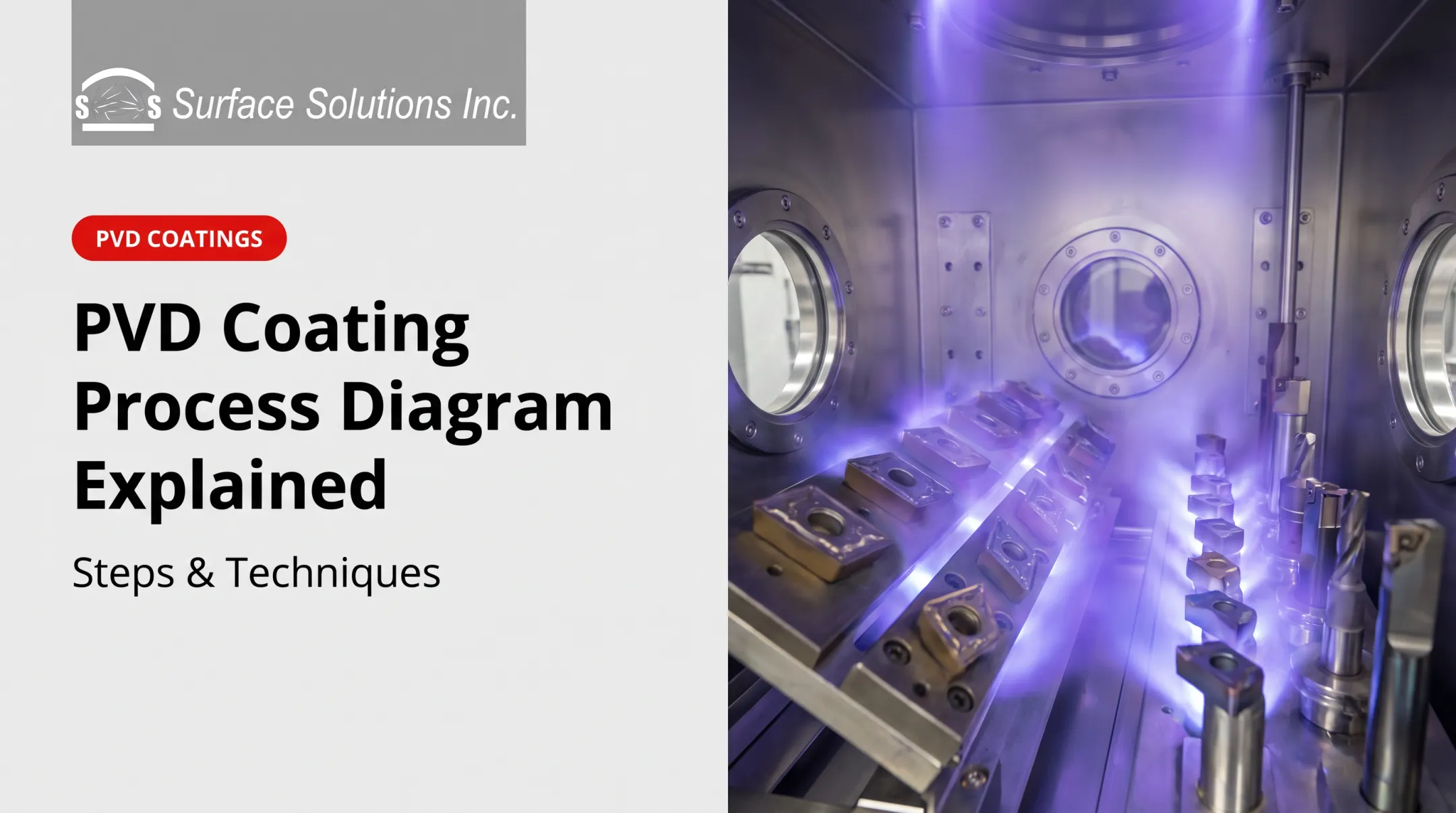
Most buyers know coatings extend tool life. Few understand what actually happens inside the chamber, how solid metal becomes plasma, and how that plasma becomes a film only a few microns thick. This guide breaks down cathodic arc PVD deposition stage by stage.
TL;DR
- Cathodic arc PVD ionizes metal into plasma, forming ultra-hard films like TiN, CrN, and AlTiN
- Four stages drive the process: arc ignition, vaporization, filtering, and condensation
- It delivers the highest ionization rate of any PVD method, yielding denser, better-adhered coatings than sputtering
- Macroparticles (droplets) are the main drawback, controlled through magnetic filtering and arc steering
- Applications span cutting and forming tools, decorative finishes, and medical device components
What Is Cathodic Arc PVD Deposition?
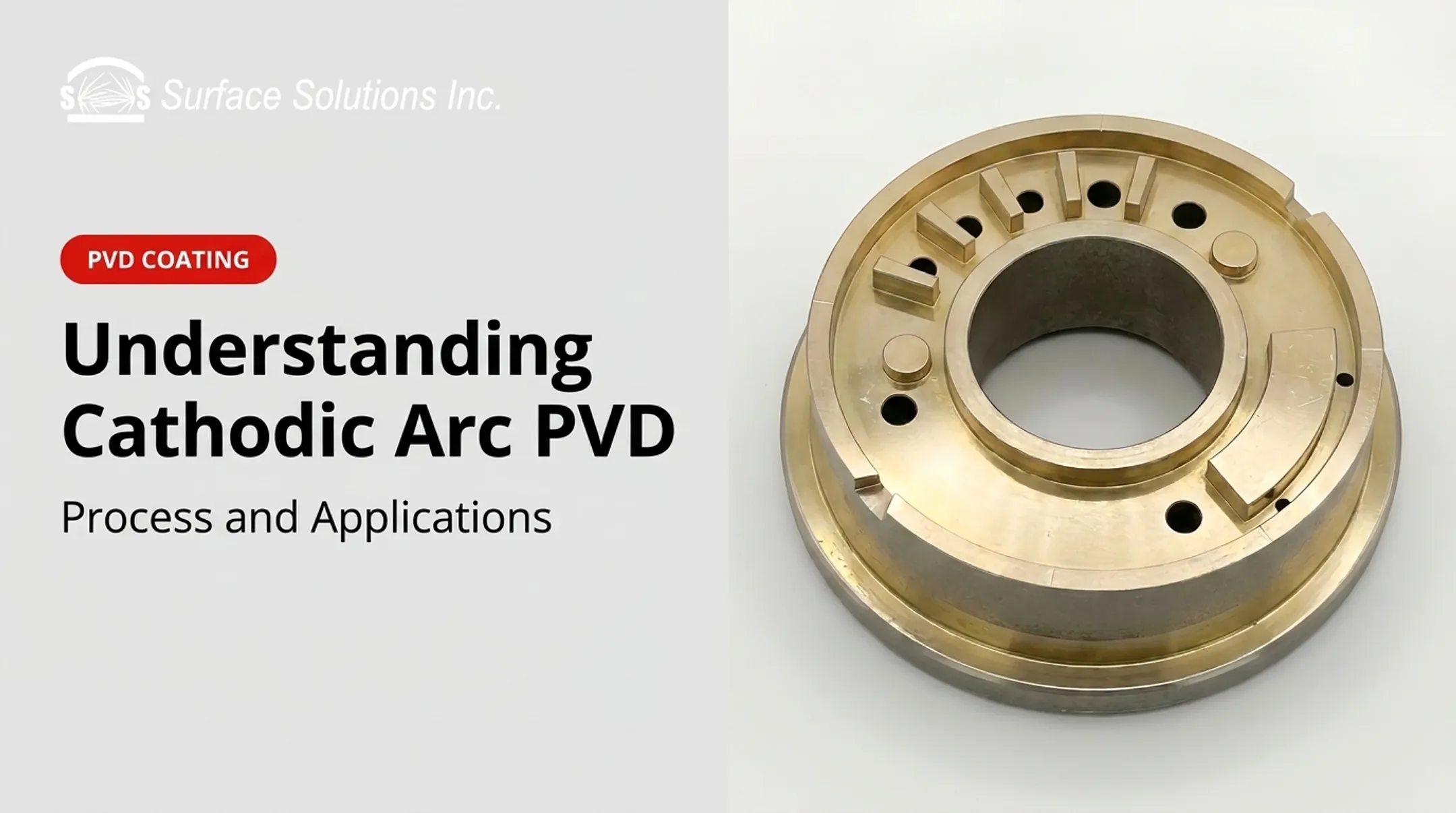
Cathodic arc PVD deposition is a physical vapor deposition process that uses a high-current, low-voltage electric arc to vaporize a solid cathode (the "target") into ionized plasma. That plasma travels through a vacuum chamber and condenses onto a substrate as a thin, hard film.
This process emerged to close a real gap left by older methods. Electroplating and basic thermal evaporation simply couldn't produce coatings dense or hard enough for demanding cutting and forming applications. The near-full ionization of cathodic arc plasma solved that problem by delivering ions with enough energy to pack tightly onto the substrate surface.
How It Differs From Other Coating Methods
It's easy to lump PVD methods together, but the mechanics differ substantially:
| Process | Mechanism | Ionization Level |
|---|---|---|
| Cathodic Arc PVD | Electric arc vaporizes solid cathode into plasma | High |
| Magnetron Sputtering | Ion bombardment physically ejects target atoms | Low |
| CVD | Chemical reaction of gaseous reactants on substrate | N/A (not physical) |
| Electroplating | Wet chemical bath deposits metal via electrical current | N/A (not vacuum-based) |
A 2024 comparison study found magnetron sputtering produces smoother, more uniform films with fewer defects, but cathodic arc's higher ionization generates denser films with stronger adhesion. That trade-off is exactly why cathodic arc remains the default for hardness-critical tooling, even with newer alternatives like HiPIMS (High Power Impulse Magnetron Sputtering) on the market.
Process Variations Worth Knowing
Not all cathodic arc setups are identical:
- Standard (random-arc) DC systems - simplest configuration, cathode spot moves randomly across the target
- Magnetically steered arc - magnetic fields guide the spot for more even target erosion
- Filtered cathodic arc - removes macroparticles before they reach the substrate, at some cost to deposition speed
- Pulsed arc - runs in short bursts, useful for controlling heat input on sensitive substrates

How Does Cathodic Arc PVD Deposition Work?
Cathodic arc PVD unfolds through a defined sequence of stages inside a vacuum chamber. Each one shapes the final coating's hardness, thickness, and adhesion.
Arc Ignition
The process starts when a high-current, low-voltage arc strikes between the cathode (the target material) and the anode inside a high-vacuum chamber. A mechanical trigger typically creates a momentary short circuit to initiate this.
That instant creates a tiny, intensely energetic "cathode spot." Research on molybdenum and tungsten cathodes has traced spot temperatures above 8,000 K and 8,500 K respectively. At those temperatures, target material vaporizes almost instantaneously.
Plasma Generation and Vaporization
Once the cathode spot forms, the target material transitions into plasma. It ejects ions, neutral atoms, and macroparticles (molten droplets) at high velocity toward the substrate.
This stage defines the process's biggest performance advantage: near-total ionization. A 2024 review of cathodic arc evaporation coatings confirms this high ionization rate directly drives film density, hardness, and adhesion, outperforming lower-ionization methods like conventional sputtering.
A reactive gas is often introduced at this point: nitrogen reacts with metal ions to form nitride coatings such as TiN, CrN, AlTiN, and AlCrN, while hydrocarbon gases like methane or acetylene support carbide and carbonitride systems such as CrCN.
Arc Steering and Filtering
Left uncontrolled, the cathode spot wanders unpredictably, which can burn through the target and destabilize plasma output. Magnetic fields solve this by steering the spot across the target surface, ensuring even erosion and consistent plasma delivery.
Magnetic filters or curved ducts add a second layer of control. They divert macroparticles away from the plasma stream before it reaches the substrate.
In one filtered-arc study, adding a restricted opening cut macroparticle surface area from 4.8% down to 0.6%, though deposition rate dropped from 28.5 to 18.8 nm/min as a trade-off. Filtering cleans up the coating, but it isn't free.
Film Deposition and Output
The filtered ion stream now travels to the substrate and condenses. A negative substrate bias voltage often accelerates ions further for denser atomic packing. Studies on bias voltage effects have shown that increasing negative bias from floating potential to -70V reduces macroparticle content and growth rate while raising compressive residual stress to roughly 450 MPa.
The result is an extremely hard, well-adhered film, typically a few microns thick, with composition tailored by the cathode material and reactive gas selected. At Surface Solutions, this is the exact principle behind coating thicknesses in the 0.0001"–0.0002" (2–5 micron) range, applied at roughly 800°F.
Our Alpha™ and CrN coating lines are built on these fundamentals, and the results show up in real production data. One customer running Alpha™-coated punches reported a jump from 10,000 parts to 60,000 parts before resharpening was needed, a 6x improvement that saved an estimated 48 hours of labor per production run.

Where Is Cathodic Arc PVD Used?
Cathodic arc PVD typically shows up as the final surface treatment in a manufacturing workflow. Tools go through grinding, sharpening, and cleaning first, then straight into the coating chamber before returning to production.
It performs best in high-wear, high-friction, high-temperature conditions:
- Metal stamping and punching operations
- Sheet metal forming and drawing
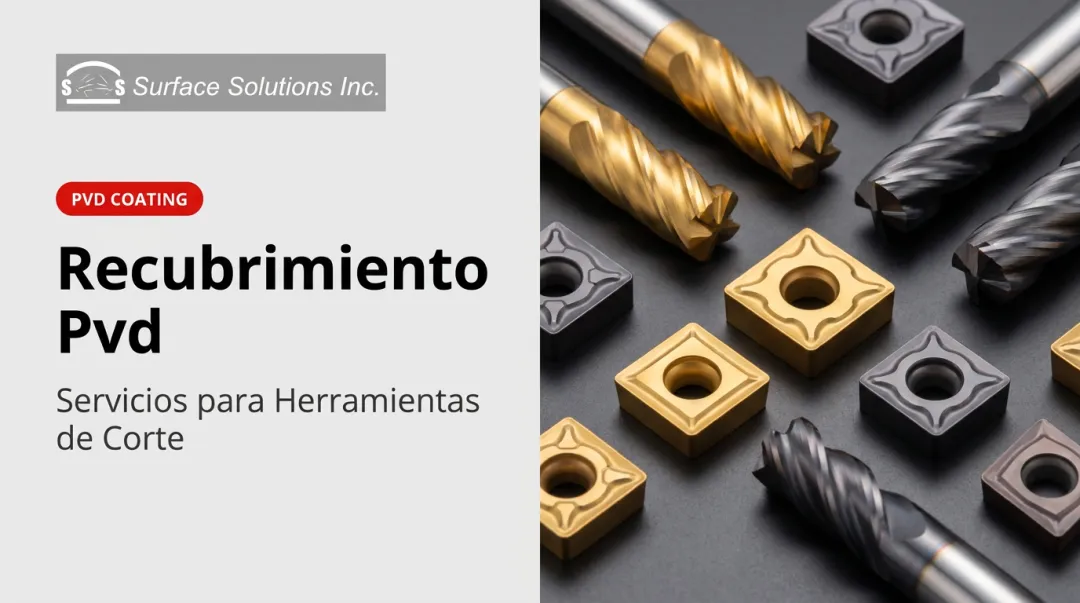
- Precision cutting tool applications
- Injection molding tooling
These are the same segments Surface Solutions serves nationwide, from its Fridley, Minnesota facility reaching Wisconsin and the Upper Midwest within a day or two, and extending service to California, New York, Florida, Canada, and Mexico.
That reach shows up in customer feedback, too. Tony Deschenes, owner of Special Tools, Inc. in St. Francis, MN, put it simply: "Nearly everything we resharpen gets sent out to Surface Solutions for coatings, and the tools come back working better than new."
Applications vary by industry, though:
- Decorative work favors thinner, color-tuned coatings for aesthetics
- Industrial tooling and medical device manufacturing need thicker, harder coatings for wear and corrosion resistance under mechanical stress
Advantages and Limitations of Cathodic Arc PVD
Key Advantages
The high ionization rate lets cathodic arc build dense, well-adhered coatings even at relatively low substrate temperatures. That makes it viable across a wide range of tool steels and heat-sensitive materials without risking distortion.
It also offers wide material compatibility and precise composition control, so manufacturers can tailor hardness, color, and friction characteristics to a specific job.
A stainless steel drawing application documented by Surface Solutions makes this vivid. Alpha™-coated tooling produced about 15 parts before overheating. Switching to CrN coating on the same job pushed output past 500 parts, with parts staying only warm to the touch. Same process family, different coating chemistry, dramatically different thermal performance.
Known Limitations
Cathodic arc is a line-of-sight process. Coating complex geometries evenly can be tricky without substrate rotation or multiple cathode sources positioned around the part.
The other well-known limitation is macroparticle formation, the molten droplets ejected alongside the plasma stream. Left unmanaged, they raise surface roughness and can weaken adhesion. Magnetic filtering, arc steering, and process optimization are used industry-wide to keep this in check.
Surface Solutions shows this directly. Side-by-side testing of Alpha™ versus TiN-coated punches on galvanized steel found Alpha™ produced almost no galvanized buildup and noticeably reduced chipping compared to the TiN-coated punch under identical conditions.

Conclusion
Cathodic arc PVD converts solid metal into ionized plasma through a controlled electric arc. That mechanism produces coatings with a density and adhesion difficult to match with other deposition methods. Each stage, from arc ignition through film condensation, affects hardness, thickness, and finish. Understanding these effects helps manufacturers pick the right coating for their specific wear challenge rather than guessing.
Surface Solutions applies these same cathodic arc PVD principles across its Alpha™, CrN, and TiN coating services, helping manufacturers across the U.S., Canada, and Mexico extend tool life and cut maintenance costs.
Frequently Asked Questions
What is arc PVD?
Arc PVD is another name for cathodic arc deposition. It uses an electric arc to vaporize and ionize a solid target material, forming a hard, thin-film coating on the substrate.
How long does arc PVD coating last?
Lifespan depends on substrate material, coating type, and application, but it consistently outlasts uncoated tools. One Surface Solutions customer went from resharpening every 10,000 parts to running 60,000 parts on a single coating cycle.
What is the difference between cathodic arc deposition and magnetron sputtering?
Cathodic arc vaporizes target material via an electric arc, producing higher ionization and harder films. Magnetron sputtering ejects atoms through ion bombardment, yielding smoother, lower-defect films at lower hardness.
What materials can be coated using cathodic arc PVD?
Common coatings include TiN, CrN, TiAlN, AlTiN, and ZrN. The process works on metals, tool steels, carbides, ceramics, and select composite substrates, though conductivity and thermal tolerance matter.
What are macroparticles in cathodic arc deposition and why do they matter?
Macroparticles are molten droplets ejected from the cathode spot alongside the plasma. They can create surface roughness and adhesion defects, but magnetic filtering and arc steering reduce their impact.
Is cathodic arc PVD coating safe and environmentally friendly?
Yes. It's a dry, vacuum-based process with no hazardous liquid waste stream, unlike electroplating, which commonly generates waste requiring special handling. That makes it a cleaner alternative for hard coating applications.