That's why surface coatings and treatments have become such a heavy focus in implant dentistry. Manufacturers and clinicians are chasing faster healing, higher survival rates, lower peri-implantitis risk, and better outcomes in patients with compromised bone. This article breaks down what these surface modifications actually are, the major categories on the market today, and how to evaluate which one fits a given clinical or manufacturing need.
TL;DR
- Surface coatings modify titanium at the micro/nano level to speed osseointegration and cut complications
- Major categories: mineral (CaP), textured (SLA, anodized), plasma-sprayed, and antibacterial hybrid
- Hydrophilicity and roughness are the two variables most tied to early bone-to-implant contact
- SLA and anodized surfaces show the strongest 10-year survival data, in the high-90% range
- The right coating depends on bone quality, infection risk, and healing timeline, not marketing claims
What Is a Dental Implant Surface Coating and Why Does It Matter?
A dental implant surface coating or treatment is any mechanical, chemical, or physical modification applied to titanium to change its roughness, chemistry, or bioactivity. That's the plain definition. The reason it matters is simpler still: the surface is the only part of the implant that actually touches bone and soft tissue.
Everything else (the alloy grade, thread design, abutment connection, and other design factors) matters less than what happens at that microscopic interface during the first few weeks after placement.
Osseointegration is the process where bone cells form a direct structural bond with the implant surface, rather than scar tissue simply walling it off. Microscopic roughness and surface wettability accelerate this by giving cells more surface area to attach to and a more favorable chemical environment to grow in.
This wasn't always well understood. Early implants were smooth and machined, and outcomes were inconsistent. Modern surfaces are engineered on purpose. But the historical picture is more nuanced than "rough always wins." A direct retrospective comparison of smooth-surface versus rough-surface implants found 94.0% versus 94.5% survival at five years, a difference that wasn't statistically significant.
That doesn't mean surface texture is unimportant. It means roughness and coatings primarily influence:
- Speed of early bone attachment
- Predictability of healing in compromised bone
- Reduced early failure risk in difficult cases
- Consistency of outcomes across patient types
Without adequate surface modification, healing slows, bone-to-implant contact drops, and early failure risk climbs, especially in soft or low-density bone. That's the practical stake here, not a cosmetic detail.

Types of Dental Implant Surface Coatings and Treatments
Coatings aren't one-size-fits-all. Different systems target different problems: faster healing, weak bone, infection risk, or soft tissue integration. Researchers typically compare them using bone-to-implant contact (BIC), resonance frequency analysis (RFA), and long-term survival data rather than marketing copy.
Mineral Coatings (Hydroxyapatite & Calcium Phosphate)
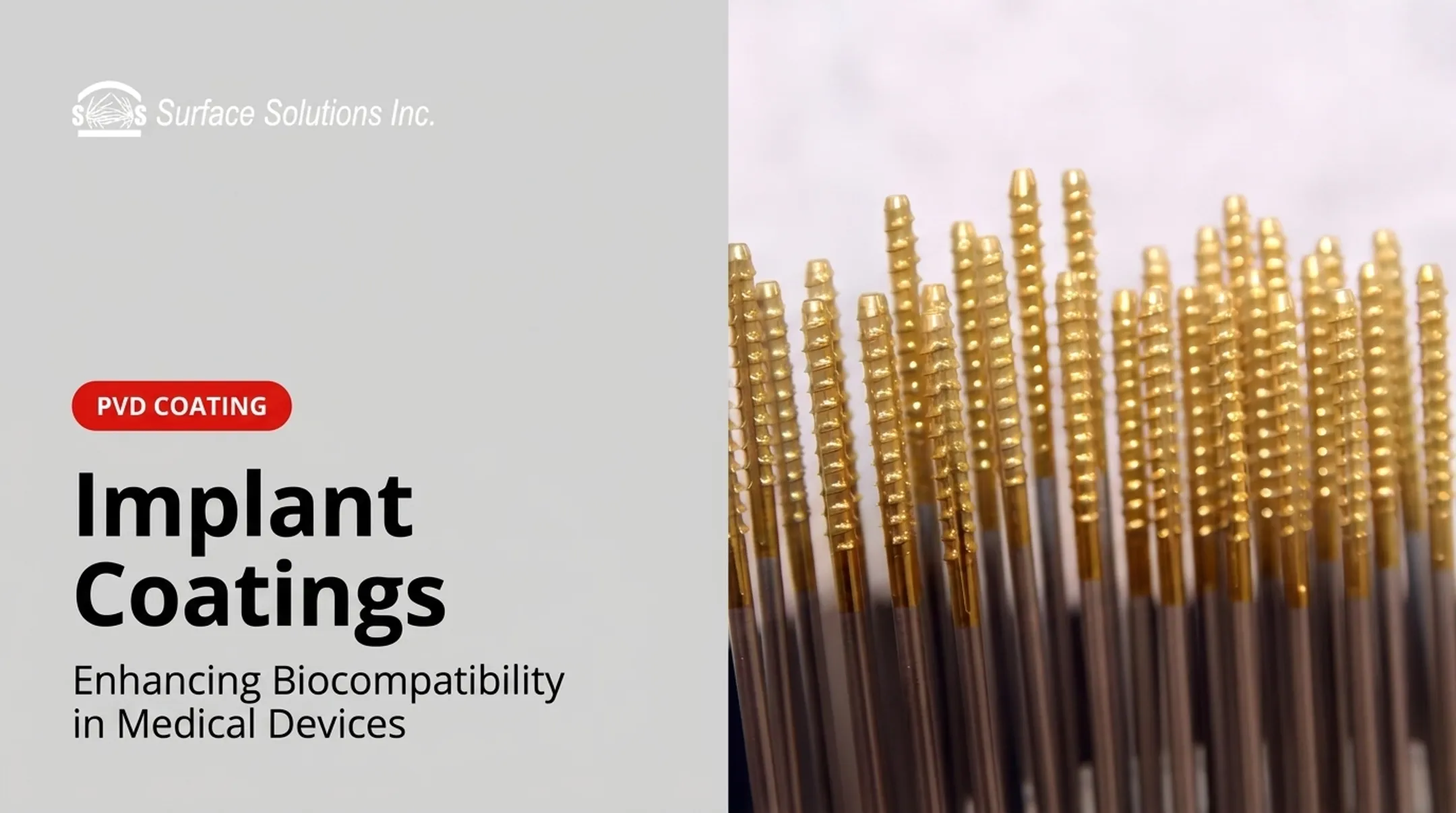
Hydroxyapatite (HA) and calcium phosphate (CaP) coatings apply a bioactive layer that chemically resembles natural bone mineral. They're best suited for patients with compromised or lower-density bone who need faster early integration.
A meta-analysis found HA-coated implant survival ranging from 93.2% to 98.5% over four to eight years, broadly comparable to uncoated titanium in the same literature. The catch is long-term coating integrity.
Retrieval studies have documented cases of significant HA resorption and coating loss over a decade or more, alongside other cases where the coating stayed fully intact. There's no reliable population-level delamination rate, just a documented risk that varies by manufacturing process and patient factors.
Nanostructured & Topographic Surfaces (SLA, Anodized/Anodization)
These surfaces get their roughness from sandblasting and acid-etching (SLA) or from electrochemical anodization, which builds a controlled oxide layer with specific pore structure. This category is the closest thing implant dentistry has to a default choice: broadly reliable and heavily studied.
SLA implants have reported 98.8% survival and 97.0% success at 10 years in a large retrospective cohort, with other studies reporting figures as high as 99.7%. Moderately rough anodized surfaces have posted similarly strong long-term numbers in separate reviews.
The trade-off centers on manufacturing control rather than clinical performance. Both SLA and anodization require tight control over blasting media, acid chemistry, voltage, and timing, and small process drift produces a meaningfully different surface under the same product label.
Plasma-Sprayed Coatings (e.g., Titanium Plasma Spray, HA-TPS)
Plasma spraying melts titanium or HA particles and deposits them onto the implant, building a thick, aggressively rough layer. It's a strong choice when the priority is mechanical fixation right at placement.
The trade-off is coating integrity over time. Plasma processing can introduce cracks, variable thickness, or weak bonding between the coating and the underlying titanium, all of which raise delamination risk in a way that smoother, thinner surfaces don't share.
Primary stability itself depends more on bone quality and osteotomy technique than on the coating alone, so this category shouldn't be treated as a substitute for careful case planning.
Antibacterial & Hybrid Coatings (Silver, Copper, Combination Systems)
This is the newest category: coatings that incorporate silver or copper ions, sometimes combined with osteogenic (bone-forming) properties in a single hybrid system. They're aimed squarely at patients with elevated peri-implantitis risk or a history of implant infection.
Lab studies show real promise: silver and copper surfaces reliably suppress biofilm-forming bacteria in vitro. What's missing is long-term human data. Systematic reviews consistently find these coatings evaluated mostly through laboratory and animal studies, without established evidence for long-term survival or infection prevention in patients. Promising, but still maturing.

How Dental Implant Surface Treatments Are Applied
Application methods fall into three broad groups:
- Mechanical: blasting and grinding to physically roughen the surface
- Chemical: acid-etching and anodization to reshape surface chemistry and oxide structure
- Physical: plasma spraying and ion deposition methods like Physical Vapor Deposition (PVD)
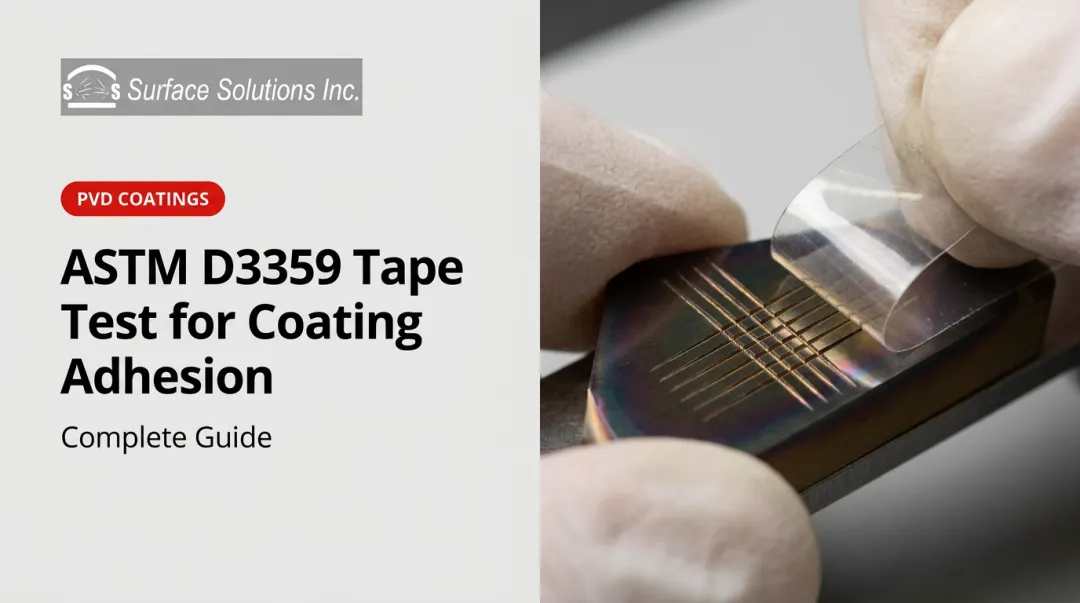
PVD is worth understanding because it applies extremely thin, tightly controlled coatings inside a vacuum chamber, rather than building up a thick sprayed layer. The process depends on precise temperature control and a contamination-free surface. If either slips, adhesion and consistency suffer.
This is where manufacturing discipline matters as much as coating chemistry.
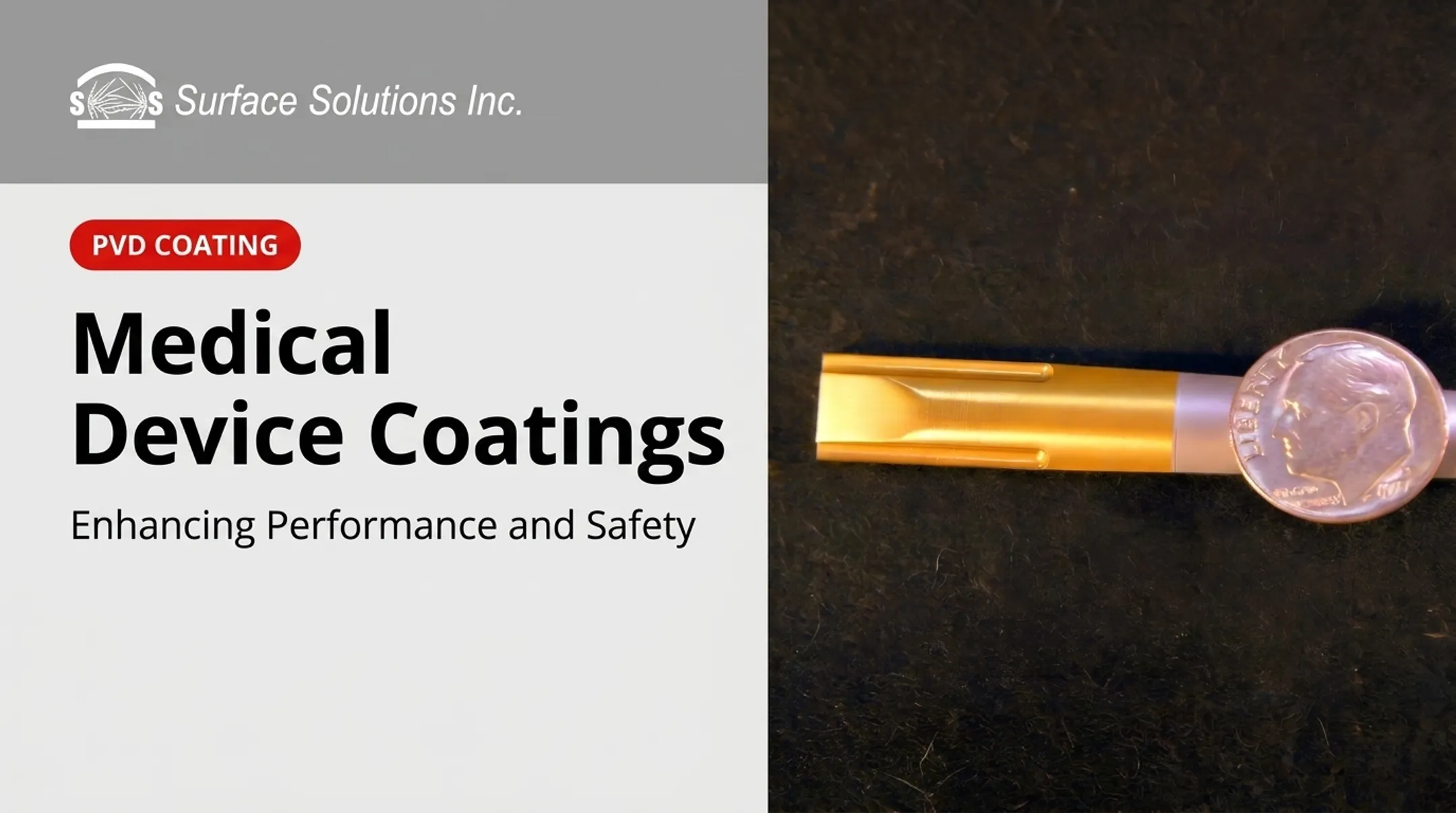
Precision PVD processes were originally developed for high-wear industrial and medical-grade components. The same discipline applies to the PVD coating services that Surface Solutions provides for medical device manufacturers, where consistency in application matters as much as the coating material itself.
Surface Solutions applies coatings such as AlTiN and CrN at controlled thicknesses of roughly 2 to 5 microns, at deposition temperatures between 700°F and 800°F. Masking and traceability are built into the process for medical-grade parts.
That level of process control separates a coating that performs in a lab from one that holds up in real-world use.
How to Choose the Right Surface Treatment
The right surface depends on the clinical case and the available evidence behind it, not brand reputation. Weigh these factors:
- Bone quality and density at the implant site: softer bone often benefits from bioactive HA/CaP or aggressively rough topographic surfaces
- Infection risk profile — patients with a history of peri-implantitis may warrant antibacterial or hybrid systems, though evidence for these remains early-stage
- Desired healing and loading timeline: hydrophilic and nanostructured surfaces show their advantage in the first few weeks, not years
- Strength of clinical evidence behind the specific coating — 10-year cohort data beats a promising lab study
- Manufacturing consistency of the specific implant system: the same surface label can perform differently depending on process control

None of these factors work in isolation. A well-documented surface applied inconsistently will underperform a newer surface applied with tight process control.
Common Mistakes to Avoid & Final Considerations
A few recurring missteps show up when evaluating or selecting implant surfaces:
- Chasing novelty over evidence: choosing a newer, less-studied coating over SLA or anodization without a specific clinical reason to do so.
- Overlooking coating-specific limitations. Plasma-sprayed and HA coatings carry real delamination risk that affects long-term outcomes.
- Treating "SLA" or "anodized" as interchangeable labels, when process consistency between manufacturers drives the actual results.
Implant surface treatments sit at the center of osseointegration success. Different coating types solve different clinical problems, whether that's bone quality, infection risk, or healing speed. Matching the coating to the case, backed by evidence rather than assumption, is what makes outcomes predictable rather than lucky.
Frequently Asked Questions
What are dental implants coated with?
Common coatings include hydroxyapatite/calcium phosphate, plasma-sprayed titanium or HA, and anodized or nanostructured surfaces. Many modern implants also use surface texturing alone, without an added coating layer.
What is the best surface treatment for implants?
Anodized and SLA (sandblasted, acid-etched) surfaces currently have the strongest long-term clinical evidence, with survival rates in the high-90% range at 10 years. The right choice still depends on the specific case.
Do dental implant coatings affect healing time?
Yes. Hydrophilic, textured, and bioactive surfaces generally speed up early bone attachment compared to older smooth or machined surfaces. That early advantage tends to level off by around six weeks.
Are dental implant surface coatings safe?
Widely used coatings like HA and anodized titanium have decades of clinical safety data behind them. Newer antibacterial and nanomaterial coatings are still undergoing long-term safety evaluation.
How long do coated dental implants typically last?
Well-established coatings typically last 10 or more years, with documented success rates exceeding 90%. Actual longevity still depends heavily on patient bone quality, oral hygiene, and maintenance.
What is the newest technology in dental implant surface treatments?
Emerging hybrid and antibacterial coatings, such as copper or silver ion systems, combine bone-forming and infection-preventing properties in one layer. These are promising but still gathering long-term clinical data.