Introduction
Uncoated cutting tools wear out fast. A punch or blade that should last months might need resharpening every few weeks, pulling machines offline and eating into labor budgets.
Physical Vapor Deposition (PVD) blade coating solves this by depositing an ultra-thin, ultra-hard layer onto a tool's surface inside a vacuum chamber. Shops that switch often see tools last up to six times longer between sharpenings. It's used on everything from stamping dies and cutting tools to knife blades and watch cases.
This guide breaks down:
- How the PVD process actually works
- The main coating types and how to tell them apart
- Real production gains manufacturers see after switching
- Where PVD lands compared to paint, powder coat, and Cerakote
Let's start with the fundamentals.
Key Takeaways
- PVD deposits a hard, 2-5 micron coating at low temperatures, preserving the substrate's temper
- Match coating type (TiN, CrN, or Alpha™) to the tool's heat, friction, and wear profile
- Documented results: 6x longer runtime between sharpenings, saving 48 labor hours per production run
- Paint and powder coat can't match PVD's hardness and wear life, despite its higher upfront cost
What Is PVD Blade Coating?
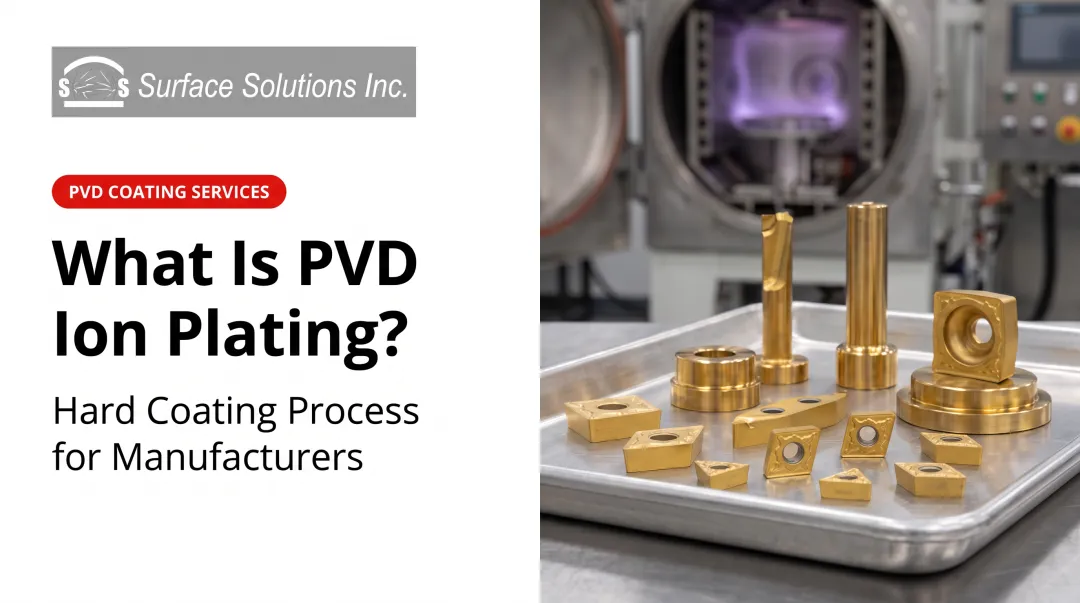
PVD is a physical vapor deposition process. A solid metal source gets vaporized inside a vacuum chamber and deposited as a thin, hard film directly onto the blade or tool surface. No liquid, no chemical bath, no wet paint layer sitting on top of the metal.
The result is an ultra-thin coating, just a few microns deep, that bonds at an atomic level to the substrate. That's a meaningful distinction from powder coating, which sits on the surface as a thicker applied layer.
How the PVD Coating Process Works
The process happens in three stages inside a vacuum environment:
- Cleaning and loading. The blade or tool is thoroughly cleaned to remove oils, oxides, and contaminants, then loaded into the vacuum chamber. Any residue left on the surface will weaken adhesion later.
- Vaporization. A metal source, typically titanium or chromium, is vaporized using an electric arc or sputtering method. This creates a metal plasma inside the chamber.
- Reactive bonding. The vaporized metal reacts with a gas, usually nitrogen, and bonds ionically to the tool's surface. The result is a coating just a few microns thick.

Surface Solutions applies coatings in this 0.0001"-0.0002" (2-5 micron) thickness range, which is thinner than a human hair but still delivers a dramatic hardness increase over the bare steel underneath.
The numbers back this up. One 2023 study measured heat-treated tool steel at 538 HV10, while its CrN-coated surface tested at 1670 HV0.01. Those figures come from different test loads, so they aren't a clean multiplier, but the gap illustrates just how much harder the coated surface becomes compared to bare steel.
PVD vs. CVD (Chemical Vapor Deposition)
CVD relies on high-temperature chemical reactions to build its coating, typically running between 720°C and 1050°C. PVD works at much lower temperatures.
Ionbond lists typical PVD processing between 250°C and 450°C, and Surface Solutions runs its coatings even lower, around 700°F-800°F (roughly 370°C-425°C).
Why does this matter? Lower heat means the substrate's original temper and hardness stay intact. CVD's higher temperatures can require a full re-heat-treatment cycle afterward just to restore the tool's core properties. PVD generally skips that step entirely, sparing precision stamping dies and injection molds from the downtime and tolerance risk that extra cycle can introduce.
Types of PVD Blade Coatings
Not all PVD coatings behave the same way. Chemistry, color, and application all shift depending on which metal and gas combination gets used.
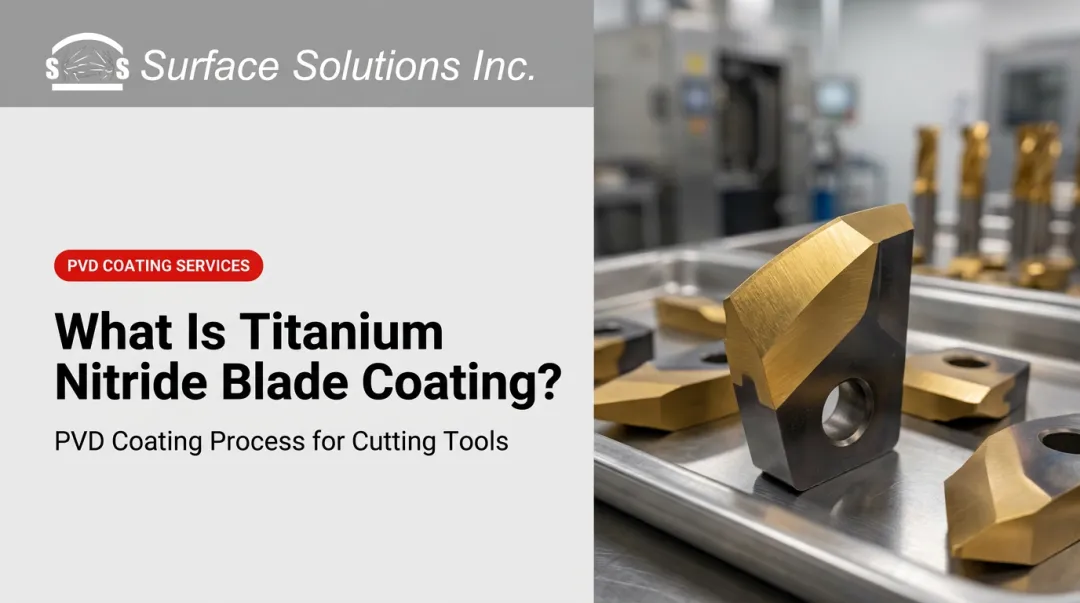
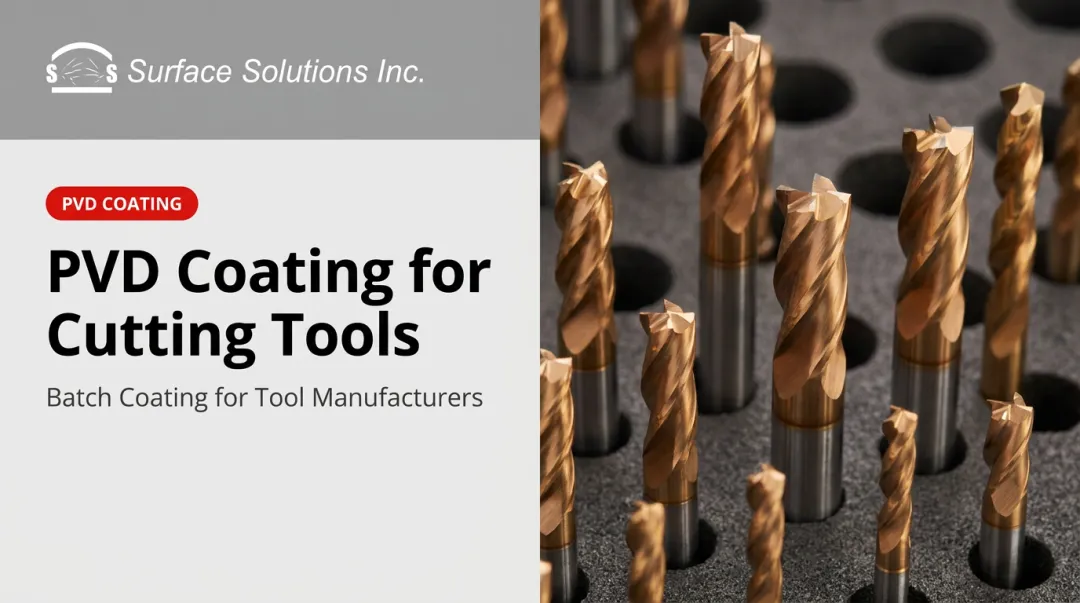
Titanium Nitride (TiN) The most common and economical PVD coating. Recognizable by its gold finish, TiN offers solid, moderate wear resistance for general-purpose cutting and forming tools.
Chromium Nitride (CrN) CrN excels where heat and friction run high. It resists corrosion and galling better than TiN, which matters in sheet metal drawing and stainless steel forming.
In one documented stainless steel drawing application, tooling coated with CrN produced over 500 parts while staying just warm to the touch. A standard coating, by comparison, produced only 15 parts before running too hot to handle.
Diamond-Like Carbon (DLC) DLC is an ultra-hard, low-friction black coating applied via PVD or hybrid vapor deposition. It resists sticking, especially in applications prone to material buildup.
Proprietary multi-layer blends Advanced formulations go beyond basic TiN. Surface Solutions' Alpha™ coating, for example, is built to eliminate extra finishing steps.
One metal forming customer reported: "We used to polish a few times a run. Now, with the Alpha™ coating, we have never had to polish."
Another customer running M4 punches through galvanized steel found Alpha showed almost no galvanized buildup, compared to noticeably more buildup on TiN-coated punches over the same run.
A quick color guide:
| Color | Likely Coating Type |
|---|---|
| Gold | TiN |
| Silver-gray | CrN |
| Black | DLC or advanced blends like Alpha |
Benefits of PVD Blade Coating
The case for PVD comes down to fewer stoppages and lower total cost per part produced.
Extended Tool Life and Reduced Downtime
A hard PVD layer keeps a cutting edge intact through far more cycles than uncoated steel. One documented case saw tools run a full 60,000-part order without resharpening, compared to a previous baseline of just 10,000 parts on uncoated tools, a 6x improvement.
That improvement also cuts hours lost to maintenance. Eliminating six resharpening cycles on a single run saved 48 hours of labor, since each die removal, sharpen, and reinstall cycle typically eats up around four hours.

Cleaner Output and Wear Resistance
PVD's low-friction surface reduces material sticking during forming and cutting, so customers use less lubricant while getting a better-finished product with no need for mid-run polishing.
The coating also acts as a barrier against oxidation and abrasive wear. This matters most for non-stainless tool steels that would otherwise corrode or gall under repeated contact.
Long-Term Cost Efficiency
PVD carries an upfront cost, documented in one case study at $2.50-$4.00 per tool depending on size. But when you factor in fewer part rejects, less downtime, and longer intervals between maintenance, most manufacturers see a lower total cost of ownership across the tool's working life.
PVD vs. Other Blade Coating Methods
Paint and powder coatings are thicker and less wear-resistant than PVD. They're prone to chipping under heavy production use, and once damaged, they don't offer much protection against abrasive contact.
Ceramic coatings like Cerakote address some of these durability issues while adding far more flexibility in color and pattern. However, they generally fall short of PVD or DLC on hardness and wear life, making them a better fit for cosmetic or lower-stress applications than high-volume tooling.
Here's how the main options compare:
| Method | Hardness | Friction | Typical Wear Life |
|---|---|---|---|
| Paint | Low | Medium-High | Low |
| Powder Coat | Low-Medium | Medium | Low-Medium |
| Cerakote/Ceramic | Medium | Low-Medium | Medium |
| PVD (TiN/CrN) | High | Low-Medium | High |
| DLC | Very High | Very Low | High |
Ratings are qualitative and vary by specific product and test method, so always trial a coating on your actual substrate before committing to a full production run. Surface Solutions applies the PVD coatings on this table (TiN, AlTiN, CrN, TiCN, and Alpha™), not ceramic or DLC processes.
Industries and Applications of PVD Blade Coating
Metal Forming, Punching, and Sheet Metal Drawing
PVD-coated punches and dies withstand high-volume production with far less maintenance downtime. Trade reporting identifies PVD as one of three established coating families used on dies stamping advanced high-strength steel, alongside CVD and thermal diffusion.
Cutting Tools and Medical Device Manufacturing
Precision cutting applications demand coatings that stay sharp, resist friction, and don't shed particles into sensitive processes. Surface Solutions' AlTiN coatings, for instance, are documented at 4,000-4,200 HV, holding up under heat and repeated contact in demanding tooling environments.
Medical instrument makers use PVD for similar reasons, though any device requires its own biocompatibility evaluation. Coating chemistry alone doesn't establish that.
Consumer and Specialty Applications
PVD's industrial roots also show up in everyday products. Knife blades and watch cases use it for scratch resistance and appearance. PVD resists scratches but isn't scratch-proof; a damaged dark PVD layer can reveal contrasting base metal underneath.
Choosing the Right PVD Coating Provider
Not every coating shop delivers the same results. A few things separate a good provider from a great one.
- Turnaround time. Extended tool downtime costs money. Look for a provider with a track record of reliable, fast turnaround, not just a low quote.
- Coating-to-application match. A provider should match TiN, CrN, AlTiN, or a proprietary blend to your tool's actual wear, heat, and friction demands, not push one coating for everything.
- Documented performance. Ask for real numbers, not vague promises about wear resistance.
Surface Solutions, serving manufacturers across the U.S., Canada, and Mexico, backs its coatings with documented results: AlTiN delivers 2-7x tool life over uncoated tools.

One resharpening business owner summed up the difference simply: "His tools are working better than new. It's like night and day."
If you're evaluating providers, ask for a quote based on your specific part and material rather than a generic price list. Coating needs vary too much for one-size-fits-all pricing to mean much.
Frequently Asked Questions
What are the different types of blade coatings?
Main categories include paint, powder coat, ceramic/Cerakote finishes, and vapor deposition coatings like TiN, PVD, and DLC. PVD stands out for combining extreme hardness with an ultra-thin profile.
What is a PVD blade coating?
PVD is a vacuum-based process that deposits a thin, hard metal coating onto a blade or tool surface. It improves wear resistance and reduces friction without adding meaningful thickness.
What is DLC blade coating?
DLC, or diamond-like carbon, is a black coating often applied via vapor deposition. It's known for extreme hardness paired with very low friction, making it useful against sticking and galling.
What is the best coating for cutting tool blades?
DLC and PVD are top performers for durability and edge retention on industrial cutting blades. The right choice depends on intended use, budget, and desired appearance.
Is PVD coating better than powder coating for industrial tools?
PVD offers superior hardness and wear life, making it better suited for high-production tooling. Powder coating works fine for lower-stress, cosmetic applications where extreme durability isn't required.
How long does a PVD blade coating last?
PVD coatings can last far longer than uncoated tools or basic coatings. The exact lifespan depends on the application, base material, and specific coating type used.