Many shops still choose bits based on price or brand familiarity, without understanding what the coating actually does. That's a costly mistake. Uncoated tools dull faster, chip more often, and drive up per-part costs through constant resharpening and replacement.
A drilling study on Ti-6Al-4V titanium found that TiAlN-coated carbide drills significantly outperformed uncoated tools across every tested speed, according to a 2007 study published in the International Journal of Machine Tools and Manufacture. This guide breaks down the major coating types, how they differ, and how to match one to your material and application.
Key Takeaways
- Drill bit coatings fall into three categories: PVD films, chemical conversion, and alloying
- PVD options include TiN, TiCN, TiAlN, and CrN, each suited to different jobs
- No single coating wins every job — trade-offs exist between hardness, heat resistance, and cost
- A Surface Solutions customer got 6x more parts before resharpening after upgrading to PVD coating
- Recoating worn tools with specialty PVD layers is often cheaper than buying replacements
What Is Drill Bit Coating & Why It Matters
What Is a Drill Bit Coating?
A drill bit coating is a thin engineered layer applied to the tool's surface to change how it behaves under stress: its hardness, its friction against the workpiece, and how it manages heat.
Coatings are applied three different ways:
- PVD (physical vapor deposition): vacuum-deposited films like TiN, TiCN, AlTiN, and CrN, typically only 2 to 5 microns thick
- Chemical conversion: black oxide, which reacts with the steel surface itself rather than sitting on top of it
- Alloying: cobalt mixed directly into the steel during manufacturing, technically not a surface coating at all
That gold, blue-gray, or black tint you see on a bit signals the specific chemistry doing the work underneath.
Why Coatings Matter for Drilling Performance
Friction and heat are the two forces that destroy a drill bit. Every rotation generates resistance against the workpiece, and that resistance turns into heat at the cutting edge. Left unmanaged, heat softens the tool, accelerates wear, and causes built-up edge (BUE), where workpiece material welds itself to the bit and ruins hole quality.
A properly matched coating interrupts that cycle. The tool life gains can be dramatic:
- One Surface Solutions customer, Don Richardson, ran 60,000 parts without resharpening after switching to an advanced PVD coating, up from a previous baseline of 10,000 parts. That's a documented 6x improvement.
- The same customer calculated 48 hours of labor saved by eliminating six resharpening cycles at 8 hours each.
- Surface Solutions' AlTiN coating data shows 2 to 7x tool life over uncoated tools, depending on application.

Without an appropriate coating, expect faster dulling, more frequent resharpening, inconsistent hole diameters, and a steadily rising cost per part.
Types of Drill Bit Coatings
Coatings aren't interchangeable. Each one balances hardness, friction, heat resistance, and cost differently, which is why the right choice depends entirely on what you're drilling and how fast.
Titanium Nitride (TiN) Coating
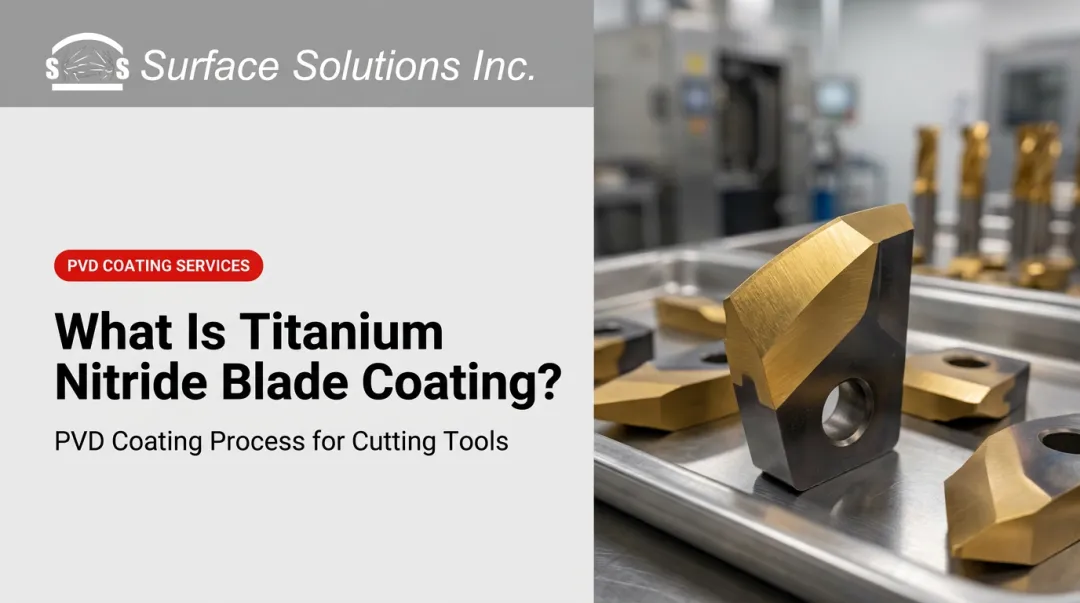
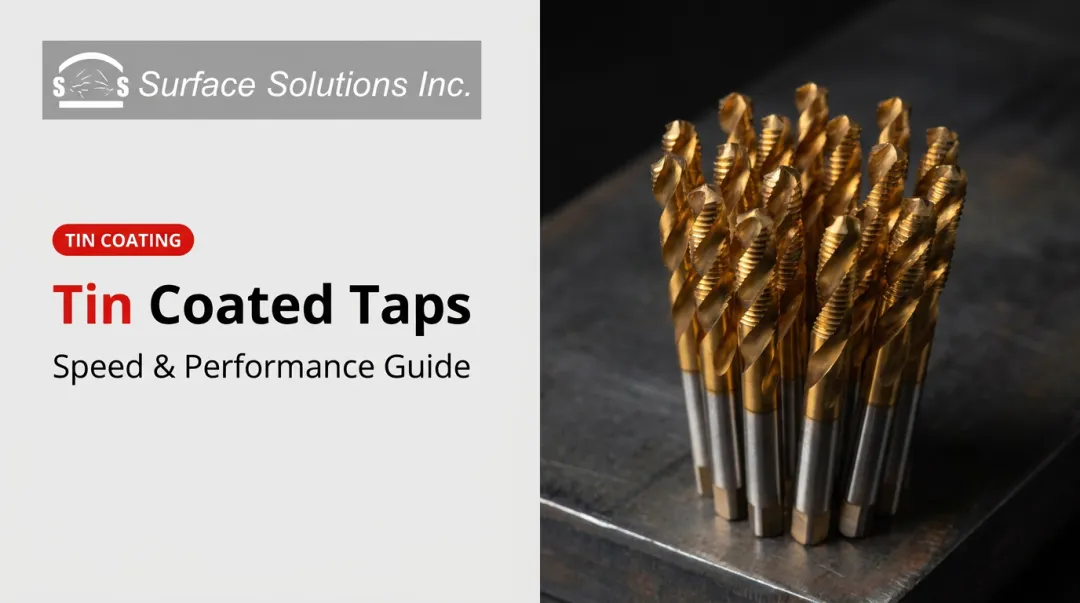
TiN is the most recognizable drill bit coating: that gold tint you've probably seen on hardware store bits. It's a PVD ceramic film of titanium and nitrogen, and it's the industry's entry-level upgrade over bare steel.
- Best for: general-purpose drilling in wood, plastics, and softer metals
- Strength: meaningfully harder and lower-friction than uncoated steel; manufacturer data puts TiN hardness in the 2,400 to 2,800 HV range
- Limitation: performance drops off in high-heat, heavy-duty industrial work: TiN simply isn't built for sustained thermal stress
Titanium Carbonitride (TiCN) Coating
Add carbon to TiN and you get TiCN — harder, lower-friction, and tinted blue-gray instead of gold.
- Best for: tougher materials like stainless steel and cast iron, plus high-speed or repetitive drilling runs
- Strength: notably harder than TiN with roughly half the dry friction coefficient against steel, according to Guhring's published coating specifications
- Limitation: costs more than basic TiN, and its oxidation resistance tops out lower than TiN's, meaning it doesn't necessarily handle extreme heat any better
Titanium Aluminum Nitride (TiAlN) Coating
TiAlN adds aluminum to the mix, and that addition changes everything at high temperatures. When the coating heats up during cutting, it forms a protective aluminum oxide layer right at the surface, reinforcing itself under stress.
- Best for: high-speed, dry, or heavy-duty machining of hard metals and alloys where heat is the primary enemy
- Strength: the strongest thermal stability of the standard PVD coatings, with oxidation resistance rated well above both TiN and TiCN
- Limitation: higher upfront cost, and often unnecessary for light-duty jobs where a cheaper coating would perform just fine
Black Oxide Coating
Black oxide isn't a deposited film at all. It's a chemical conversion process that turns the outer layer of steel into magnetite, a process that produces negligible dimensional change and relies on oil or wax finishes for most of its corrosion resistance.
- Best for: general-purpose work on wood, plastic, and softer metals, especially in environments with moisture exposure
- Strength: strong corrosion resistance at a low cost
- Limitation: the softest option on this list, wearing quickly under heavy industrial use
Cobalt-Infused Bits
Cobalt works as an alloying element mixed directly into the steel rather than a surface coating, which is why it survives resharpening in a way surface films can't. M35 tool steel runs about 5% cobalt content, while M42 pushes to 8%.
- Best for: stainless steel, titanium, and other hard, heat-generating materials in demanding industrial settings
- Strength: exceptional heat resistance and retained sharpness under sustained stress
- Limitation: higher material cost than coated high-speed steel bits
Specialty PVD Coatings (CrN, Diamond & Beyond)
Chromium nitride (CrN) is the standout specialty option, known for minimal galling and strong release properties. Surface Solutions has documented this directly: in a stainless steel drawing application, Alpha™-coated tooling managed only 15 parts before overheating, while CrN produced over 500 parts with the workpieces staying just warm to the touch.
Advanced formulations push further still:
- Alpha™ coating has shown almost no galvanized build-up in side-by-side testing against TiN, according to a Surface Solutions stamping customer running identical punches under matched conditions
- Diamond coatings handle extreme applications — ceramics, composites, glass — where standard PVD films can't survive the abrasion

If TiN or TiCN stops meeting your throughput or part-quality targets, this is the tier worth evaluating next.
| Coating | Mechanism | Best Fit | Watch For |
|---|---|---|---|
| TiN | PVD film | General purpose, wood/plastic/soft metal | Limited heat tolerance |
| TiCN | PVD film | Stainless, cast iron, high-speed work | Lower oxidation ceiling than TiN |
| TiAlN | PVD film | Dry/high-speed, hard alloys | Higher upfront cost |
| Black Oxide | Chemical conversion | Moisture-prone, light-duty work | Wears fastest under load |
| Cobalt | Alloy (bulk) | Stainless, titanium, hard materials | Pricier substrate |
| CrN/Alpha | PVD film | Anti-galling, forming/drawing | Specialty pricing |
How to Choose the Right Drill Bit Coating
The right coating is the one matched to your material, your operating conditions, and your budget, not simply the most expensive or advanced option on the shelf.
Four factors drive that decision:
- Workpiece material. Wood and soft plastics rarely need more than TiN or black oxide. Stainless steel, titanium, and exotic alloys demand TiCN, TiAlN, or cobalt-alloy bits capable of handling sustained heat and abrasion.
- Heat and speed of operation. High-speed or dry drilling generates far more thermal stress than slow, lubricated cutting. That's exactly where TiAlN and specialty coatings like CrN earn their premium: they're built for oxidation resistance under sustained heat.
- Expected tool life and duty cycle. A prototype shop drilling a handful of holes a week doesn't need the same coating as a high-volume production line running three shifts. Higher volume justifies premium coatings that reduce downtime for resharpening.
- Budget versus performance trade-off. Weigh the upfront coating cost against labor and downtime saved from fewer bit changes. Surface Solutions' customer data shows coated bits producing up to 6x more parts before resharpening than uncoated tools, often enough to offset the price difference within the first production run.
Common mistakes to avoid:
- Choosing the most advanced coating when a simpler, cheaper one would perform identically
- Ignoring a coating's published heat limitations and running it past its rated threshold
- Picking a coating out of familiarity rather than checking it against the actual material being drilled
Maintenance & Recoating: Extending Coated Drill Bit Life
Coated bits aren't maintenance-free. Basic care still matters:
- Clean bits after use to remove chip residue and built-up material
- Store them properly to avoid nicks that expose bare steel underneath the coating
- Avoid running past the coating's rated heat threshold, even briefly
When a coating finally does wear through, replacement isn't the only option. Recoating (stripping the worn layer and reapplying a fresh PVD film) often restores a tool to its original spec, or beyond it.
Tony Deschenes, owner of Special Tools, Inc., a cutting tool resharpening service, put it plainly: tools sent out for recoating come back "working better than new. It's like night and day." He now sends nearly everything his shop resharpens out for coating, and customers who try it once tend to want everything they own coated afterward.
Surface Solutions provides this kind of recoating service across the United States, Canada, and Mexico, using PVD layers like CrN and Alpha™ that reduce resharpening frequency compared to standard factory coatings. For shops evaluating whether to recoat existing tooling, requesting a quote is usually faster than sourcing a full replacement order.

Conclusion
The coating on a drill bit handles most of the wear from friction and heat, not just the surface finish. Get that layer wrong, and you'll fight premature wear, inconsistent holes, and rising per-part costs no matter how good the base steel is.
Different jobs call for different coatings. Black oxide and TiN cover general-purpose work affordably. TiCN and TiAlN step up for tougher materials and higher speeds. Cobalt alloys and specialty PVD films like CrN handle the most demanding conditions.
Understanding those differences, and knowing when recoating beats buying new, is what separates shops that manage tooling costs from shops that just absorb them. Surface Solutions applies PVD coatings such as TiN, AlTiN, TiCN, and CrN for manufacturers recoating batches of tooling rather than replacing it outright.
Frequently Asked Questions
How are drill bits coated?
Coatings are applied through PVD (vacuum deposition of TiN, TiCN, CrN, or similar films), chemical conversion (black oxide), or alloying cobalt directly into the steel during manufacturing.
What is the best coating for drill bits?
There's no universal answer: it depends on material and application. TiAlN or specialty PVD coatings suit hard metals and high heat, while TiN or black oxide handle general-purpose work fine.
Why are there different drill bit coatings?
Materials, speeds, and heat levels vary by job, and no single coating maximizes hardness, friction reduction, cost, and heat resistance all at once.
What is the titanium nitride coating on drill bits?
TiN is a gold-colored PVD ceramic film of titanium and nitrogen that increases hardness and reduces friction. It's the standard entry-level upgrade over uncoated bits.
Can drill bit coatings be reapplied or recoated?
Yes. Worn coatings can typically be stripped and reapplied through professional PVD recoating services, often restoring or exceeding original tool performance.
How long do drill bit coatings typically last?
Lifespan depends heavily on coating type, material drilled, and operating conditions. Surface Solutions customers have documented improvements ranging from 2x to 6x longer intervals between resharpenings compared to uncoated tools.