Picking the wrong one isn't a minor mistake. It shows up as shortened tool life, higher cost per part, and unplanned downtime on the shop floor. This guide breaks down how each process works, where each one shines, and how to decide which fits your application.
TL;DR
- PVD: Physical vapor process in vacuum at ~150–500°C (300–930°F)—best for sharp edges and heat-sensitive substrates
- CVD: Chemical gas-phase process at ~700–1050°C (1290–1920°F)—thicker, highly conformal coatings
- PVD fits precision tools, interrupted cuts, and forming; CVD fits continuous, high-heat, high-volume machining
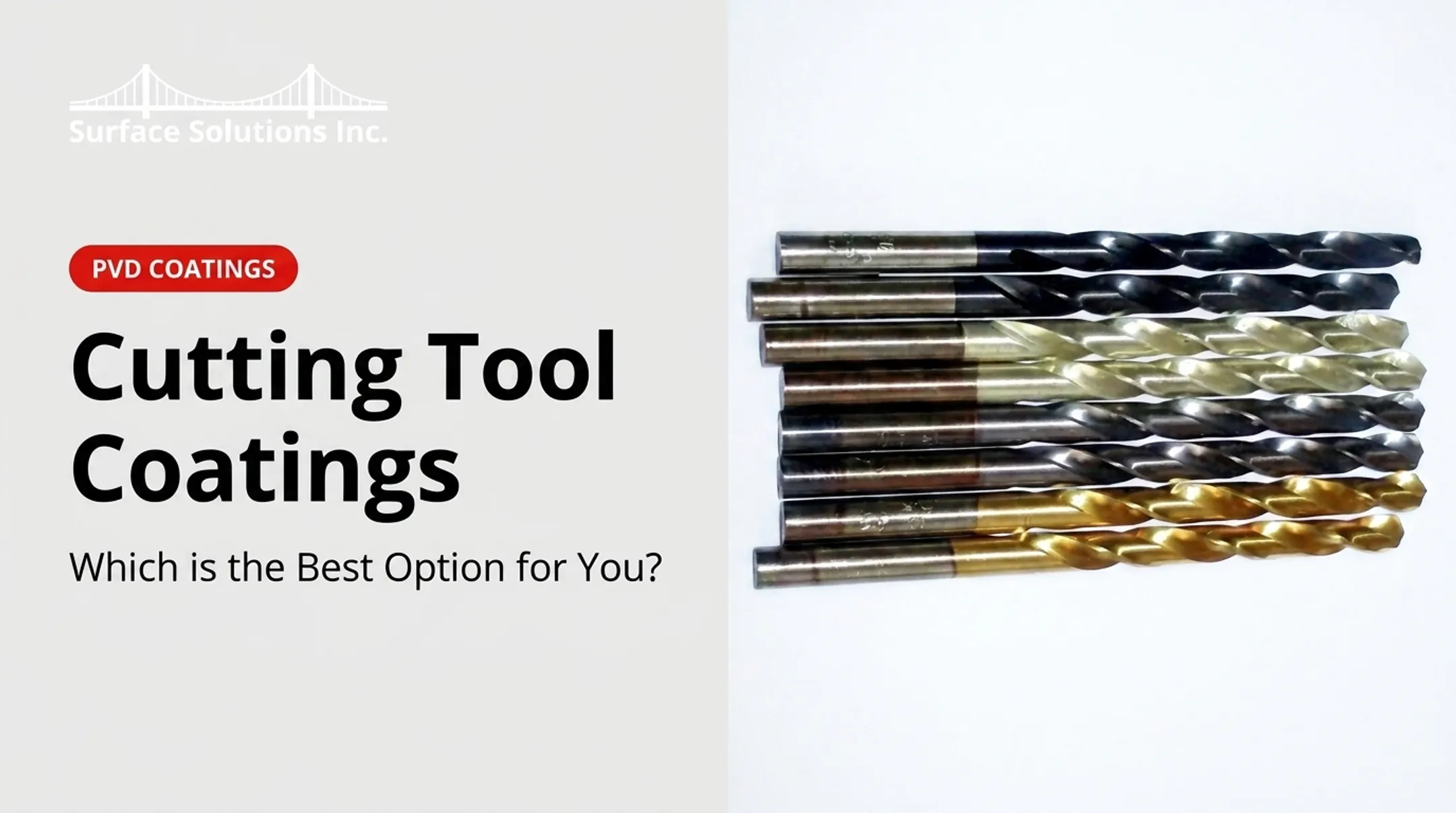
- Both extend tool life; pick by substrate, geometry, and operating conditions
CVD vs PVD: Quick Comparison
| Factor | PVD | CVD |
|---|---|---|
| Process type | Physical (evaporation/sputtering) | Chemical (gas-phase reaction) |
| Temperature | Lower range, safer for sensitive substrates | Much higher, limits substrate choices |
| Thickness & conformity | Thinner, largely line-of-sight | Thicker, highly conformal on complex shapes |
| Adhesion & durability | Strong adhesion, tunable hardness | Excellent adhesion, superior wear resistance |
| Best use cases | Precision tools, interrupted cuts, forming dies | Heavy roughing, continuous high-heat operations |

Oerlikon reports PVD process temperatures generally in the 150–500°C range (about 300–930°F). Sandvik places its cutting-tool CVD processes closer to 700–1050°C (about 1290–1920°F)—a gap wide enough to decide which substrates can survive the coating cycle.
What Is PVD Coating?
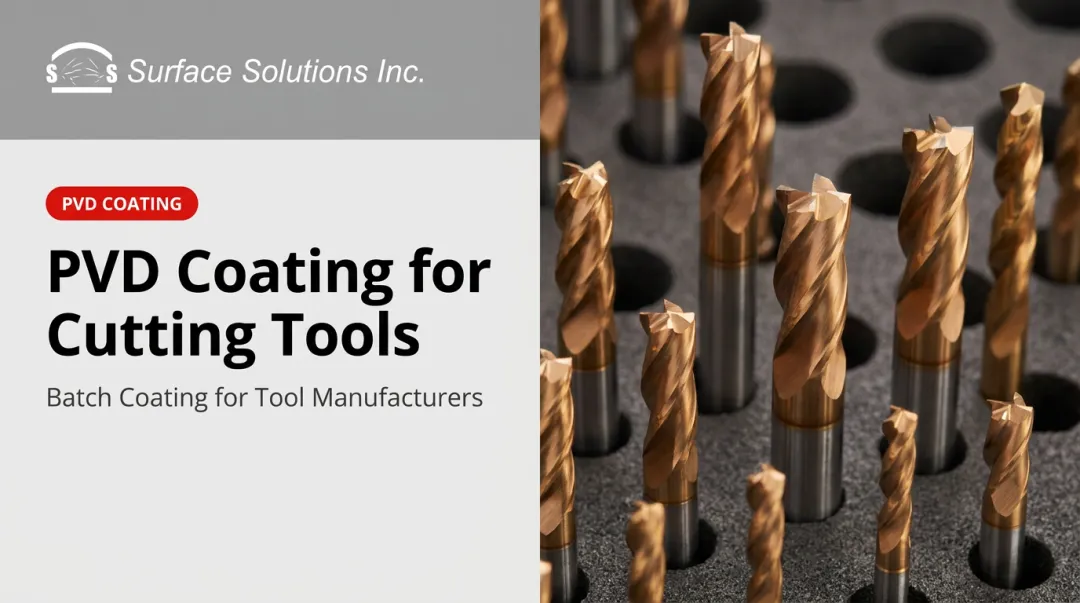
PVD is a vacuum-based process. The process vaporizes a solid coating material, then deposits it as a thin, controlled film onto the substrate. No chemical reaction produces the film; it's a physical transfer from solid to vapor to solid again.
Core benefits for manufacturers:
- Enhanced surface hardness without altering the base material's core properties
- Lower friction, which reduces galling and material buildup
- Better wear resistance, which means fewer tool changes and less downtime
PVD has two common sub-methods:
- Sputtering: ionized gas bombards a target material, ejecting vapor onto the part
- Evaporation (cathodic arc): repeated vacuum arc discharges vaporize the target material
Both produce hard, thin films, but deposition rate, density, and uniformity vary by method and equipment setup.

Use Cases of PVD
PVD coatings are widely used in metal forming and machining:
- Punches, dies, and stamping tools
- Cutting tools, drills, and taps
- Medical instruments requiring biocompatibility and low friction
- Firearm components
Industries that rely on PVD include automotive stamping, aerospace component manufacturing, medical device production, and tool resharpening services. At Surface Solutions, Alpha™ and CrN PVD coatings are commonly applied to punches, dies, and forming tools where edge retention and reduced buildup matter more than raw heat tolerance.
What Is CVD Coating?
CVD (Chemical Vapor Deposition) forms a solid film when gaseous chemical precursors react at high temperature on the substrate surface. Because the coating grows from a chemical reaction rather than a physical vapor stream, it can wrap complex geometries—including internal surfaces that PVD's line-of-sight process can't easily reach.
Core benefits:
- Thick, conformal coatings that resist crater wear
- Excellent adhesion to cemented carbide substrates
- Strong performance in continuous, high-heat cutting operations
Two common CVD variants:
- LPCVD (Low-Pressure CVD): thermal chemistry at reduced pressure
- PECVD (Plasma-Enhanced CVD): plasma-activated reaction with lower thermal burden than standard thermal CVD
Use Cases of CVD
CVD is the standard choice when wear resistance matters more than edge sharpness:
- Turning and indexable inserts
- Continuous, high-heat machining of steel and cast iron
- General turning, boring, and milling (Sandvik's preferred pick in these roles)
A 2024 peer-reviewed study on dry-turning AISI 4340 steel found CVD-coated tools lasted 14.75 minutes versus 10.08 minutes for PVD-coated tools under the same low-speed conditions: 31% longer tool life for CVD in that scenario.
The same study also found PVD produced less flank wear in other runs. Neither process wins universally.

CVD vs PVD: What's Better?
Neither coating wins in every application. The right answer depends on four factors:
- Substrate sensitivity: Heat-treated tool steels and fine-grained carbides can lose toughness under CVD's higher temperatures. PVD's lower thermal load protects these substrates.
- Geometry complexity: Internal or highly complex geometries favor CVD's conformal chemistry over PVD's line-of-sight limitations.
- Operating temperature: Continuous high-heat cutting favors CVD's thermal-barrier behavior. Interrupted cuts favor PVD's toughness and crack resistance.
- Production volume: High-volume steel and cast iron machining commonly uses CVD; precision or forming work commonly uses PVD.
Quick rule of thumb: Choose PVD for precision, interrupted cuts, and heat-sensitive tools. Choose CVD for continuous, high-heat, high-volume machining.
Real-World Example: PVD Coating for Metal Forming Tools
One customer running a high-volume stamping die faced a recurring problem. Their uncoated D2 punches, stamping 0.057-inch galvanized steel at roughly one stroke per second for 8 to 16 hours a day, needed resharpening every three weeks.
Each maintenance cycle meant pulling the die, disassembling it, sharpening the punches, and reassembling—at least three hours of labor per event, not counting production downtime.
The problems:
- Frequent chipping on the punch edges
- Heavy galvanized-steel buildup during production
- Constant maintenance interrupting the production schedule
The fix: switching to M4 punches coated with Alpha™ PVD coating.
The results:
- Coated punches ran more than 15 months in continuous service
- Estimated 15 million parts produced before major maintenance
- Almost no galvanized buildup compared to the previous TiN-coated trial
- Noticeably less chipping

In a separate customer case, switching to Alpha™ coating pushed one production run from a normal 10,000-part resharpening limit to 60,000 parts, a sixfold increase that saved an estimated 48 hours of labor by avoiding six separate sharpening events.
For punching and forming applications where edge retention and reduced buildup drive profitability, PVD coatings routinely outperform uncoated or standard TiN-coated tooling. If your dies or punches are facing similar wear patterns, contact Surface Solutions to evaluate whether a PVD coating fits your tooling needs.
Conclusion
Neither CVD nor PVD is universally better. The right choice depends on substrate sensitivity, part geometry, temperature exposure, and production volume. Match the process to the actual failure mode your tools experience.
For manufacturers dealing with frequent resharpening, chipping, or buildup on forming and stamping tools, PVD coating often delivers the fastest, most measurable return: fewer sharpening cycles, less downtime, and a lower cost per part.
Frequently Asked Questions
What is the difference between PVD and CVD coating?
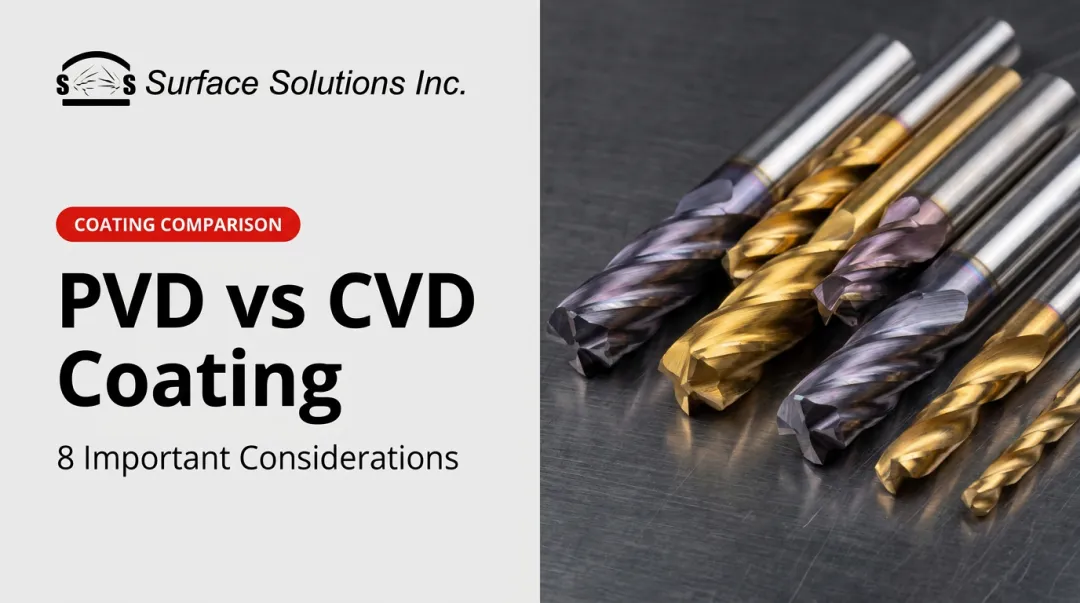
PVD is a physical process that vaporizes material in a vacuum at lower temperatures, producing thin, hard films. CVD is a chemical process using gas-phase reactions at much higher temperatures, producing thicker, more conformal coatings.
Is PVD coating toxic to humans?
PVD coatings are safe once applied, with no hazardous gas byproducts during normal use. As with any coated tool, review the specific coating's safety data sheet and control dust exposure during grinding or stripping.
Is sputtering CVD or PVD?
Sputtering is a PVD method. It uses ionized gas to bombard a target material, ejecting vapor that deposits onto the substrate as a thin film.
Which is better, PVD or DLC coating?
DLC (Diamond-Like Carbon) is a coating material, not a single process. It's commonly applied via PVD or PECVD. The best choice depends on the friction and wear properties your application needs, not a blanket comparison.
How long do PVD and CVD coatings typically last?
Coating lifespan depends heavily on substrate, application, load, and operating conditions. Both processes outperform uncoated tools; some PVD-coated punches have run 15+ months versus weeks for uncoated tooling.
Can PVD and CVD coatings be applied to the same tool?
Yes, some manufacturers layer CVD base coatings with PVD top layers for combined performance benefits. Most tools, however, use one primary process suited to their specific application and substrate.