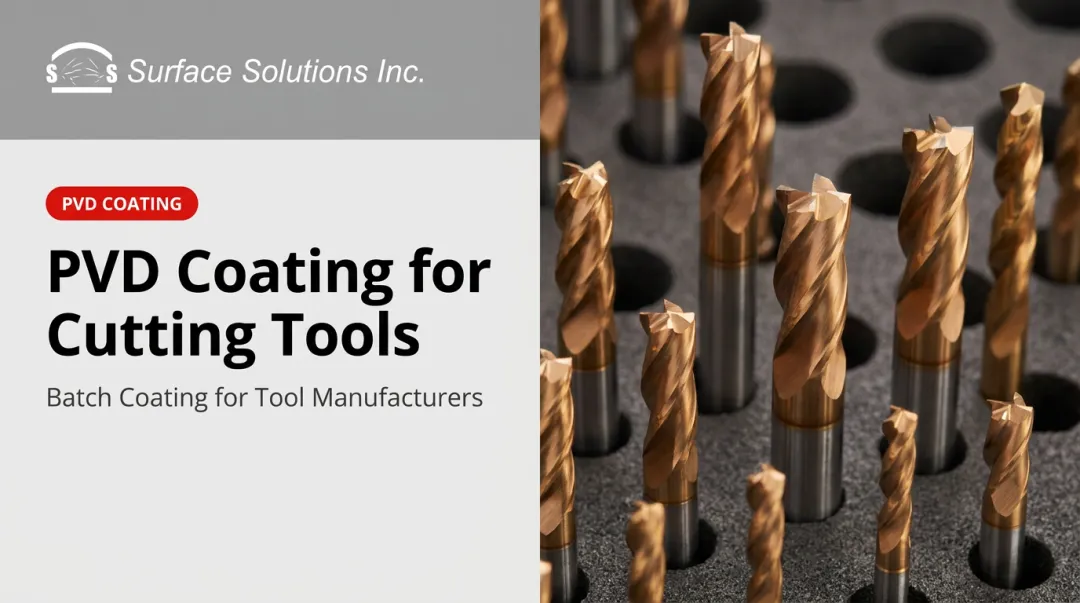
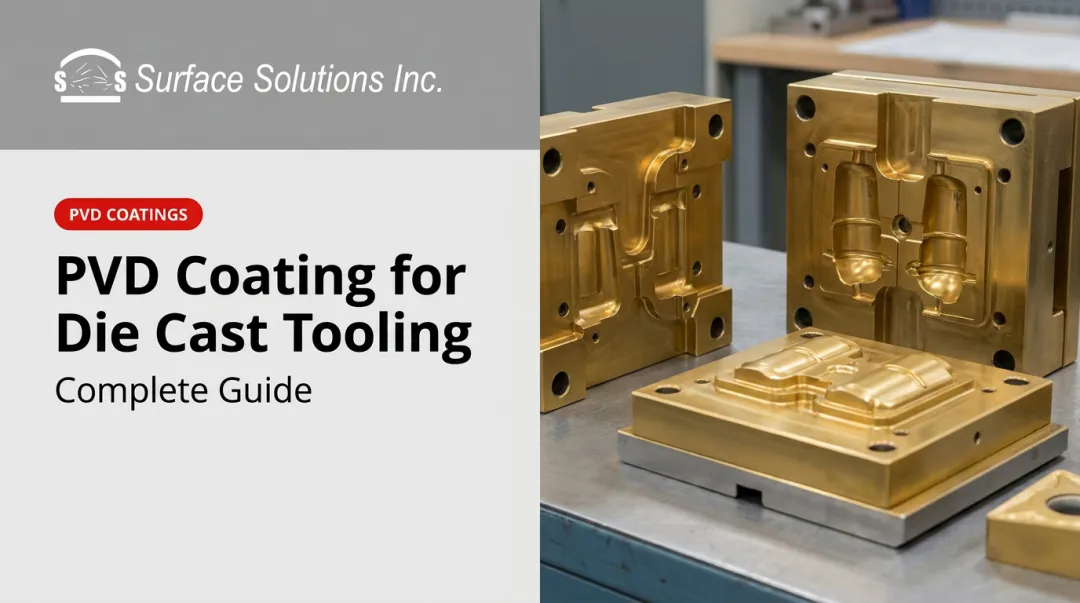
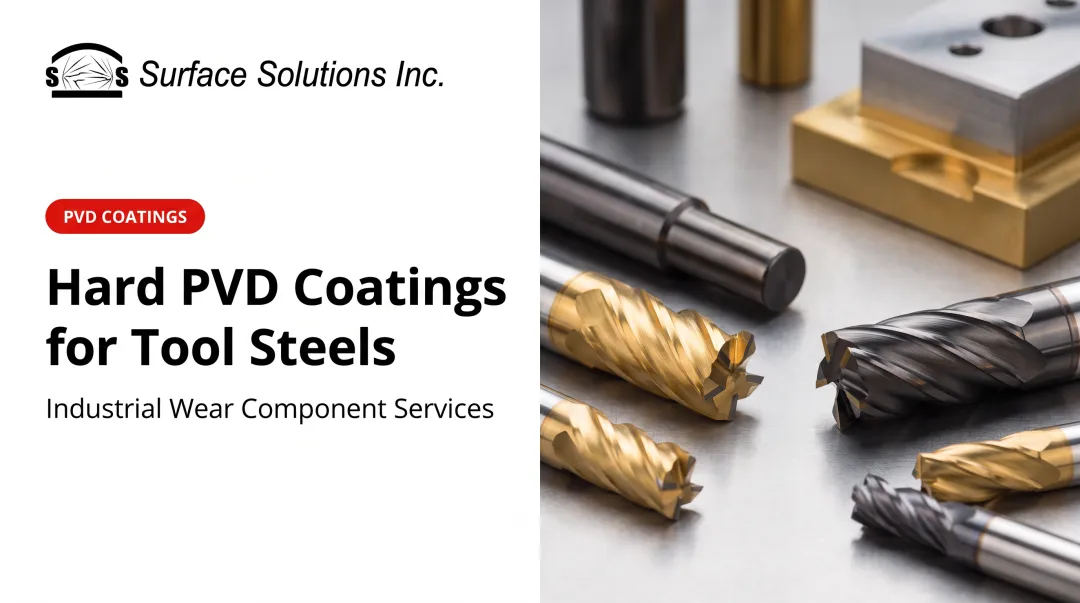
Manufacturers who understand why uncoated tools fail can catch problems before they become production stoppages. NIST's 2021 survey found that manufacturers relying more heavily on predictive maintenance saw 52.7% less unplanned downtime and 78.5% fewer defects than reactive-maintenance-heavy plants — a gap that starts with knowing your failure modes (NIST, 2021).
This guide breaks down the main causes of tool failure without PVD coating, the warning signs to watch for, and how coatings like Alpha and CrN from Surface Solutions address each one.
TL;DR
- Uncoated tools fail mainly from abrasive wear, galling, heat buildup, and corrosion
- Ignoring these causes drives up scrap, rework, and resharpening frequency
- Inspection, lubrication, and tool steel selection help, but they don't stop wear at the source
- PVD coatings add a hard, low-friction barrier; one Surface Solutions customer went from 10,000 to 60,000 parts between resharpenings with Alpha coating
Common Causes of Tool Failure Without PVD Coating
Tool failure shows up as chipping, cracking, dimensional loss, or surface galling that ends a tool's usable life. Uncoated tools rely entirely on the hardness of the base steel, so they face several failure modes at the same time.
Abrasive and Adhesive Wear
Bare tool steel means direct metal-to-metal contact with every cycle. Hard particles strip material from the surface, and adhesive wear transfers metal between the tool and workpiece. According to AHSS forming guidelines, this friction and heat cause micro-welding between surface asperities. When those welds break, fragments transfer back and forth and accelerate wear on both sides (AHSS Insights).
Typical scenario: Punches and dies in sheet metal forming lose edge sharpness after a limited number of cycles, forcing frequent resharpening just to hold tolerance.

Galling and Material Build-Up
Uncoated surfaces pick up adhesive material transfer, especially from galvanized sheet. ASM International classifies galling as a severe form of adhesive wear: material physically welds itself onto the tool surface. Once buildup starts, friction rises and every subsequent part gets scratched or misshapen.
Typical scenario: Punching operations where galled punches start chipping and hole quality goes inconsistent from one part to the next.
Excessive Heat Generation
Without a thermal barrier, uncoated tools heat up fast during high-speed cutting or forming. In one Surface Solutions customer example, a stainless-steel drawing application with Alpha coating produced only 15 parts before they were too hot to touch. After switching to CrN, the same tool produced over 500 parts with parts described as just warm.
Typical scenario: Parts coming off the tool hot enough to burn hands, a clear sign of thermal stress that shortens tool life and degrades part finish.
Corrosion and Chemical Attack
Bare tool steel oxidizes. Add aggressive coolants, lubricants, or humid shop air, and rust or pitting follows. Forming-lubricant guidance lists corrosion protection as a required lubricant function, so without adequate coverage, corrosion risk climbs fast (Maintenance and Engineering, 2021).
Typical scenario: Tools stored or run in humid conditions developing surface pitting that compromises edge geometry over weeks, not months.

What Happens If Tool Wear Causes Are Ignored
Skip past these warning signs and the costs stack up quickly.
NIST data puts the scale in context: US discrete manufacturers reported roughly $222 billion in annual maintenance-related costs and losses. Plants that rely most on reactive maintenance see 3.3 times more downtime and 16 times more defects than predictive-maintenance leaders (NIST).
For tooling specifically, ignored wear causes drive:
- More frequent resharpening that cuts into production windows
- Higher scrap rates when dull or galled tools make out-of-spec parts
- Inconsistent quality from burrs, dimensional drift, and surface flaws
- Rising labor costs from extra manual maintenance and downtime each shift
One Surface Solutions customer sharpened uncoated D2 punches every three weeks. That downtime multiplies fast across every die in the shop.

Warning Signs You're About to Experience Tool Failure
Catch these early and you avoid full edge loss or a cracked die mid-run.
- Visible edge dulling or rounding on cutting or forming surfaces. Mate Precision Technologies recommends resharpening once edge radius reaches 0.010 inches (Mate).
- Increased force, noise, or vibration during operation. A press working harder than normal often signals a dulling tool.
- Discoloration or excess heat on parts and tooling after short runs, which points to thermal stress building fast.
How to Prevent Tool Failure Without PVD Coating
How to Prevent Tool Failure
Effective prevention combines process discipline with surface protection.
Apply PVD Coatings to Tooling
Coating tools with PVD options like Alpha or CrN before deployment creates a hard, low-friction barrier that fights wear, galling, heat, and corrosion at once. In a machining comparison on 304 stainless steel, Surface Solutions documented Alpha coating delivering 2x the life of TiN, and AlTiN delivering 3x the life of Alpha. Together that produced a 6x improvement over TiN on a three-corner carbide insert, with speeds and feeds held constant.
Apply coatings before first use, or fold recoating into scheduled resharpening cycles.
Optimize Lubrication Practices
Match lubricant type and volume to the specific material and operation. Proper lubrication reduces friction-driven heat and slows adhesive wear between tool and workpiece. Revisit lubrication setup with every material or tooling change.
Implement Routine Tool Inspection
Schedule regular visual and dimensional checks on cutting edges and forming surfaces. This catches early wear before it snowballs into failure or scrap. Build inspection into set intervals: every shift or every batch, depending on volume.
Select Appropriate Tool Steel and Heat Treatment
Match base material and hardness to the application before anything gets coated. Common options include A2, D2, and M2, each with different tradeoffs between wear resistance and toughness. This decision happens at the design and procurement stage. Get it wrong, and no coating fully compensates.

Tips for Long-Term Prevention and Control
Beyond the immediate fixes, a few habits separate shops that consistently extend tool life from those stuck in reactive mode:
- Track part counts and wear in a log so maintenance starts before failure (one customer: uncoated tools at 10,000 parts vs. Alpha-coated at 60,000)
- Train operators on proper loading, handling, and lubrication to reduce avoidable wear
- Document tool life, coating cycles, and resharpening history to spot trends over time
- Build recoating into standard maintenance with a nationwide provider like Surface Solutions, instead of waiting for failure
Conclusion
Tool failure without PVD coating traces back to identifiable, preventable causes: abrasive wear, galling, heat buildup, and corrosion. Combining solid maintenance practices with PVD coating investment cuts downtime and extends tool life well beyond what uncoated steel can deliver on its own.
Frequently Asked Questions
What is the average lifespan of a plastic injection mold, and does lack of PVD coating affect it?
Mold life ranges widely, from a few hundred cycles up to over a million, depending on classification and materials. Uncoated molds wear faster because abrasive-filled plastics and repeated thermal cycling attack bare steel directly.
How much longer do PVD-coated tools last compared to uncoated tools?
Results vary by application and coating, but the gains are substantial. One Surface Solutions customer went from resharpening at 10,000 parts uncoated to 60,000 parts with Alpha coating.
Can uncoated tools be coated later to fix wear issues?
Yes, tools can typically be cleaned and coated after the fact. Severely worn tools may need sharpening or refurbishment first so the base geometry is sound before coating goes on.
What industries are most affected by tool failure from lack of coating?
Metal forming, punching, sheet metal fabrication, medical device manufacturing, and cutting tool production all see frequent uncoated tool failure. These industries share high cycle counts and abrasive or corrosive materials.
Is PVD coating a one-time fix, or does it need reapplication?
Coatings wear over time just like any surface treatment. Reapplication typically happens during scheduled tool refurbishment, once the coating shows visible wear or the base metal starts showing through.
How quickly can worn tools be turned around with PVD coating services?
Surface Solutions coats tools and wear components from across the US, Canada, and Mexico. Most locations are within a few days' shipping each way. Call 763-785-9436 or email info@tincoat.net for a current processing estimate.