Here's the good news: coating selection isn't guesswork. It comes down to matching chemistry, hardness, and deposition method to your material, speed, and application. This guide breaks down the major coating types, how PVD and CVD differ, and the factors that separate a good coating choice from an expensive mistake.
TL;DR
- Coatings cut friction, resist heat, and extend tool life far past uncoated tooling
- PVD yields thinner, sharper, tougher films; CVD yields thicker, more wear-resistant ones
- TiN, TiCN, TiAlN, AlTiN, and CrN each suit different materials and cutting speeds
- The "best" coating depends on your workpiece, heat load, speed, and budget
- Surface Solutions' Alpha™ and CrN coatings have driven longer tool life and real labor savings on production runs
What Are Cutting Tool Coatings?
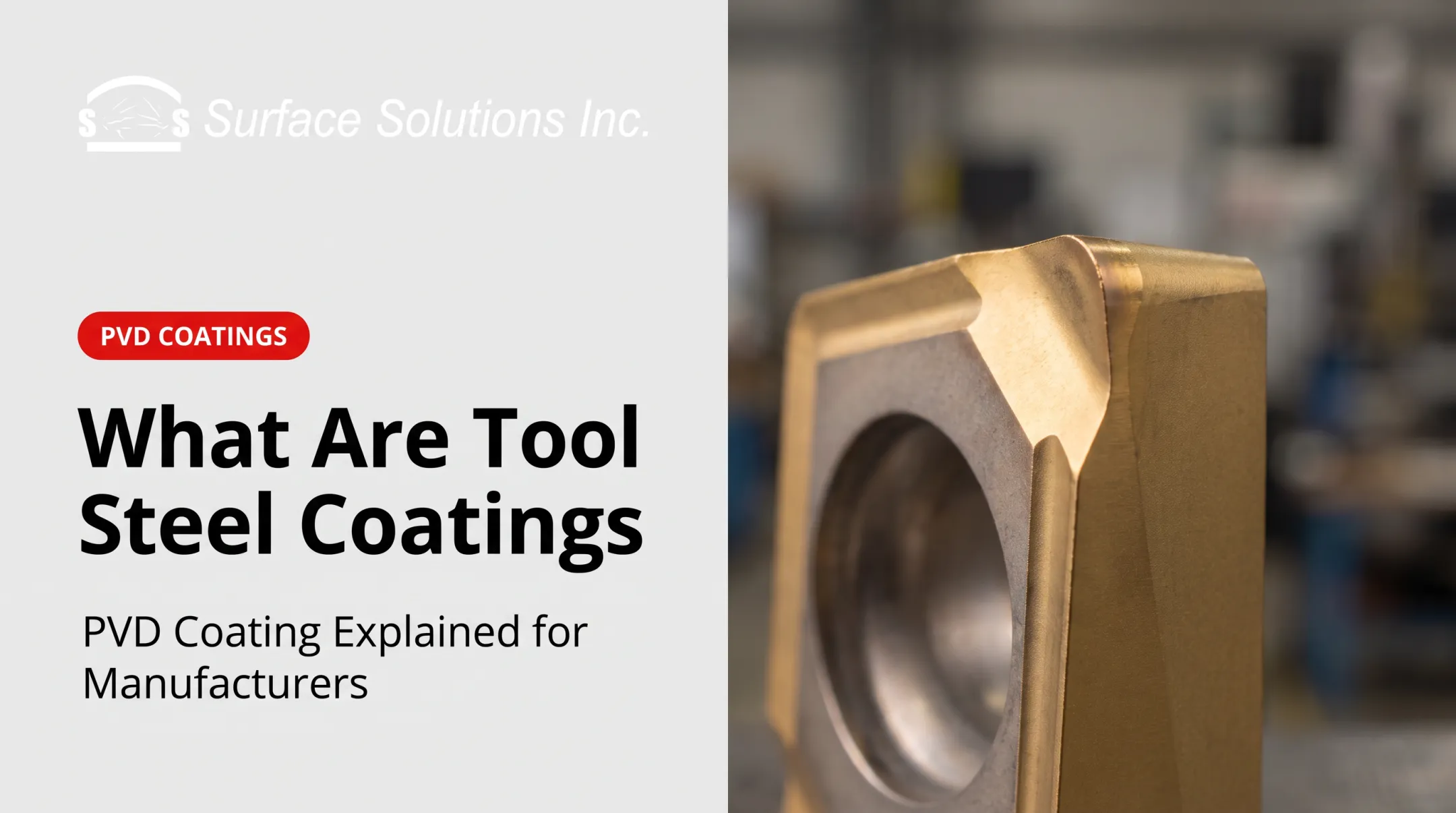
Cutting tool coatings are thin, hard layers applied to a tool's substrate (usually carbide, HSS, or tool steel) to reduce wear, friction, and heat transfer at the cutting edge. Two deposition families dominate: PVD and CVD. Specialty options like diamond and DLC (diamond-like carbon) fill niche, highly abrasive applications.
Core Components of a Cutting Tool Coating System
Coating performance isn't just about the chemical formula. Thickness, hardness, and internal structure all shape how a coating behaves under load.
Hardness and composition. Nano-hardness, measured in gigapascals (GPa), tracks directly with wear resistance. According to CERATIZIT's coating comparison, TiN reaches up to 24 GPa, while AlTiN can hit 38 GPa, a clear durability gain on demanding cuts.
Layer thickness and structure. Single-layer coatings are simpler, but multilayer or nanolayer coatings (sometimes built from thousands of layers only a few nanometers thick) resist crack propagation better. A 2017 study in Mechanics & Industry found multilayer coatings with nanolayers between 20-145 nm showed improved resistance to cyclic thermomechanical failure.
Friction and thermal barrier properties. Lower friction coefficients mean less heat and less built-up edge. TiCN, for example, tests around 0.2 friction coefficient, noticeably lower than TiN or AlTiN, which matters for gummy or heat-sensitive operations.

Benefits of Coatings for Manufacturing Applications
- Extended tool life (vendor data: about 3–4x for TiN, up to 14x for AlTiN, application-dependent)
- Higher achievable cutting speeds and feeds
- Reduced friction and built-up edge
- Improved surface finish consistency
- Lower coolant/lubricant dependency
- Reduced cost-per-part over the tool's service life
PVD vs. CVD Coatings: Which Process Is Right for You?
The deposition method shapes edge sharpness, toughness, and where the coating performs best.
PVD (Physical Vapor Deposition)
PVD runs at a comparatively low 400-600°C (750-1,110°F), according to Sandvik Coromant. That lower heat preserves the substrate's toughness and keeps coatings thin (typically 1-4 microns).
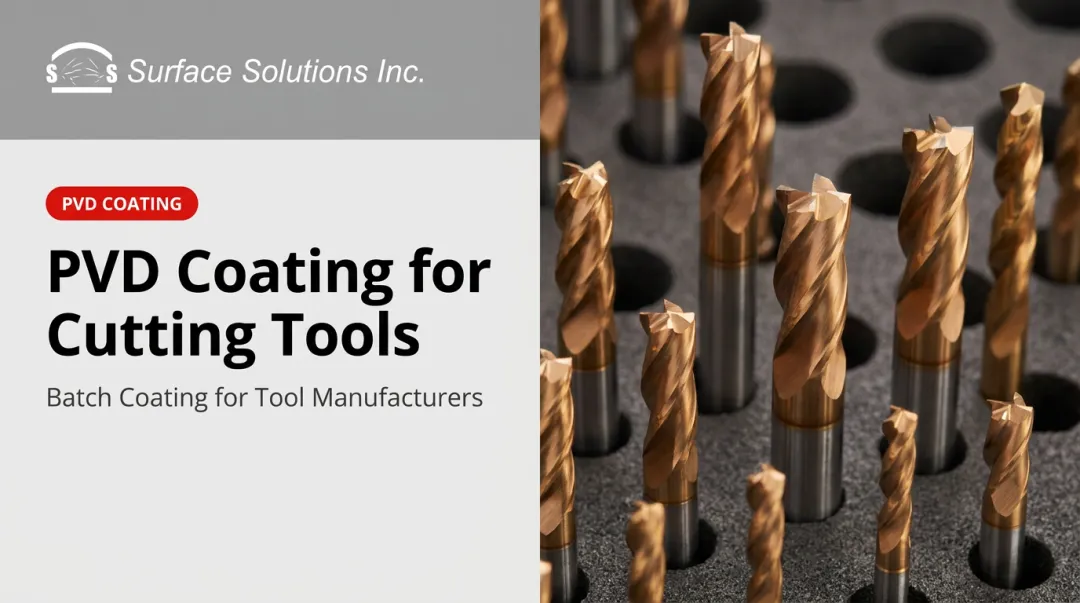
Best fit: solid carbide end mills, drills, finishing operations, and interrupted cuts like milling, where a sharp, tough edge matters more than bulk wear resistance.
CVD (Chemical Vapor Deposition)
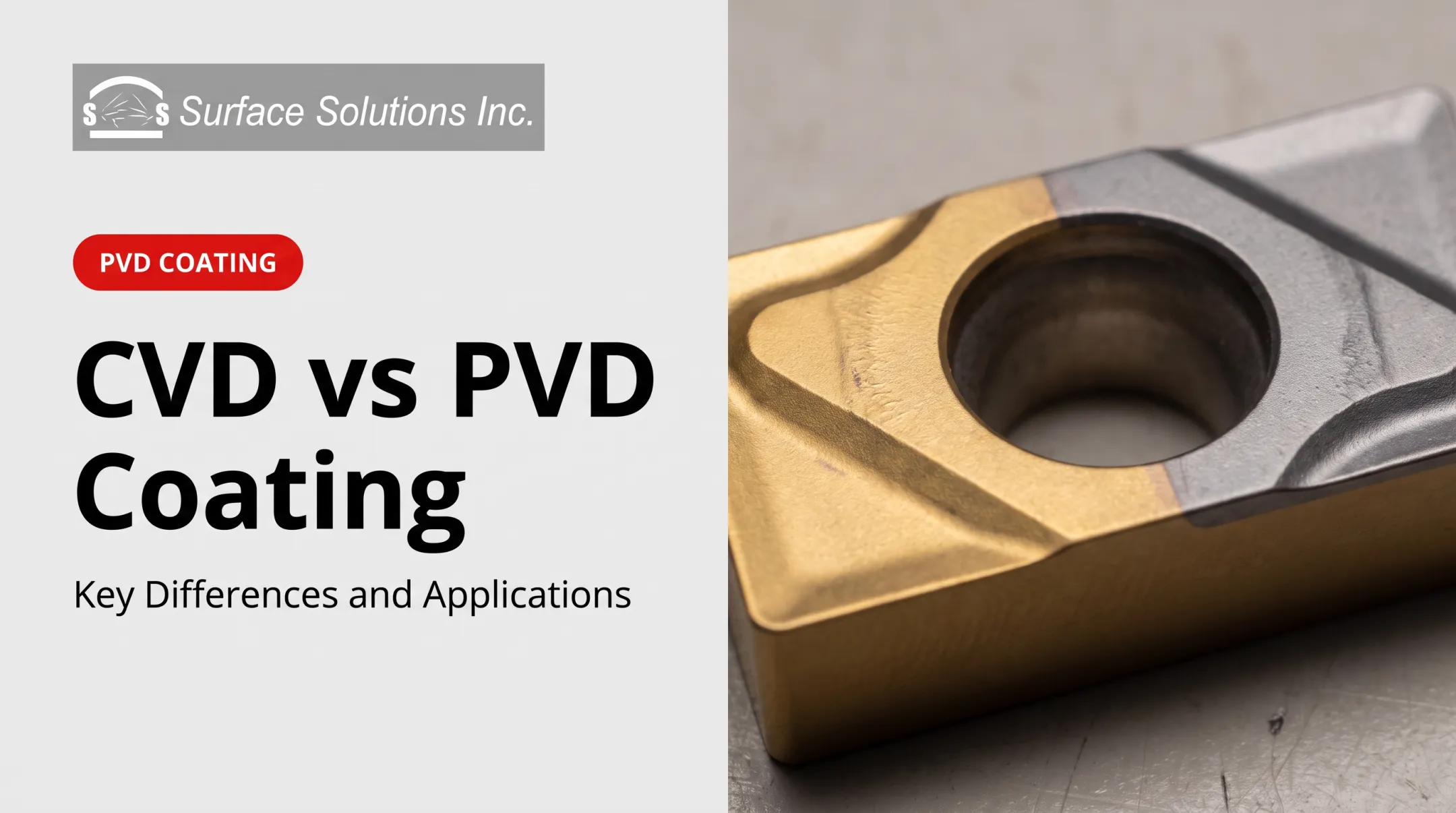
CVD operates at much higher temperatures, up to 1,000°C (1,830°F), and builds thicker coatings—typically 5-12 microns, sometimes reaching 20 microns. That thickness supports long wear life under continuous contact.
Best fit: turning stainless steel, general steel drilling, and high crater-wear environments where the tool sees continuous, abrasive contact.
Diamond and DLC coatings are a CVD variant (DLC can also be applied by PVD). They are used for extremely abrasive, non-ferrous materials such as graphite, CFRP, and high-silicon aluminum.

What to Consider When Choosing the Best Cutting Tool Coating
Coating selection hinges on six practical factors: workpiece material, heat load, speeds and feeds, coating thickness, friction needs, and total cost of ownership. Get these right and the technical spec shows up as shorter cycle times and lower tooling spend.
Workpiece Material Compatibility
Ferrous and non-ferrous materials need different chemistry. TiCN or ZrN suit aluminum's low-friction, anti-galling needs, while TiAlN and AlTiN handle the heat generated cutting stainless and titanium. Match this correctly and you'll see fewer built-up-edge issues and lower scrap rates.
Heat Resistance Requirements
High-temperature alloys and dry machining push coatings past 800-900°C. AlTiN's aluminum content forms a protective oxide layer at these temperatures, per a 2021 tribology study on 304 stainless turning. The payoff: less thermal deformation and fewer replacements per shift.
Cutting Speed and Feed Rate
Coating choice sets how hard you can push speeds and feeds before edge life drops. A heat-stable coating lets you raise SFM and chip load without adding tool changes—so throughput climbs and coating ROI shows up in the first production runs.
Coating Thickness and Edge Sharpness
Thick CVD coatings resist wear but round the edge slightly. Thin PVD coatings stay sharp for precision finishing work. This tradeoff shows up in dimensional accuracy and finish quality — pick based on which one your tolerance demands.

Coefficient of Friction and Lubricity Needs
Sticky, gummy materials—aluminum, copper alloys, medical-grade stocks—need low-friction coatings to limit smearing and built-up edge. Lower friction also cuts coolant demand and improves chip evacuation, which compounds across a full production run.
Total Cost of Ownership vs. Tool Life
Don't just compare price per tool. Weigh:
- Parts produced per sharpening cycle
- Labor hours spent on resharpening and tool changes
- Scrap and rework reduction
- Coating cost per tool (about $2.50–$4.00 for some Alpha™ applications, size-dependent)
A pricier coating that doubles or triples tool life almost always wins on cost-per-part. Rank these six factors against your material, tolerance, and volume, then choose the coating that protects the edge where your process actually fails first.
How Surface Solutions Can Help
Surface Solutions applies PVD coatings (TiN, TiCN, AlTiN, CrN, and its proprietary Alpha™ formulation) to cutting tools, dies, and wear components for metal forming, punching, cutting tool, and medical device manufacturers across the US, Canada, and Mexico. A few results from real production runs:
- Alpha™: 60,000 parts before resharpening vs. 10,000 uncoated (6x output); about 48 hours of labor saved
- CrN (stainless drawing): 500+ parts still warm to the touch vs. 15 parts too hot to handle with Alpha™ on the same job
- Alpha™ (galvanized stamping): Almost no galvanized build-up vs. heavy buildup on TiN punches, with less chipping and no polishing step Service covers customers nationwide, with competitive pricing and reasonable turnaround. Limitations: Surface Solutions does not coat aluminum or zinc alloy parts. Parts must be single-piece, conductive metal: no assemblies, plastic inserts, or pressed components. Surfaces with oxides, EDM recast, or bluing must be cleaned first. PVD's thin 0.0001"–0.0002" layer will not hide surface flaws or adhere to contaminants.

Conclusion
There's no universal "best" coating. The right choice is the one that fits your material, application, and production priorities right now. AlTiN might be perfect for your titanium job and wrong for your aluminum one. Revisit your coating choice as materials, tooling, and production goals shift.
If your current tooling isn't hitting the part counts or cycle times you need, a different coating may close the gap. Contact Surface Solutions to talk through your specific application.
Frequently Asked Questions
What is the best coating for carbide cutting tools?
It depends on the material being cut, but AlTiN and TiAlN are popular choices for steel and stainless applications thanks to their high heat resistance and long tool life.
What is the best coating for aluminum end mills?
ZrN and TiCN are commonly preferred for aluminum due to low friction and reduced built-up edge. For high-silicon aluminum, uncoated or polished tools are sometimes used instead.
What is the difference between AlTiN and TiAlN coatings?
AlTiN has a higher aluminum content, giving it greater heat resistance and hardness. TiAlN is more titanium-dominant, offering slightly more toughness for general-purpose use.
How do TiCN and TiAlN coatings differ?
TiCN offers higher hardness and lower friction at lower temperatures. TiAlN performs better under high heat and interrupted cuts, making it the better pick for tougher, hotter operations.
What are the different types of cutting tool coatings?
The main categories are TiN, TiCN, TiAlN, AlTiN, CrN, and diamond/DLC. Each targets a different balance of hardness, friction, and heat resistance.
What are the ISO coating standards?
ISO classifications (P, M, K, N, S, H) categorize workpiece materials — not the coatings themselves — to help match the right coating and tool grade to the job.