Nitride coating solves this by hardening the metal surface itself. Whether through thermochemical diffusion or PVD (Physical Vapor Deposition), the process creates a wear-resistant layer that fights friction, corrosion, and fatigue.
This article breaks down how nitride coating works, what it delivers, where it's used, and how to pick the right option for your tools and dies.
Key Takeaways
- Nitriding diffuses nitrogen into a metal surface, forming a hard, wear-resistant case
- Gas nitriding, salt bath nitriding, and plasma nitriding each suit different volumes and part requirements
- Higher hardness, lower friction, longer fatigue life, and stronger corrosion resistance
- Tool & die, cutting tools, automotive, and medical manufacturing all rely on nitride coatings
- Choose the process based on base metal, part geometry, and performance goals
What Is Nitride Coating?
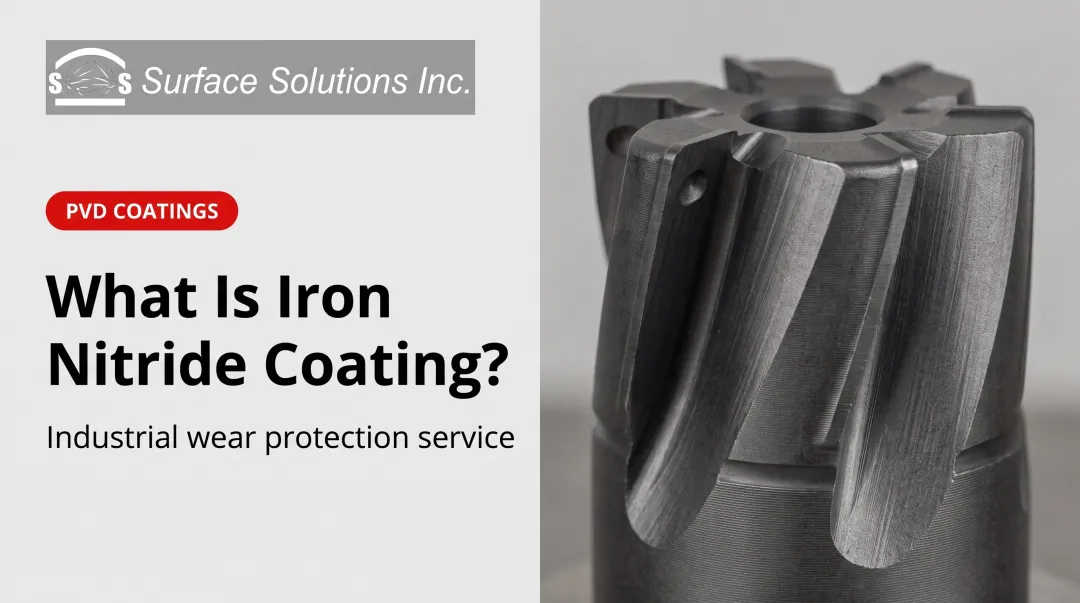
Nitride coating refers to surface treatments that form hard nitrogen-rich compounds on or in a metal part. In practice, that means two different methods: diffusion nitriding and PVD nitride films such as TiN or CrN.
Nitriding is a case-hardening process that enriches a metal's surface with nitrogen, forming hard metallic nitrides without melting or reshaping the part. Bodycote describes gas nitriding as a low-temperature, low-distortion treatment suited to finished or near-finished components.
The resulting case has two zones:
- Compound layer ("white layer") — the outermost region, providing wear, scuffing, and seizure resistance
- Diffusion zone — beneath it, where dissolved nitrogen and nitride precipitates support fatigue strength
Nitriding vs. PVD Coating
True nitriding changes the substrate through diffusion. PVD coating, by contrast, deposits a thin film like TiN or CrN onto the surface using ionized metal vapor. Oerlikon's IONIT process is a diffusion treatment, not a coating, while Ionbond's PVD technology builds a separate surface layer entirely.
Both approaches harden the surface. Neither adds bulk material nor changes part dimensions in a meaningful way, so finished parts can go straight into treatment.
Which metals work best? Alloy steels, tool steels, and cast irons respond well, especially those containing chromium, molybdenum, aluminum, or vanadium. Plasma nitriding also handles stainless steels, sintered steels, titanium, and nickel alloys, depending on temperature and process qualification.

The Nitride Coating Process: Step-by-Step
Before any treatment begins, parts need proper surface preparation. Oxides, EDM recast, bluing, and other surface contaminants must be removed, or coatings will not adhere properly.
If you want a polished final appearance, polish before coating. These layers are typically only 0.0001–0.0002 inches thick and will not hide surface roughness.
Gas Nitriding
Ammonia gas decomposes at high heat, releasing nitrogen that diffuses into the steel surface. Bodycote cites a typical temperature around 520°C (970°F). Paulo's process runs 950–1050°F, with treatment times ranging from 5 to 55 hours depending on desired case depth, typically 15–25 hours for a 0.010–0.020 inches case.
Common applications include:
- Gears and crankshafts
- Rotating components that need wear resistance without dimensional shift
Salt Bath Nitriding
This method submerges parts in a molten salt bath and processes faster than gas nitriding. ASM International notes salt-bath nitrocarburizing runs at 560–580°C (1040–1075°F) for just 15 minutes to 2 hours.
That process is technically nitrocarburizing (nitrogen plus carbon), not pure nitriding. Molten salts also need careful containment, so environmental and handling controls matter.
Plasma (Ion) Nitriding & PVD Coating
Plasma nitriding uses ionized gas in a vacuum chamber for precise control at lower temperatures, typically 350–600°C (660–1,110°F), with Aalberts noting 480–520°C (900–970°F) as common.
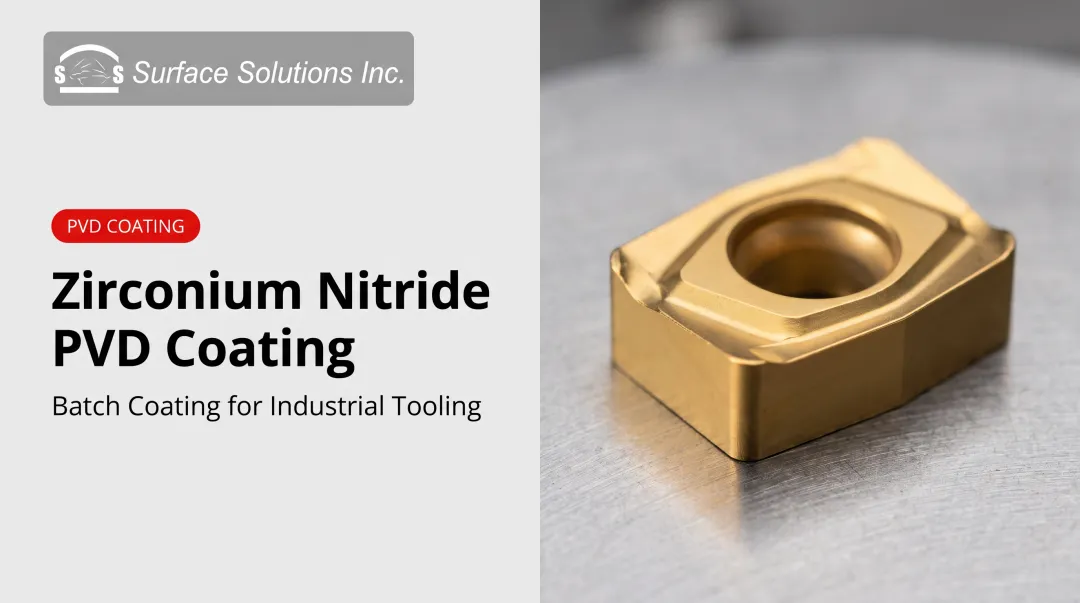
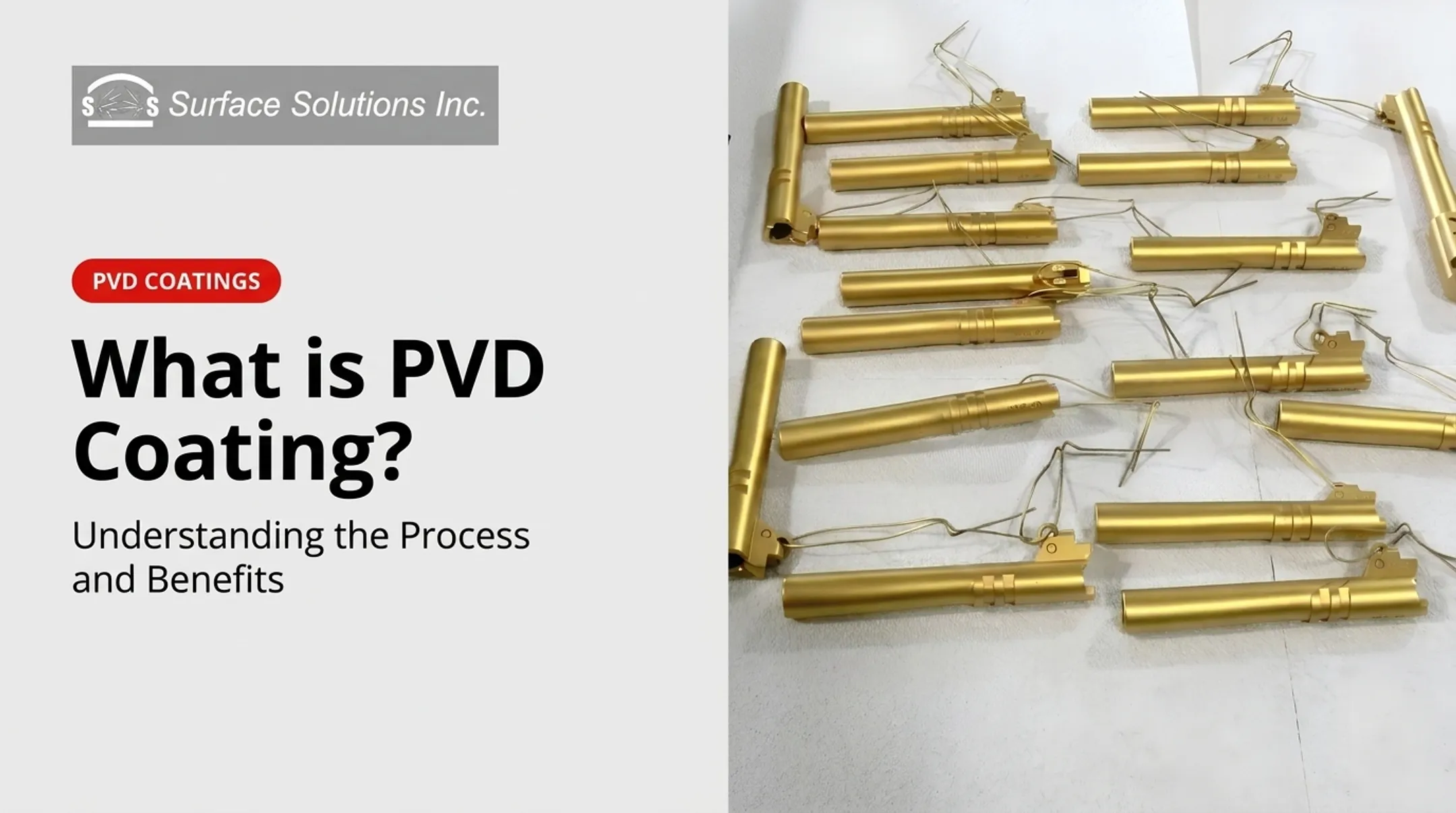
PVD nitride coatings take a different path: they deposit thin films such as TiN, CrN, or AlTiN rather than diffusing nitrogen into the case. Surface Solutions applies its AlTiN coating at 700–800°F, producing a layer just 2–5 microns thick (0.0001–0.0002 inches) with hardness around 4,000–4,200 Hv. This approach suits cutting and forming tools where precision matters more than deep case penetration.

Key Benefits of Nitride Coating
Hardness without brittleness. Nitriding hardens the surface while the core stays tough and ductile, critical for tools that need to resist chipping under load.
Lower distortion than carburizing. Gas nitriding runs around 970°F, well below atmospheric carburizing at roughly 1600–1800°F. Bodycote's Corr-I-Dur process reports significantly less dimensional change than carburizing or carbonitriding, making nitriding a better fit for finished-part treatment.
Improved fatigue life. A 2014 peer-reviewed study on low-alloy steel found nitriding alone improved the fatigue limit by 51.3%. Results vary by material and process, so treat this as a documented example rather than a universal guarantee.
Reduced friction and galling. Lower friction means less lubricant needed during metal forming — a real cost and cleanup savings on the shop floor.
Corrosion resistance is condition-dependent. For some stainless grades, low-temperature plasma nitriding preserves corrosion resistance, but higher temperatures or longer treatment times can reduce it. One study on AISI 304 found hardness nearly tripled at about 840°F, but corrosion resistance dropped as treatment temperature climbed toward 930°F. Match the process to your base metal carefully.
Real-World Results from Surface Solutions
Coating performance shows up in production numbers, not just lab data:
- One customer completed 60,000 parts without resharpening, versus a normal 10,000-part interval, a 6x improvement that saved roughly 48 labor hours
- Alpha™-coated M4 punches on galvanized steel produced an estimated 15 million parts over 15+ months, compared to uncoated D2 punches needing sharpening every three weeks
- In a stainless steel drawing application, switching from Alpha™ to CrN coating took output from 15 parts (too hot to touch) to over 500 parts, staying just warm

Common Applications of Nitride Coating
Nitride coatings are used wherever metal tools and components face repeated wear, friction, or high-cycle stress:
- Tool and die manufacturing: Punches, dies, and stamping tools run longer between maintenance stops. K&C Manufacturing's CFO described Alpha™-coated cutters as eliminating an entire process step, saving substantial production time.
- Cutting tools and drill bits: Coated edges hold up in metal forming, sheet metal forming, and drawing work, where surface wear sets the limit on tool life.
- Automotive components: Gears, camshafts, and crankshafts gain wear and fatigue resistance from nitride coatings, especially in high-cycle uses such as racing engines.
- Medical device manufacturing: Precision tooling for stainless steel, titanium, and cobalt-chrome components needs durability and tight dimensional control—nitride coatings deliver both.
Choosing the Right Nitride Coating for Your Application
Coating selection comes down to three variables:
- Base metal type — different steels respond differently to nitrogen diffusion
- Part geometry — complex shapes may favor PVD over thermochemical processes
- Wear and corrosion conditions — abrasive vs. adhesive wear call for different coating chemistries
Nitride Coatings vs. TiN
Standard TiN performs well for general wear resistance, but alternatives can outperform it in specific conditions. Surface Solutions customers report Alpha™ coating shows almost no galvanized build-up compared to TiN on the same punch design. They also see reduced chipping and longer die life, since the punch retains its edge longer.
| Coating | Best For | Key Advantage |
|---|---|---|
| TiN | General wear applications | Broad compatibility, proven track record |
| AlTiN | High-temperature cutting | Oxidation resistance up to 800-900°C |
| CrN | Forming/drawing stainless steel | Lower heat buildup, high part counts |
| Alpha™ | Stamping galvanized steel | Minimal galvanized build-up |

An experienced coating provider can match chemistry to your base metal, geometry, and wear conditions. Surface Solutions applies PVD coatings for manufacturers nationwide, including Minnesota, the upper Midwest, California, New York, Florida, Canada, and Mexico.
Services cover metal parts only—aluminum and zinc alloys, assemblies, and parts with plastic inserts are excluded. For turnaround times on your job, call 763-785-9436 or email info@tincoat.net.
Frequently Asked Questions
Is nitriding cookware safe to use?
A properly nitrided surface forms an inert, hardened layer generally considered food-safe. However, FDA regulation depends on the specific substance and manufacturing process, so verify certification for food-contact applications before use.
What is the difference between nitriding and nitrocarburizing?
Nitrocarburizing adds carbon along with nitrogen during the diffusion process, often improving wear and corrosion resistance on ferrous alloys beyond what pure nitriding achieves. Both create similar compound and diffusion layer structures.
How long does the nitriding process take?
Gas nitriding typically runs 5-55 hours depending on desired case depth, while salt bath nitrocarburizing can finish in 15 minutes to 2 hours. Plasma and PVD processes vary based on the specific recipe and coating thickness needed.
Does nitriding affect the dimensions of a part?
Nitriding causes minimal dimensional change compared to processes like carburizing, making it ideal for finished parts. Some growth still occurs, but distortion stays far lower than with other hardening methods.
Can nitride coatings be removed or reapplied?
PVD-coated tools can typically be reground and recoated, performing like new through multiple reconditioning cycles. Thermochemical nitride cases are harder to strip since removing them usually requires removing surface material.
What industries benefit most from nitride coating?
Tool & die manufacturing, automotive, aerospace, and medical device production all rely heavily on nitride coatings for wear resistance and extended tool life. Cutting tool and sheet metal forming operations see similar gains.