Manufacturers who get coating selection wrong pay for it twice: once in scrapped parts, and again in resharpening labor. Get it right, and the same tool can outlast expectations many times over.
This article breaks down the major tap coatings—TiN, TiAlN, TiCN, and specialty options like CrN and black oxide—so you can match the right one to your job.
TL;DR
- TiN suits general-purpose work on mild steel and aluminum; it's the cost-effective baseline
- TiAlN handles heat-intensive, abrasive jobs like stainless and alloy steel
- TiCN resists impact and abrasion but needs adequate cooling
- CrN and black oxide solve niche problems: corrosion resistance and dry-machining lubricity
- Coating alone can't fix bad tap geometry or the wrong substrate—selection matters as much as material
What Is a Tap Coating?
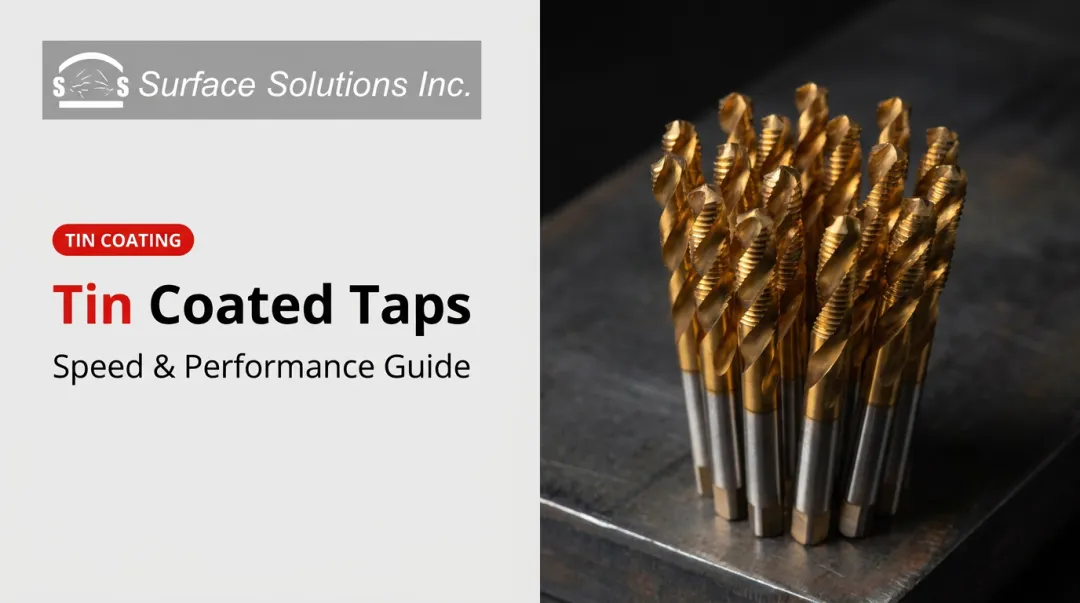
A tap coating is a thin, hard layer (typically 2 to 5 microns) bonded to a tap's cutting surface through Physical Vapor Deposition (PVD). It sits on top of the base tool material, whether that's high-speed steel (HSS) or carbide, and it's engineered to cut friction and slow wear.
According to Tapmatic, PVD coatings like TiN and TiCN specifically target abrasion and chip welding, with the biggest payoff on ferrous materials under 40 HRC. That upgrade directly changes how many parts you get per tool before resharpening.
Why Tap Coatings Matter for Manufacturing Operations
Uncoated or poorly matched taps generate friction, heat, and galling during thread cutting. That combination leads to:
- Frequent resharpening cycles
- Chipped or fractured cutting edges
- Built-up edge on the workpiece
- Inconsistent thread quality across a production run
A 2020 study on HSS taps in dry cast-iron tapping found coated taps significantly outperformed uncoated ones: TiCN and TiAlN taps produced roughly 30% more good threads than TiN or uncoated tools in the same test conditions (MDPI, 2020).
Surface Solutions has seen the same pattern with customers. One manufacturer running Alpha™-coated tooling finished a full 60,000-part order without sharpening, versus a normal resharpening interval of 10,000 parts.
That's 6x more parts before maintenance and an estimated 48 labor hours saved across six avoided sharpening cycles.

Types of Tap Coatings
No single coating works for every material. Selection depends on heat generated, hardness needed, and what you're cutting.
TiN (Titanium Nitride)
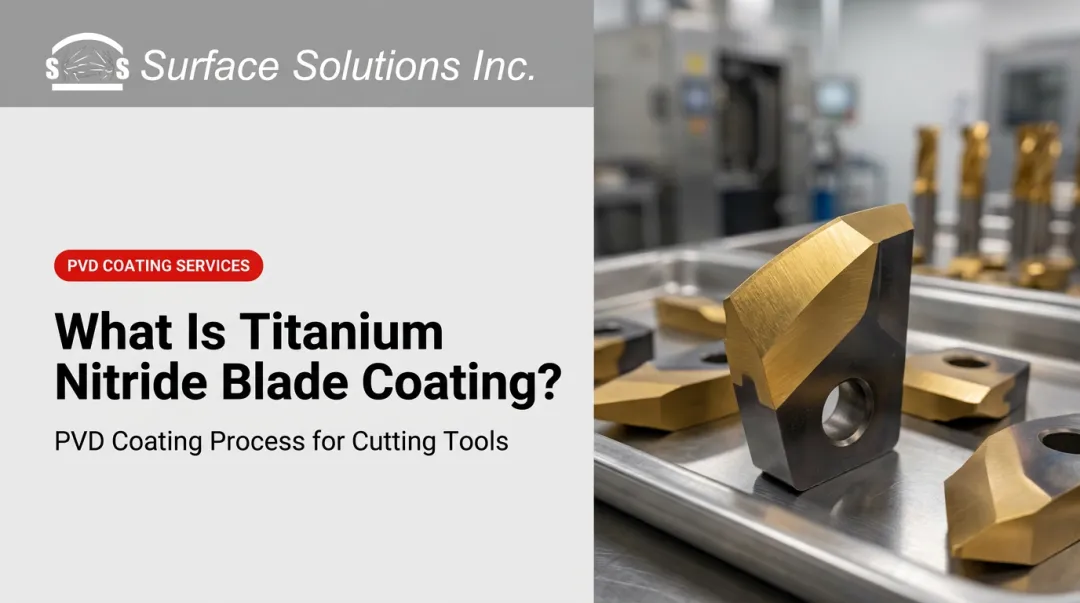
TiN is a gold-colored PVD coating and the industry's original workhorse. Manufacturer data puts its hardness around 2,300 HV with oxidation resistance up to roughly 600°C (Guhring). It reduces friction and adds lubricity across the cutting edge.
Best suited for:
- Mild steel and general production work
- Aluminum and other non-ferrous metals
- Ferrous materials below 40 HRC
Strengths: Affordable, versatile, solid all-around wear resistance.
Limitations: Struggles in high-heat conditions or aggressive stainless work. Step up to TiAlN for those jobs.
TiAlN (Titanium Aluminum Nitride)
TiAlN carries a black-violet finish and holds up better than TiN when heat spikes. Guhring reports hardness near 3,300 HV with oxidation resistance up to about 799°C.
Aluminum in the film forms a protective oxide layer that strengthens as temperatures climb, which is why this coating works well in dry or semi-dry cutting.
Best suited for:
- Stainless steel and alloy steel
- High cutting speeds
- Dry or minimal-coolant machining
A 2021 oxidation study confirmed that TiAlN coatings form protective Al2O3 layers starting around 900°C, directly supporting its use in high-heat, low-coolant applications (PMC, 2021).
Strengths: High hot hardness; protective oxide layer under load.
Limitations: Costs more, and you need the right tap grade and geometry to see the benefit.
Surface Solutions also applies AlTiN, a related coating with aluminum content above 50%. It is technically distinct from TiAlN, but built for the same high-heat jobs.
TiCN (Titanium Carbonitride)
TiCN is gray-violet and harder than TiN—around 3,000 HV—but with lower heat tolerance, topping out near 400°C. Adding carbon to the titanium nitride structure boosts hardness and impact resistance.

Best suited for:
- High-strength, abrasive steels
- Interrupted cuts where shock resistance matters
Strengths: Higher hardness and impact resistance than TiN.
Limitations: Lower heat tolerance means you need adequate cooling. Less forgiving in unstable setups than TiAlN.
Specialty & Alternative Coatings (CrN, Black Oxide, Multilayer)
Sometimes the answer isn't a general-purpose coating—it's a specialist.
CrN (Chromium Nitride) offers strong thermal stability and corrosion resistance. In a Surface Solutions stainless drawing test, Alpha-coated parts hit only 15 parts before running too hot to touch.
CrN-coated tooling produced over 500 parts, with parts staying just warm—clear gains in heat management on corrosive, abrasive work.

Black oxide is not a PVD coating. It is a low-cost treatment that helps retain cutting oil, often used for general or hand tapping in stainless and gummy materials (Tapmatic).
Multilayer coatings (such as FIREX) pair TiCN shock resistance with TiAlN heat resistance in one film, typically in the 3,000–3,300 HV range.
Use these specialty options for corrosion, oil retention, or mixed-load problems—not as a blanket swap for production PVD coatings.
How to Choose the Right Tap Coating
Match the coating to your workpiece, production volume, and operating conditions—not to which name sounds most advanced. Work through these factors:
- Workpiece material: steel, stainless, aluminum, and cast iron each favor different coatings
- Production volume: higher runs justify coatings that cut resharpening downtime
- Machining conditions: dry, wet, high-speed, or interrupted cuts shift which coating holds up
- Tool substrate and geometry: confirm HSS vs. carbide compatibility before you commit
- Budget vs. tool life: a pricier coating pays off only when volume recovers the cost
- Recoating availability: reapplication can extend tool value without buying new taps

What to Check Before Finalizing a Coating
Run through these checks before you lock in a coating:
- Skip TiAlN when standard TiN already handles the job—you add cost with no real gain
- Fix geometry, substrate grade, and speeds/feeds first; coating will not rescue weak fundamentals
- Add up recoating, resharpening frequency, and lubricant use over the tool's full working life
- Work with a PVD specialist such as Surface Solutions to match the coating to your tooling and materials instead of guessing from a catalog
Conclusion
Tap coatings aren't a minor detail. They directly shape manufacturing efficiency, cost control, and part quality. TiN, TiAlN, TiCN, and CrN each serve different needs depending on material hardness and heat demands.
Matching the right coating to your application extends tool life and cuts production interruptions. When hardness or heat load makes the choice unclear, a PVD coating specialist can help you lock in the right finish the first time.
Frequently Asked Questions
What are the four types of taps?
Common types include taper taps for starting threads, plug taps for through holes, bottoming taps for blind holes, and spiral point or spiral flute taps for chip control.
What is the best lubricant for tapping stainless steel?
Cutting oils formulated specifically for stainless steel reduce heat and galling during tapping. Pairing the right lubricant with a heat-resistant coating like TiAlN further reduces how much lubricant you need.
What coating is best for aluminum?
TiN and uncoated taps are commonly used on aluminum, though results depend on tap design, alloy, and lubrication conditions. There's no universal answer. Specialty coatings can help reduce built-up edge in specific setups.
How long do tap coatings typically last before recoating is needed?
It depends heavily on material and usage volume, so there's no fixed interval. Many coatings can be reapplied multiple times, extending a tool's usable life well beyond its original coating.
Can a coating fix a tap that keeps breaking?
No. Coating improves wear resistance, but it can't correct wrong tap geometry, poor speeds and feeds, or an incorrect substrate grade. Those issues need to be addressed separately.
Is it worth paying more for TiAlN over TiN coating?
For high-heat, abrasive, or high-volume applications, yes: TiAlN's heat resistance pays for itself in extended tool life. For simple, low-volume jobs, standard TiN often performs just as well for less money.