Manufacturers know the pain points well: tool wear, unplanned downtime, and production costs that creep upward with every resharpening cycle. A 2024 review found that reduced die life can raise production costs by up to 40%, with 70% of forging tools withdrawn from service due to plastic deformation or abrasive wear.
This guide breaks down what metal forming actually is, the major process types, how hot and cold working differ, and why tooling choices determine your long-term efficiency.
Key Takeaways
- Metal forming reshapes metal through force, not material removal
- Rolling, forging, extrusion, drawing, and stamping each fit different production needs
- Tool and die wear quietly drives up per-part cost more than most manufacturers realize
- Process selection depends on cost, volume, complexity, and timeline
- Coated tooling can deliver up to 6x more parts between sharpenings and cut labor hours
What Is Metal Forming?
Metal forming is a manufacturing process that plastically deforms metal into a shape using compressive, tensile, or shear forces. The metal's volume stays the same. Only its shape changes.
Unlike casting or machining, forming deforms solid metal under force—no material is added or removed:
- Casting — molten metal is poured into a mold and solidifies
- Machining — material is cut away, usually as chips, to reach final shape
Forming can happen hot or cold, and that single choice affects everything downstream: precision, surface finish, tool wear, and cost. We'll get into that distinction shortly.
Types of Metal Forming Processes
Manufacturers rely on five core forming methods, each suited to a specific combination of part geometry, volume, and material behavior.
Rolling
Rolling passes metal between rotating cylinders to reduce thickness and produce sheets, plates, and structural sections. It's the backbone process behind most flat and structural steel used downstream in other forming operations.
Forging
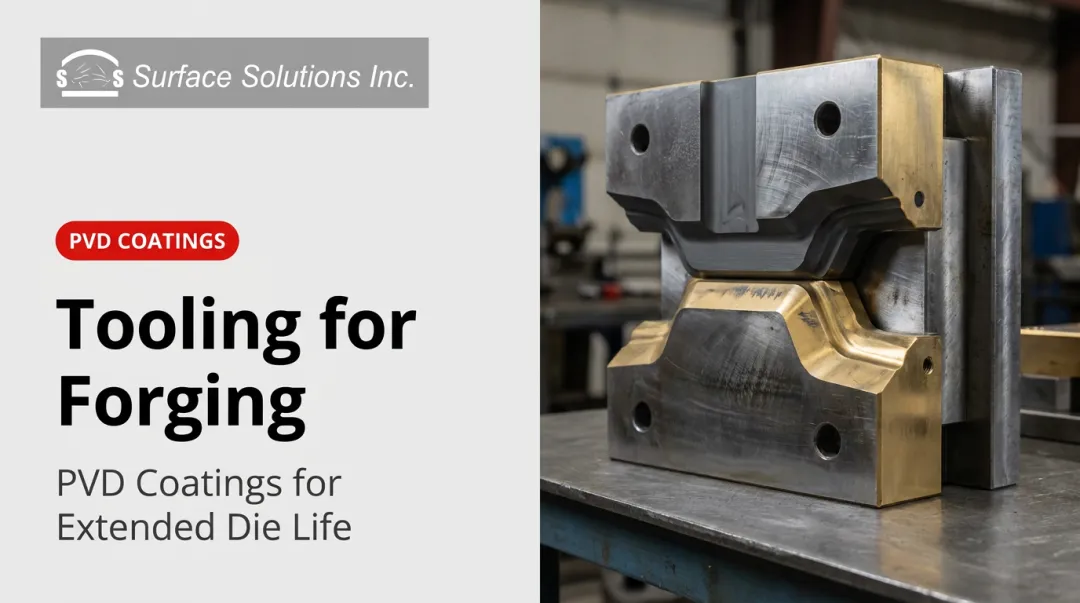
Forging uses compressive force between dies to shape metal into high-strength parts. Think transmission components, tools, and structural fasteners. The grain structure aligns with the part's shape, which is why forged parts often outperform cast or machined equivalents under load.
Extrusion
Extrusion pushes metal through a shaped die to create long, uniform profiles, such as tubing, rails, and structural channel shapes. It's efficient for continuous cross-sections but limited to shapes the die can support.
Drawing
Drawing pulls sheet metal through a die to form deep, dimensionally accurate parts like enclosures, cups, and automotive body panels. It's the go-to process when depth and dimensional consistency both matter.
Stamping and Punching
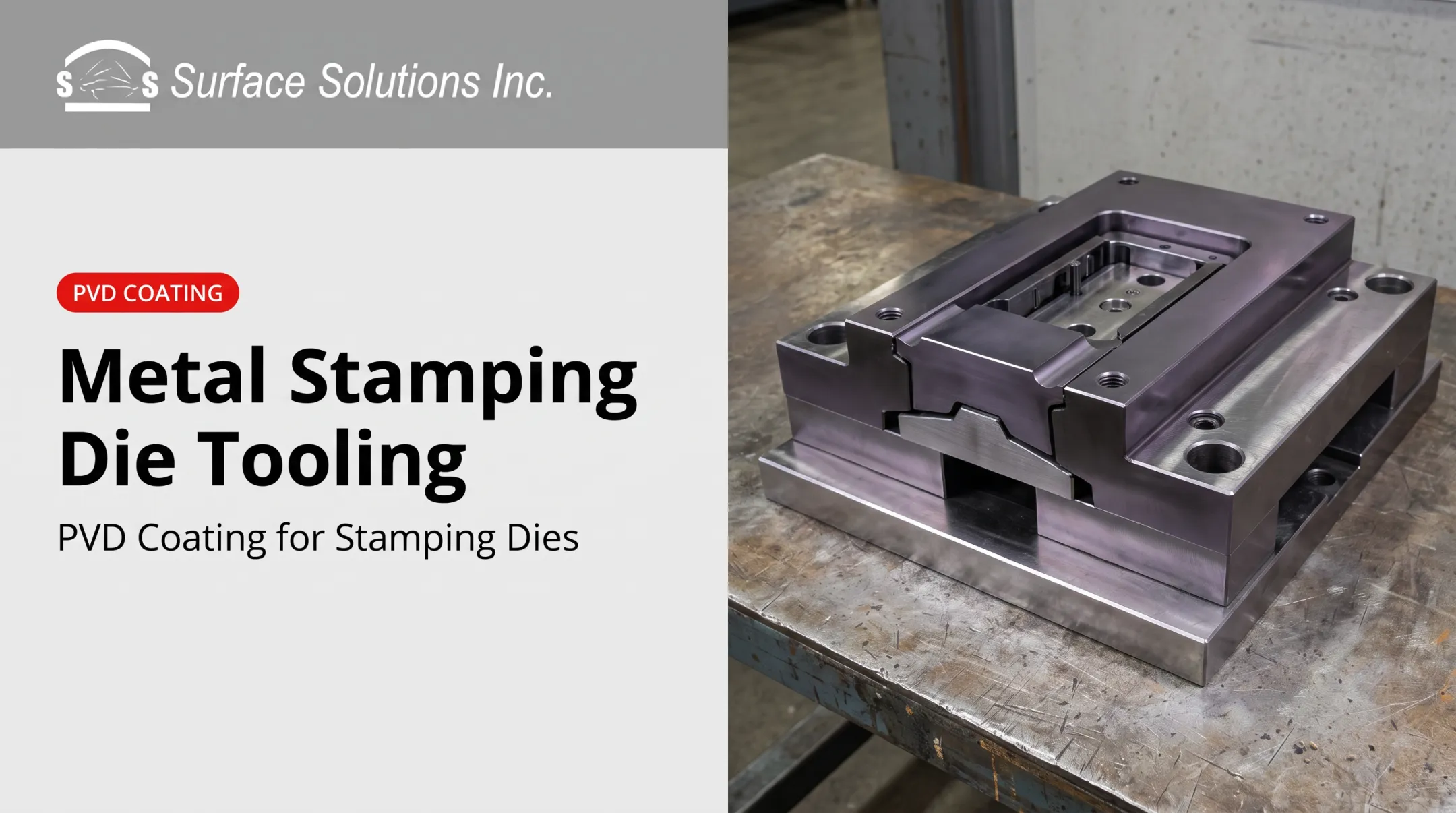
Stamping and punching use matched dies to press and cut sheet metal blanks at high speed, making them a strong fit for mass production. Equipment examples show the speed range:
- Bruderer stamping presses: 100–800 strokes per minute
- AIDA-America NSX mechanical press: 120–300 strokes per minute for high-volume production
- CEP Technologies' medical-device stamping process: an optimized workflow supporting a 20 million-part minimum annual volume
Strokes per minute aren't the same as finished parts per minute. Actual throughput depends on die design and operating losses, but the range still shows how far stamping scales.

Hot Working vs. Cold Working
The temperature at which you form metal changes almost everything about the outcome.
Hot working happens above the metal's recrystallization temperature, roughly 0.5 times the melting point for many commercial alloys. This improves ductility and lets manufacturers shape large, tough components more easily. The tradeoff: rougher surface finish from oxidation and scaling, and lower dimensional accuracy.
Cold working happens near room temperature. Benefits include:
- Higher dimensional accuracy
- Better surface finish
- Reduced material waste
- More consistent, reproducible parts
The catch is that cold working demands higher forming forces and heavier equipment, since the metal resists deformation more than it would at elevated temperature.
That temperature choice also sets your tooling wear rate and maintenance schedule.
Wear shows up differently in each process:
- Cold forming — wear, chipping, cracking, and galling from contact pressure and sliding friction
- Hot forming — oxidation and thermal fatigue on top of mechanical wear
Either way, tooling degrades. The question is how fast, and what you do about it.

Protecting Your Tooling: Why Coatings Matter in Metal Forming
Punches, dies, and forming tools take a beating. Constant friction, heat, and abrasion wear down cutting edges and working surfaces, forcing frequent resharpening.
Uncoated tools tend to develop:
- Galling — material transfer and buildup on tool surfaces
- Chipping — edge damage from repeated impact
- Surface buildup — reduces part quality and consistency over time
Each of these problems means more downtime, more scrap, and more labor spent maintaining tools instead of running production.
What Coatings Actually Change
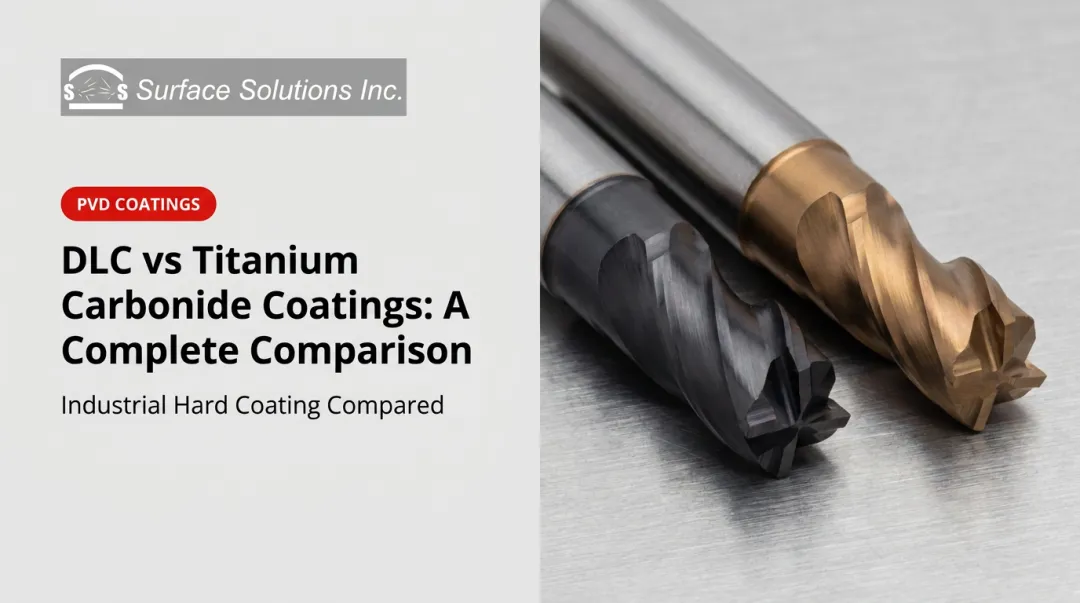
Surface Solutions applies PVD coatings, including its Alpha™ and CrN coatings, directly onto customer-supplied punches, dies, and forming tools. These thin coatings (2-5 microns) reduce friction and surface wear without changing part geometry.
The impact shows up in real production runs. One customer's tooling typically needed resharpening after 10,000 parts. With Alpha™ coating, that same tooling ran 60,000 parts without a single sharpening, a sixfold improvement.
Since each resharpening meant pulling tools from the press for 8 hours, avoiding six sharpening cycles saved 48 hours of labor.
Material matters too. In a stainless-steel drawing application, Alpha™-coated tooling produced just 15 parts before overheating, while the same tool with CrN coating produced over 500 parts, staying only warm to the touch throughout the run.

Coated tooling also delivers:
- Less lubricant required during forming
- Reduced galling and buildup compared to uncoated tools
- Fewer chipped punches
- No mid-run polishing needed
Fewer sharpening cycles and less maintenance downtime mean more parts produced per shift. For high-volume forming operations, that returns hours to the production schedule.
Choosing the Right Metal Forming Process
No single forming method wins every job. The right choice depends on four factors working together:
- Cost — tooling investment versus expected production volume
- Production quantity — low-volume prototyping rarely justifies expensive dies
- Design complexity — deep-drawn or high-precision parts need different tooling than simple bent shapes
- Timeline — custom dies can take more than 50 days to build before production even starts

Low-volume runs favor simpler, lower-tooling-cost methods. High-volume production, on the other hand, justifies the upfront investment in dies and coated tooling because the per-part savings compound quickly.
Before committing to expensive tooling, confirm your design is fully prototyped and tested. Locking into a stamping die or forming process too early can mean costly rework later.
If coated tooling is part of that investment, confirm PVD constraints before you lock the process:
- Aluminum and zinc alloys aren't compatible with standard PVD coating processes
- Pressed assemblies and parts with plastic inserts typically can't be coated
- Parts need a polished finish before coating since PVD won't correct surface defects
Where the Industry Is Heading
CNC-integrated forming and robotic press-brake systems are rewriting volume thresholds. Offline bend programming and adaptive bending let robotic cells run high-mix, lower-volume work that once needed manual setup on every batch change.
Automatic tool changes remove the old need for large batch runs just to justify setup time. That shifts the cost-versus-quantity math—shops that defaulted to simpler methods for short runs can now justify more capable forming cells earlier.
Frequently Asked Questions
What is metal forming?
Metal forming reshapes metal using applied force, such as compression, tension, or shear, without removing material. This sets it apart from machining, which cuts material away, and casting, which involves melting and pouring.
What are the different types of metal forming processes?
The main types are rolling, forging, extrusion, drawing, and stamping. Rolling produces sheets and plates, forging creates high-strength parts, extrusion makes long profiles, drawing forms deep parts like enclosures, and stamping mass-produces sheet metal components.
What is the difference between hot working and cold working?
Hot working occurs above the metal's recrystallization temperature, improving ductility but reducing precision. Cold working happens near room temperature, offering better accuracy and surface finish at the cost of higher forming force.
How often do forming tools need to be resharpened?
Resharpening frequency depends on material, coating, and production volume. Uncoated tools may need sharpening every few weeks or every 10,000 parts, while coated tools have run 60,000 parts or more without sharpening in documented cases.
Can coatings really extend the life of forming tools?
Yes. PVD coatings like Alpha™ and CrN reduce friction and wear on contact surfaces. In one documented case, coated tooling ran six times longer between sharpenings than uncoated tooling.
What industries rely most heavily on metal forming?
Automotive, medical device, aerospace, and general industrial manufacturing all depend heavily on metal forming. Steel accounts for roughly 54% of the average vehicle's material makeup, much of it formed rather than machined or cast.