Manufacturers in metal forming, cutting tools, and medical devices are leaning harder on advanced coatings to stretch component life and cut operating costs. A punch that used to need sharpening every three weeks can run for months. A valve ball that lasted weeks can last a season.
This article covers the main coating types, how they work, the real benefits manufacturers see, and how to pick a coating partner that won't blow your tolerances.
Key Takeaways
- Precision coatings protect tight-tolerance parts from wear, corrosion, and friction without altering critical dimensions
- PVD, CVD, electroless nickel, and hard chrome each suit different substrates, temperatures, and load conditions
- Production runs show Alpha™ and similar PVD coatings deliver 6x more parts before resharpening
- Select a partner that certifies thickness, delivers uniform coverage, and turns jobs around fast
What Is a Precision Component? (Understanding the Basics)
A precision component is any part where geometry and surface condition directly determine whether it works. A coating that adds a few extra microns in the wrong spot can push these parts out of spec.
There's no single numeric definition of "precision." Tolerances come from the part's drawing and function, not a universal cutoff. What matters is this: if a coating thickness variation changes fit or performance, you're dealing with a precision component.
Common examples include:
- Cutting tool inserts and carbide tooling
- Stamping and forming punches and dies
- Surgical instruments and medical implants
- Injection molding tooling
- Firearm components and wear parts
These parts need specialized coating approaches, not the general industrial coatings used on brackets or housings. The reason is dimensional sensitivity. A bracket can tolerate a 10-micron coating variance. A cutting edge or a sealing surface usually can't.
Precision Component Coating Techniques Explained
Physical Vapor Deposition (PVD)
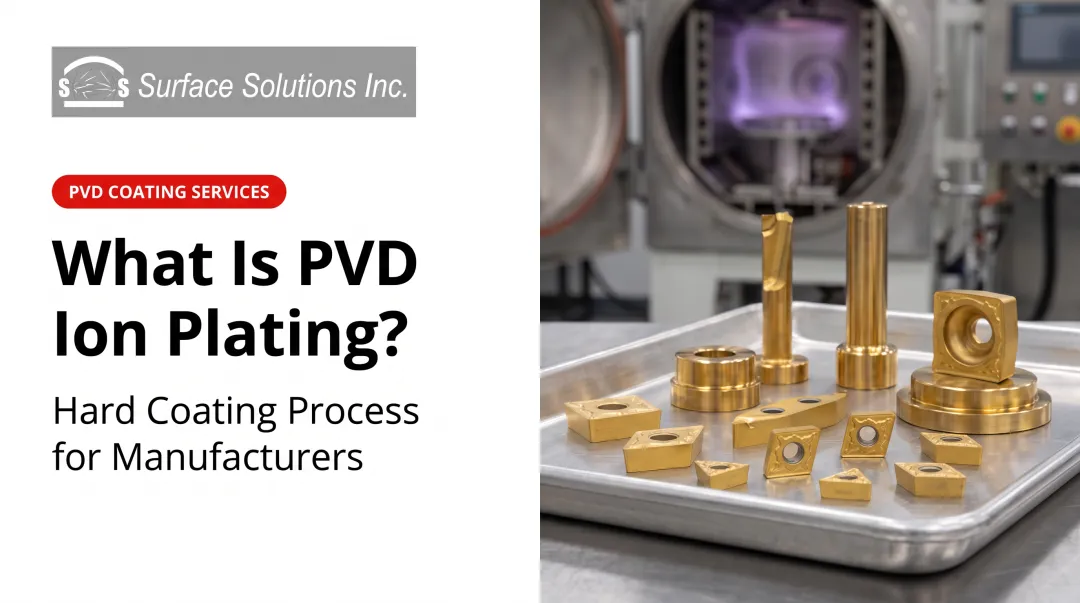
PVD vaporizes a metal (titanium, chromium, or aluminum) inside a vacuum chamber and deposits it onto the part's surface as a thin, hard film. Typical thickness runs 0.5 to 4 micrometers. Surface Solutions' AlTiN coating lands at 2–5 microns (0.0001″–0.0002″).
Because PVD adds so little material, parts rarely need re-machining afterward, which is why tooling shops prefer it for tight-tolerance work. Deposition happens at moderate temperatures (700°–800°F for AlTiN), which keeps hardened substrates stable.
CVD and Plasma-Assisted CVD
Chemical Vapor Deposition builds thicker, harder layers (typically 5 to 12 micrometers, sometimes up to 20) by reacting precursor vapors directly on the substrate. Standard CVD runs hot: 900-1050°C for high-temperature variants. That's often too hot for finished tool steel without a post-coating heat treatment.
Plasma-Assisted CVD (PACVD) solves the heat problem by activating the reaction with plasma instead of pure heat, dropping the process below 200°C. The tradeoff is tougher masking than PVD, and surface cleanliness becomes critical for adhesion.
Electroless Nickel and Hard Chrome Plating
These older, aqueous processes still have a place:
- Electroless nickel deposits uniformly around complex shapes at roughly 200°F, at 0.0001–0.0050 inches thick. It struggles in blind holes and recesses where solution flow is restricted.
- Hard chrome builds thicker wear layers (2.5 microns and up per ASTM B650), but standard deposits carry 200–400 microcracks per inch. That matters when corrosion resistance is critical; specify crack-free variants upfront if you need them.

Masking, Surface Zones, and Substrate Fit
Not every surface needs coating. Functional zones (cutting edges, sealing faces, wear points) get the coating. Non-functional zones get masked off to control cost and preserve untouched tolerances elsewhere.
Coating choice ultimately comes down to four variables:
- Substrate material: some processes exclude aluminum and zinc alloys entirely
- Load conditions: abrasive wear versus impact versus friction
- Temperature exposure during use
- Lubrication environment: dry runs need different coatings than lubricated ones
Key Benefits of Precision Component Coating
Extended Tool and Part Life
This is where coatings earn their keep. A customer running D2 punches needed resharpening every three weeks. After switching to M4 tooling with Surface Solutions' Alpha™ coating, the tooling ran for over 15 months, producing an estimated 15 million parts while punching .057″ galvanized steel.
Another customer completed a full order of 60,000 parts without a single resharpening, versus a normal cycle of 10,000 parts — a sixfold improvement.

Reduced Maintenance and Labor Costs
Fewer sharpening cycles mean fewer labor hours. In that same 60,000-part run, avoiding six sharpening events saved 48 hours of labor, since pulling and resharpening tooling took 8 hours each time.
Alpha-coated tooling also needed less lubricant and skipped polishing entirely during runs, cutting steps out of the production process altogether.
Improved Production Efficiency
Coated dies run longer between basic maintenance, so lines see less unplanned downtime and fewer mid-run stoppages. Longer uninterrupted cycles raise throughput without adding shifts or machines.
Better Surface Quality and Consistency
In side-by-side testing, Alpha-coated round punches showed almost no galvanized buildup, while TiN-coated punches accumulated noticeably more. Punch chipping also dropped.
In one stainless steel drawing application, CrN-coated tooling produced over 500 parts that stayed just warm to the touch, compared with only 15 parts with the older coating before parts became too hot to handle.

How to Choose the Right Precision Coating Partner
Not all coating shops handle tight tolerances the same way. Before committing, check for:
- Uniform coverage on complex geometries, where vacuum-based PVD keeps film consistent even on intricate tooling features
- Certifiable thickness and documented QC for medical device and other regulated work
- Turnaround that keeps tooling moving; weeks of dwell cost more than the coating saves
- Shipping reach that puts over half the U.S. within three days of a Midwest facility, with second-day and next-day options
Clear those bars and the gains show up on the shop floor. Surface Solutions coats tooling and wear components shipped in from across the United States, Canada, and Mexico, with proven results in metal forming and cutting tool work. As Tony Deschenes of Special Tools, Inc. put it, nearly everything his shop resharpens gets sent out for coating, because the tools come back "working better than new."
Industries and Applications Benefiting from Precision Coating
Precision coating pays off wherever tool wear, surface consistency, or part life drives cost. These sectors see the strongest returns:
- Metal forming, punching, and sheet metal drawing: Die and punch longevity directly drives production costs. Alpha-coated tooling has formed thick, hot-rolled material into tight channels using minimal lubricant, with no polishing needed afterward.
- Cutting tools and resharpening services: Coatings cut how often tools need resharpening and improve cutting performance, so shops push more work through the same tooling inventory.
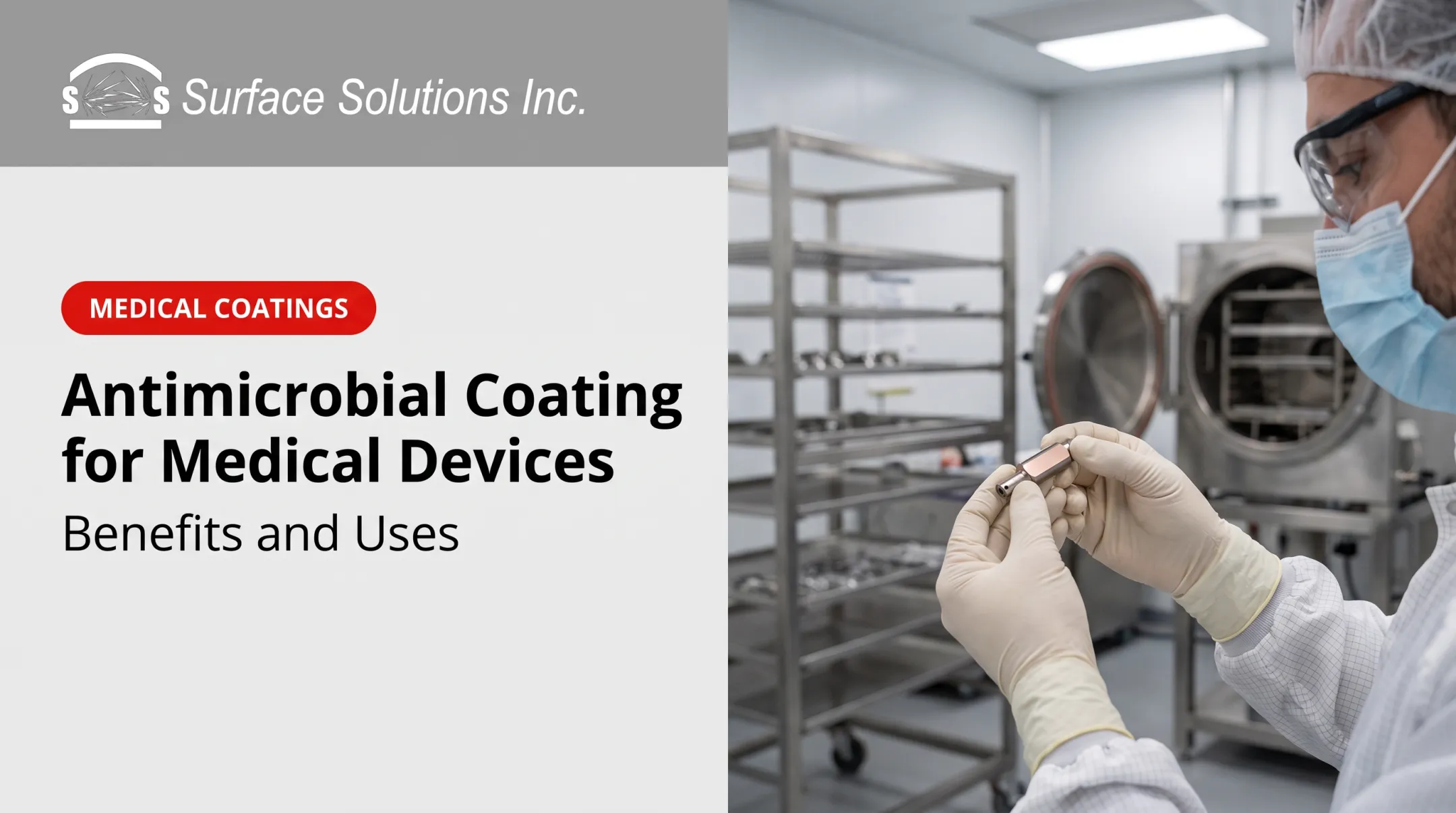
- Medical device manufacturing: Biocompatibility and surface consistency aren't optional. PVD coatings can extend medical instrument lifespan up to 10x over uncoated equivalents and remain well tolerated by the body.
Frequently Asked Questions
What types of coatings are used for precision component coating?
The main options are PVD, CVD, electroless nickel, and hard chrome plating. PVD coatings like Alpha™ and AlTiN are favored for tooling because they're thin, durable, and preserve tight tolerances without re-machining.
What is a precision component?
A precision component is a part manufactured to tight dimensional tolerances where function depends on consistent geometry and surface properties. Punches, cutting inserts, and surgical instruments are typical examples.
How thick is a typical precision coating?
PVD coatings typically range from 2 to 5 micrometers (0.0001″–0.0002″), preserving part dimensions without requiring re-machining afterward.
How does coating extend tool life?
Coatings reduce friction, wear, and galling on cutting edges and forming surfaces. This lets tools run longer between sharpening cycles, sometimes producing 6x more parts before maintenance is needed.
Can precision coatings be applied to complex geometries?
Coverage capability varies by process. Vacuum-based PVD generally handles intricate tooling surfaces well, though it's line-of-sight, so parts need proper rotation during coating.
How do I choose the right coating for my application?
Evaluate substrate material, operating temperature, load conditions, and lubrication environment first. From there, consult a coating specialist to match the process to your specific part and production goals.