PVD coating often gets discussed purely in terms of hardness numbers and Vickers ratings. But the real value shows up on the shop floor: fewer tool changes, less downtime, longer die runs between maintenance. This article breaks down what PVD coating actually delivers in production, not just on a lab report.
TL;DR
- PVD’s ultra-hard thin-film barrier outlasts uncoated or nitrided surfaces
- Better wear resistance, fewer resharpenings, and stronger corrosion/thermal protection
- Coating type (CrN, TiN, TiAlN, AlTiN) must match your specific wear, heat, or corrosion challenge
- Wrong or skipped coating drives higher scrap, more downtime, and rising tooling costs
What Is PVD Coating (Brief Context)
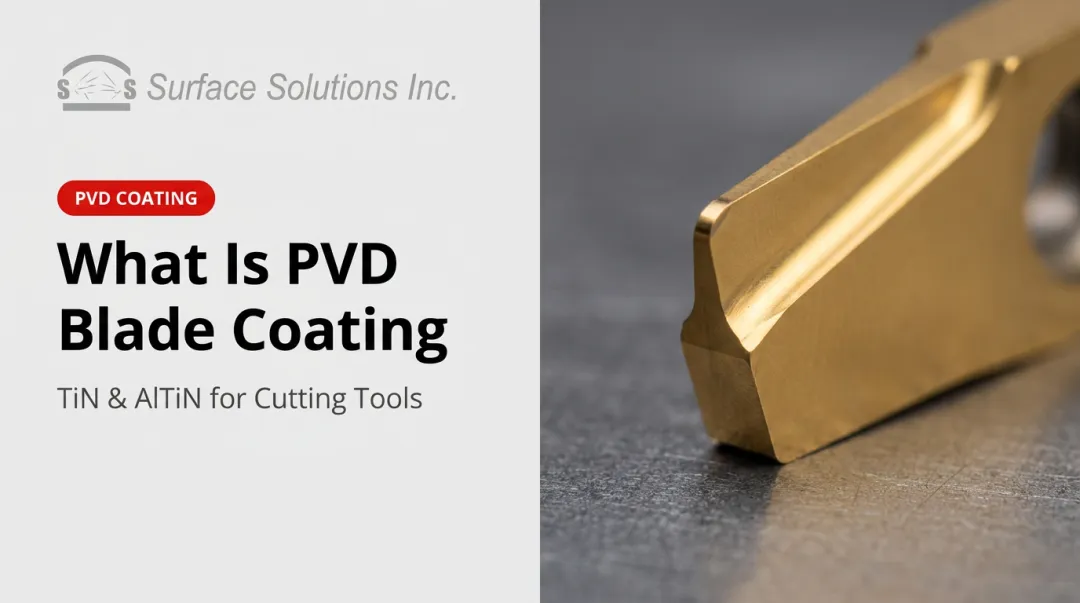
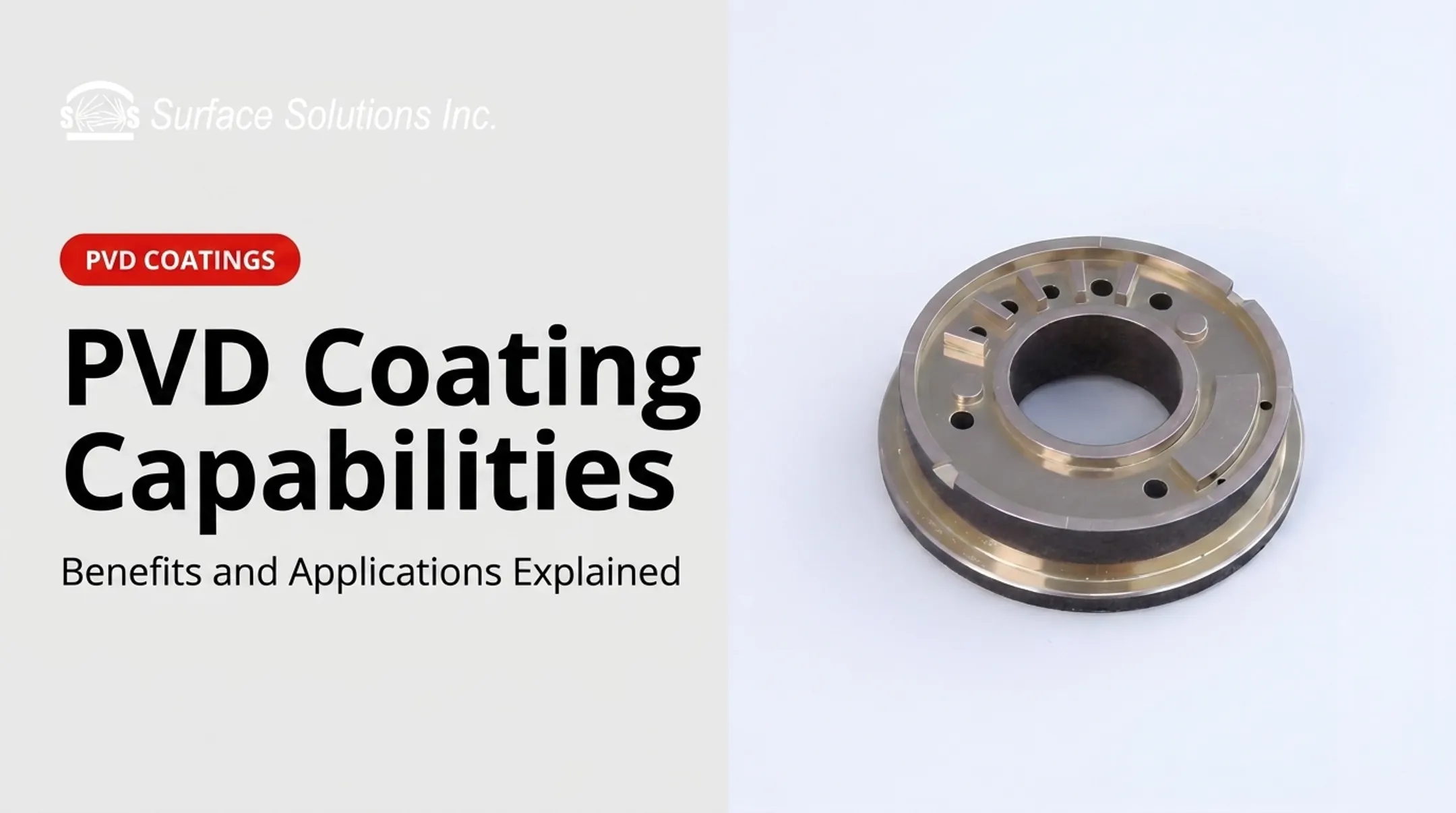
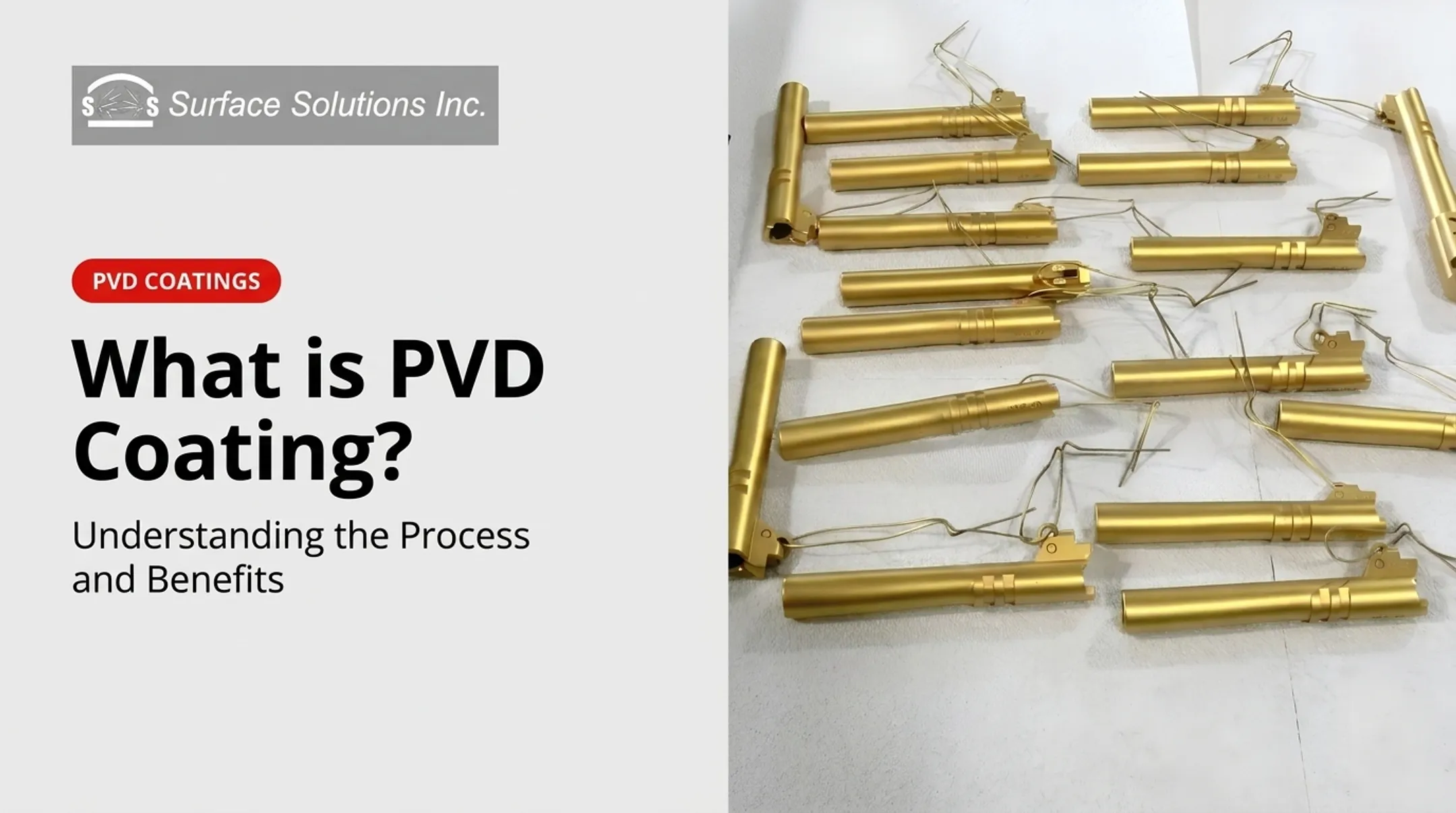
PVD (Physical Vapor Deposition) is a vacuum-based process that deposits an ultra-thin, hard metallic or ceramic film onto tools, dies, and parts. Metals like titanium, chromium, or aluminum are vaporized inside a vacuum chamber and reacted with gases such as nitrogen.
That forms a dense compound layer just a few microns thick—typically 2-5 microns—at deposition temperatures around 700°-800°F (Oerlikon Balzers).
You'll find PVD coating on:
- Cutting tools and end mills
- Stamping dies and punches
- Sheet metal forming and drawing tools
- Medical device components like scalpels, reamers, and bone drills
What matters is the result: longer tool life and lower total cost of ownership per part produced.
Key Advantages of PVD Coating for Durability and Longevity
These advantages aren't theoretical hardness ratings sitting in a lab report. They show up as parts produced before resharpening, labor hours saved, and scrap that never happens.
Extended Tool and Part Life Through Superior Wear Resistance
PVD coatings create a hard, dense surface layer that resists abrasion far better than bare or nitrided tool steel. In practice, that means tools hold a sharp edge and dimensional accuracy across many more production cycles before they need attention. A 2023 peer-reviewed study found untreated tool steel measuring around 538 HV10, compared to 2,032 HV0.01 for CrN and 2,234 HV0.01 for AlTiN coatings (PMC study, 2023). That gap in hardness is exactly why coated tooling shrugs off abrasion that would quickly round over an uncoated edge. Real-world example: One Surface Solutions customer, Don Richardson, ran a full production order of 60,000 parts without resharpening using Alpha™ coating. His tools normally needed resharpening every 10,000 parts, a 6x increase in output between sharpenings. KPIs impacted:
- Tool life cycles
- Scrap and rejection rate
- Part dimensional consistency This advantage matters most in high-volume stamping, punching, and cutting operations where tool wear directly caps throughput.

Reduced Maintenance Workload and Lower Labor Costs
Harder, smoother coated surfaces simply need sharpening and polishing far less often. That changes shop-floor routines: fewer tool changeovers, less unplanned downtime, and reduced lubricant consumption. Going back to Richardson's 60,000-part run: each resharpening normally took 8 hours to pull the tool from the press and rework it. Avoiding six sharpening cycles worked out to roughly 48 hours of labor saved on a single order. Alpha™-coated tools also never need polishing, which removes an entire step from the maintenance routine. KPIs impacted:
- Labor hours per production run
- Machine uptime
- Lubricant and consumables cost Shops on multiple shifts, or those short on skilled maintenance staff, feel the difference fast. Every hour a tool spends off the press is an hour of lost production.
Improved Corrosion, Heat, and Chemical Resistance
Certain PVD coatings, particularly CrN and TiAlN, form a protective barrier against oxidation, galling, and heat buildup during high-friction operations. In practice, parts stay cooler during production and resist galvanized build-up that would otherwise damage tooling and finish quality. In a stainless-steel drawing application, Alpha™-coated tooling produced just 15 parts before the parts became too hot to touch. Switching to CrN-coated tooling on the same job produced over 500 parts, with the output remaining only warm throughout the run. The right coating-to-application match is what drives that gap on the floor.
Lower heat and galling protect the tool and the part. Less friction means less risk of premature failure or surface damage. That same galvanized build-up resistance shows up over long production runs. One customer running Alpha™-coated M4 punches against 0.057-inch galvanized steel reported 15+ months of service and roughly 15 million parts, up from uncoated D2 punches that needed sharpening every three weeks. The customer also noted less punch chipping. The die lasted longer because the punch stayed sharp and put less stress on it. KPIs impacted:
- Part quality and surface finish
- Tool failure rate
- Production consistency High-speed forming, drawing, and harsh thermal or chemical environments gain the most here, including medical device manufacturing.

What Happens When PVD Coating Is Skipped or the Wrong Type Is Chosen
Skip proper coating selection, or pick the wrong coating for the job, and the results are predictable:
- Inconsistent part quality and higher rejection rates
- Frequent, costly tool resharpening and earlier tool replacement
- More unplanned downtime disrupting production schedules
- Rising per-unit costs as scrap and labor pile up over time
- Difficulty scaling volume without buying more tooling inventory
One documented case involved forming inserts that lasted only 20,000–25,000 hits with a prior coating treatment. After switching to a properly matched substrate and PVD coating, the same tooling reached roughly 199,000 hits (IMS Steel case study).
That nearly 8x gain came largely from reduced galling and metal pickup. Wrong coating choices do not just trim efficiency; they cap run life, raise scrap, and block volume growth.

How to Get the Most Value from PVD Coating
Getting the most value from PVD coating starts with matching the coating type to your specific wear, heat, or corrosion challenge:
- Alpha™ — strong general performer for forming and punching applications, including galvanized steel punching
- CrN — better suited for high-heat drawing applications like stainless steel forming
- AlTiN — best for demanding, high-temperature cutting tool applications

An experienced coating provider can help you weigh those tradeoffs and match the right option to your tooling. Surface Solutions, based in Fridley, Minnesota, serves manufacturers across the United States, Canada, and Mexico with PVD coatings built for metal forming, punching, and cutting tools.
Once tools are coated, track your own numbers. Parts-per-sharpening and labor hours before and after coating give you a clear ROI picture and help refine future tooling decisions.
Conclusion
PVD coating's value comes down to measurable gains: longer tool life, fewer maintenance cycles, and more consistent part quality. These advantages compound over time. Every avoided sharpening cycle and prevented scrap part adds up to real savings on labor, materials, and downtime.
Treat PVD coating selection as an ongoing operational strategy, not a one-time decision. The coating that works for one application may fall short on another, and matching the right coating to each job is where ROI shows up in longer runs and fewer maintenance cycles.
Frequently Asked Questions
How long does PVD coating last?
Lifespan depends on coating type, substrate, and application intensity. Properly applied PVD coatings can last years and often outlast uncoated tooling across production cycles.
Is PVD coating stronger than Cerakote?
Yes. PVD is a vacuum-deposited hard ceramic or metallic coating with higher hardness and wear resistance than Cerakote. Cerakote is a sprayed polymer-ceramic finish better suited to cosmetic and light-duty corrosion protection.
What industries benefit most from PVD-coated tooling?
Metal forming, stamping, cutting tools, and medical device manufacturing see the strongest gains, particularly where wear, heat, or corrosion limit tool life.
Does PVD coating affect part dimensions or tolerances?
PVD coatings are only a few microns thick (typically 2-5 microns), so they have minimal impact on tight tolerances when accounted for during tool design.
Can PVD coating be reapplied after a tool is resharpened?
Yes, tools can typically be recoated after resharpening, extending usable life through multiple cycles. The exact number of possible recoats depends on remaining tool geometry and condition.
How do I choose the right PVD coating type for my application?
Coating choice depends on your dominant challenge, whether it's wear, heat, or corrosion. Consulting a PVD coating provider like Surface Solutions helps match the coating to your specific application.