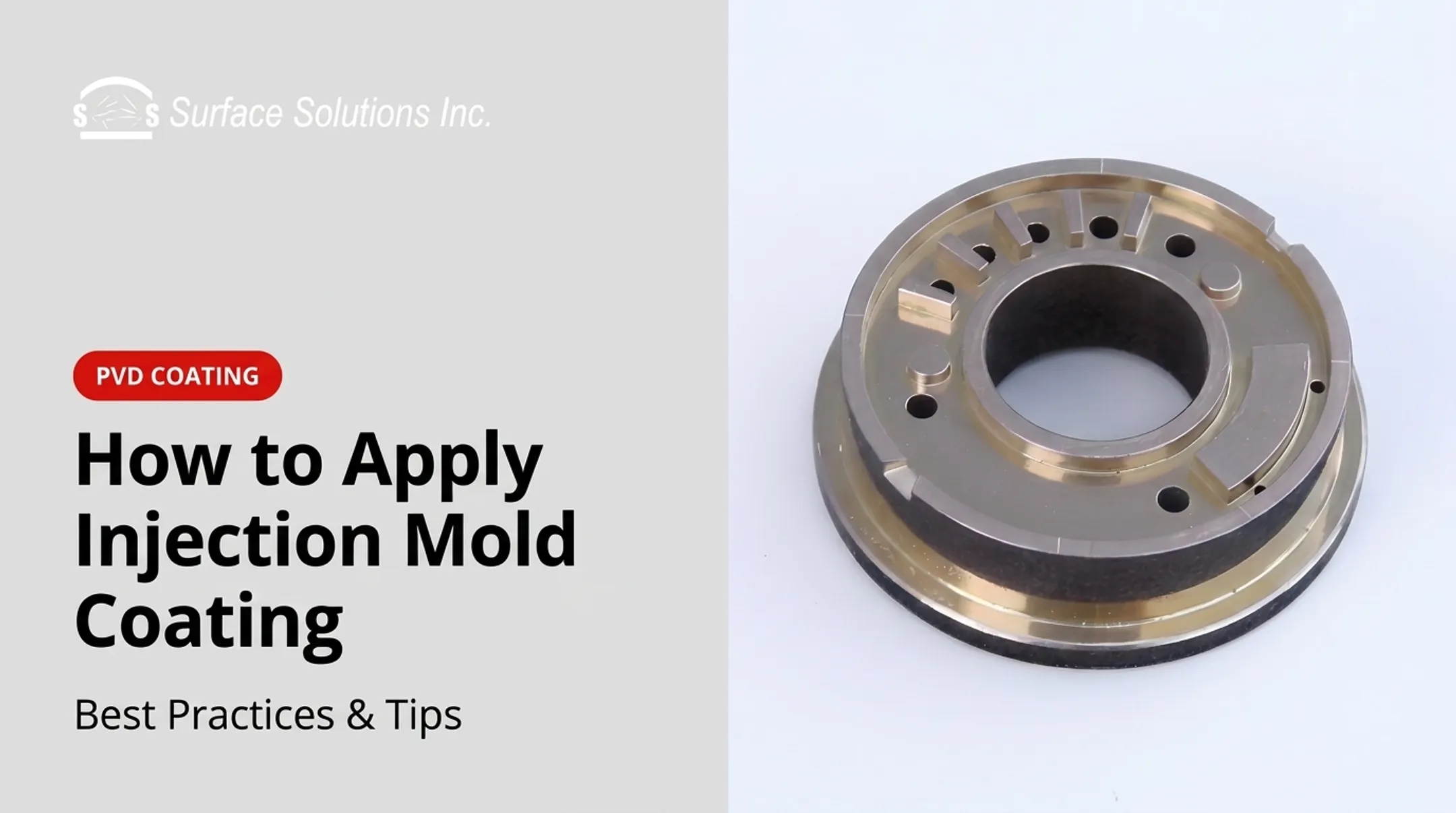
Coating technology has moved well past basic hard chrome. Today's toolmakers choose from electroless nickel, PVD coatings like TiN and CrN, and composite formulations built for specific resins and geometries. This guide breaks down the methods, where each one fits, and how to pick the right coating for your production goals.
Key Takeaways
- Mold coatings cut wear, corrosion, and maintenance frequency while improving part release and cycle times
- Hard chrome, electroless nickel, and PVD coatings each suit different resins, geometries, and volumes
- PVD coatings like TiN and CrN deliver higher hardness and longer intervals between reconditioning
- Match coating choice to resin abrasiveness, part complexity, and production volume
- Proper application and tracked maintenance schedules maximize coating lifespan
Types of Injection Mold Coating Technologies
Traditional Coatings: Hard Chrome and Electroless Nickel
Hard chrome remains a workhorse for simple mold geometries. It runs 68-72 Rockwell hardness and processes at a relatively low 128-140°F, making it cost-effective where cavity shapes are straightforward (Techmetals).
Electroless nickel (EN) takes a different approach. It deposits uniformly even into deep recesses and internal passages, which makes it a common choice for PVC molding and detailed parts.
EN reports 46-50 HRC before baking, rising to 65-68 HRC after heat treatment, with a coefficient of friction around 0.21 and salt-spray corrosion resistance up to 1,000 hours in ASTM testing (Nutmeg Chrome).
Nickel-Alloy and Composite Coatings
Nickel-cobalt and nickel-PTFE formulations build on EN's uniform plating advantage while adding better lubricity. That translates to cleaner part release on complex cavity details, particularly where uncoated steel tends to grab or drag during ejection.
PVD: The Thin-Film Advantage
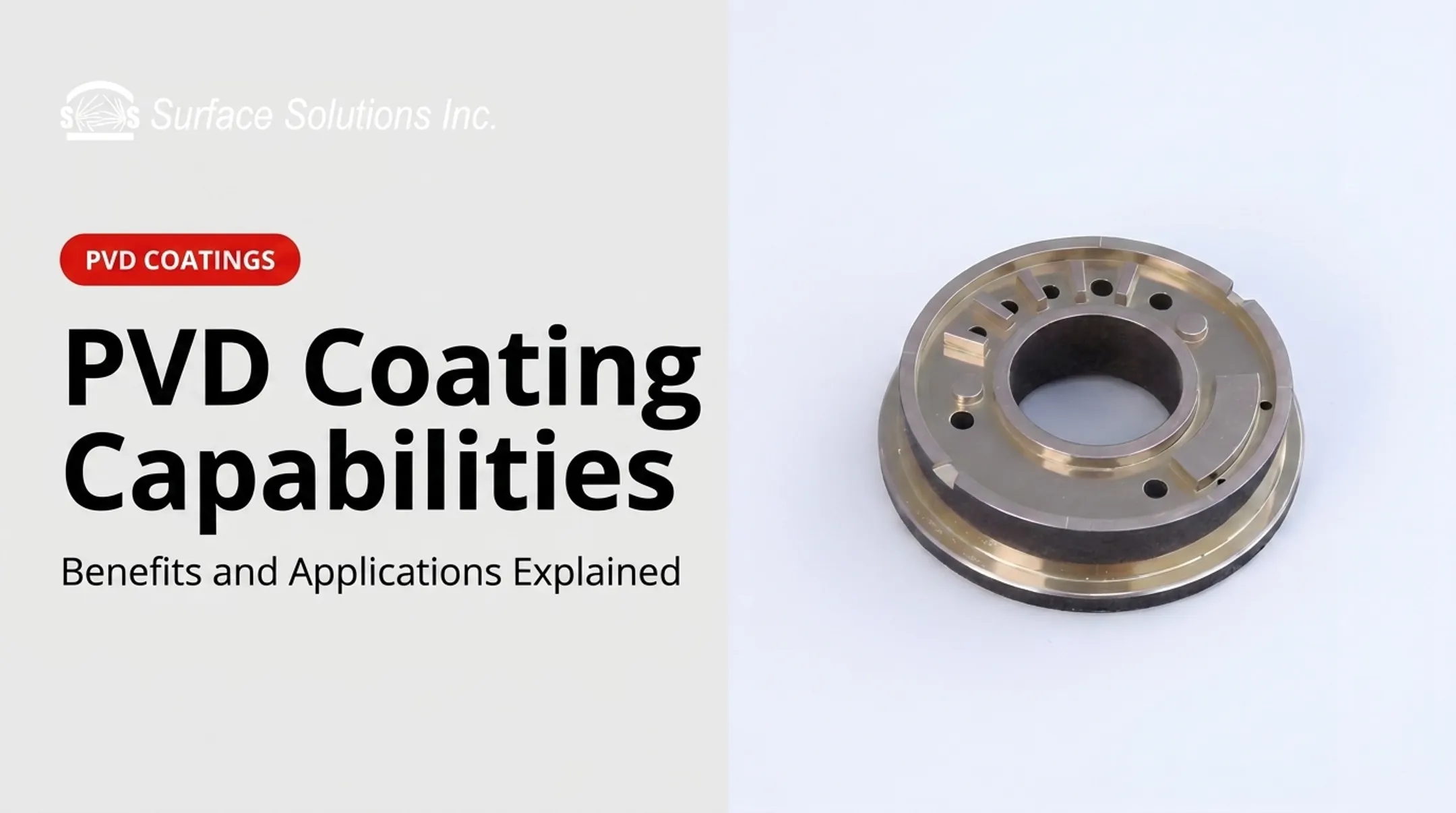
Physical Vapor Deposition vaporizes a solid coating material inside a vacuum chamber and deposits it as a thin film onto the mold surface. The resulting layer runs just 2-5 microns thick but performs far beyond its size:
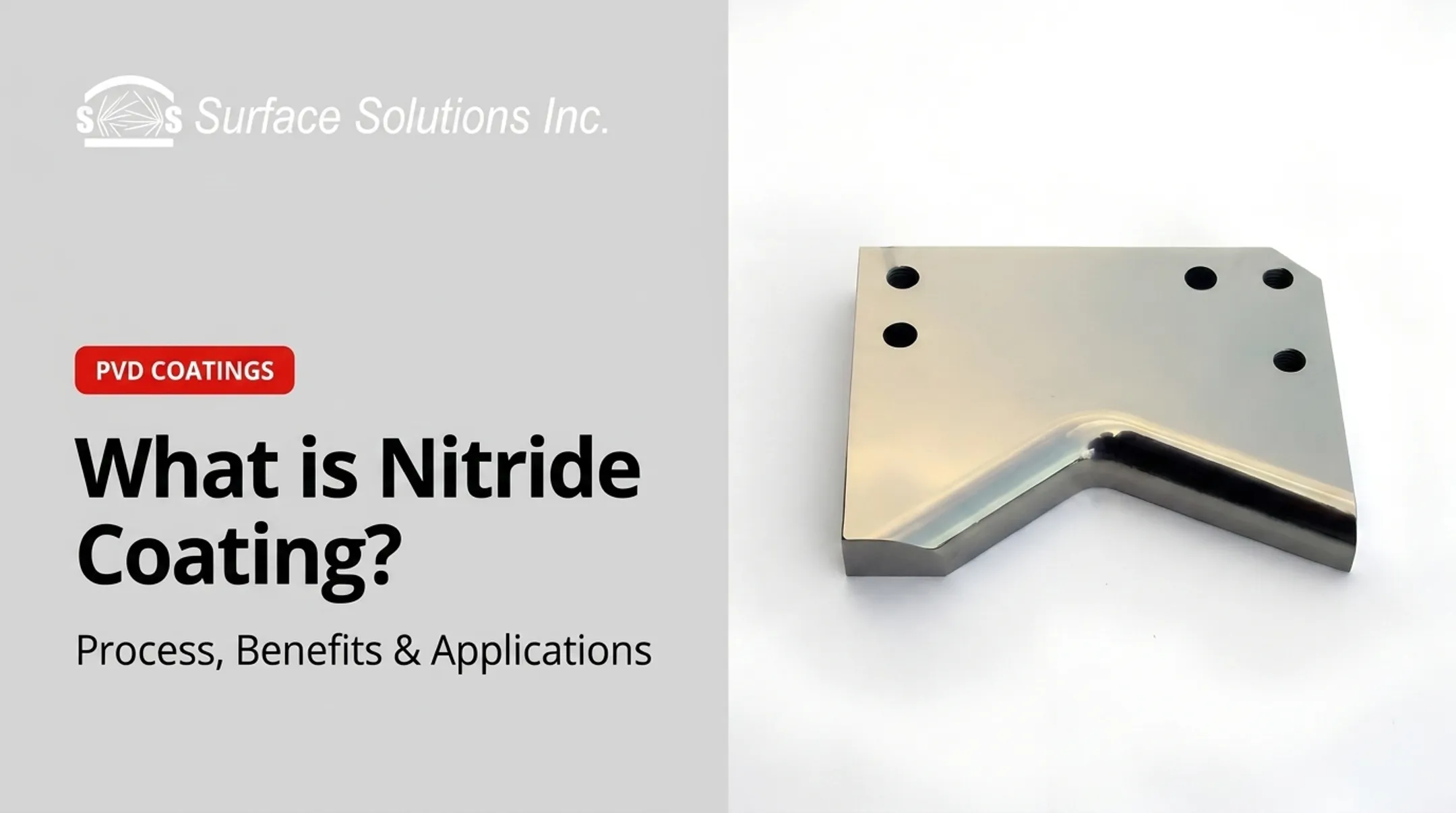
- TiN (Titanium Nitride): roughly 2,300 HV, applied up to 500°C, general-purpose hardness and wear resistance (EIFELER)
- CrN (Chromium Nitride): around 2,000 HV with a lower dry friction coefficient (0.3-0.4), strong corrosion resistance and toughness (Tipco)
- TiAlN: up to 2,800 Vickers, stable to 565°C, favored for oxidation resistance
At Surface Solutions, Alpha™ and CrN PVD options regularly outperform standard TiN on production tooling. In side-by-side runs, Alpha showed almost no material build-up versus heavy build-up on TiN-coated tools, with noticeably less chipping—gains that matter on high-wear cavity and core surfaces as well.
Coating hardness at a glance:
| Coating | Reported Hardness | Notes |
|---|---|---|
| Hard chrome | 68-72 HRC | Low process temp, simple geometries |
| Electroless nickel | 46-68 HRC (post-bake) | Uniform on complex shapes |
| TiN | ~2,300 HV | General-purpose PVD |
| CrN | ~2,000 HV | Best corrosion resistance |
| TiAlN | ~2,800 HV | Best heat stability |

Note: HRC and HV scales aren't directly interchangeable — they come from different test methods and shouldn't be read as a single ranking.
Tool coatings protect the mold. A separate category—in-mold coating (IMC)—finishes the part instead. Processes like polyurethane clearmelt apply a PUR layer inside the cavity during the shot, combining molding and surface finishing so shops can skip a post-production paint step.
Applications Across Industries
Metal Forming, Punching, and Sheet Metal Drawing
Coated dies and punches resist galling and hold their edge far longer than uncoated tooling. In one high-volume stamping application, Alpha™-coated M4 punches ran for over 15 months on 0.057-inch galvanized steel (an estimated 15 million parts), while uncoated D2 punches needed sharpening every three weeks.
In stainless steel drawing, the coating choice made a dramatic difference in heat and output:
- CrN-coated tooling: over 500 parts, staying just warm to the touch
- Alpha™-coated tooling: 15 parts before parts became too hot to touch

Different coating chemistries suit different forming conditions — there's no single "best" coating across every application.
Medical Device Manufacturing
Corrosion resistance and biocompatibility matter most here. CrN's corrosion performance makes it a strong fit for surgical instruments and medical device components.
In one documented case, stainless steel parts that galled and seized in robotic surgery ran for extended periods without seizing once PVD-coated.
Automotive Tooling and Cutting Tools
PVD hard coatings on injection molds, dies, and cutters help automotive and cutting-tool manufacturers run longer between maintenance stops and hold tighter tolerances on abrasive or high-volume jobs.
Typical uses include:
- Injection mold cores and cavities running glass-filled or abrasive resins
- Stamping and forming dies for body and structural components
- End mills, drills, and inserts cutting hardened or abrasive alloys
- Wear components that see repeated metal-to-metal contact
Shops often pick TiN, AlTiN, CrN, TiCN, or Alpha™ based on the substrate, workpiece material, and heat load—matching chemistry to the job matters more than any single “universal” coating.
Benefits of Mold Coatings
Fewer Sharpening Cycles, Less Labor
Alpha™ coating pushed one production run to 60,000 parts before resharpening, six times the usual 10,000-part interval. Pulling tooling for resharpening took 8 hours each time. Avoiding six of those cycles saved 48 labor hours on that job alone.
Eliminated Polishing Steps
One production customer went from polishing several times per run to never polishing after switching to Alpha™ coating. The polish step dropped out of the workflow entirely.
Lower Lubricant Use, Better Surface Finish
Reduced friction at the tool surface means:
- Less lubricant required per cycle
- Cleaner, better-looking finished parts
- Less residue to clean between runs
Cooler Running, Longer Tool Life
CrN's lower friction coefficient keeps parts cooler during production. In high-friction forming runs, CrN tooling kept parts warm rather than hot. Lower heat buildup means less wear on the tool face and less unplanned downtime.

How to Choose the Right Coating
Selecting a coating isn't guesswork if you evaluate the right variables:
- Resin abrasiveness: Higher glass or mineral fill content wears cavities faster and favors harder PVD coatings over softer traditional platings
- Part geometry complexity: Deep recesses and internal passages often favor electroless nickel's (EN) uniform deposition; PVD's thin film suits precision surfaces
- Required surface finish: Cosmetic exterior parts benefit from coatings with better release and lower friction, like CrN or Alpha™
- Production volume: High-volume runs justify PVD's higher upfront cost through much longer intervals between maintenance
Cost vs. performance trade-offs:
- Hard chrome: lowest upfront cost, shortest service life on abrasive resins
- Electroless nickel: mid-range cost, strong corrosion resistance, best for complex geometry
- PVD (TiN/CrN/Alpha™): highest upfront investment, longest intervals between repolishing and mold maintenance
In scratch testing, Alpha™ coating showed no visible degradation after 500 passes, while standard chrome plating showed visible wear after just 100 passes.
Work with a specialized PVD provider that can match coating chemistry and hardness to your tooling and production targets. That upfront conversation saves far more than it costs.
Application Process & Maintenance Best Practices
How PVD Coating Is Applied
The process follows a consistent sequence:
- Substrate cleaning — removing oxides, hydrocarbons, and residues via solvent or plasma etching
- Vacuum deposition — vaporizing the coating material and depositing it as a thin film, typically 2-5 microns
- Temperature control — deposition typically occurs in the 700-800°F range, compatible with most tool steels (aluminum and zinc alloys are generally excluded)

Tracking When to Recoat
Recoating on a set schedule prevents unplanned mold failures. Best practices include:
- Periodic coating thickness measurement using X-ray fluorescence methods
- Part-count tracking against known coating benchmarks for your specific application
- Scheduled inspection reports to catch wear trends before they cause defects
When recoating is due, Surface Solutions provides nationwide PVD coating service with typical ground-shipping turnaround of about three days for most U.S. locations, which helps limit tooling downtime between mold runs.
Frequently Asked Questions
What are the newest technologies in injection molding?
Emerging trends include in-mold coating (IMC) processes that combine molding and finishing in one step, AI-driven simulation tools for process optimization, and advanced multilayer PVD coatings offering improved wear resistance over single-layer formulations.
How much does it cost to get an injection mold made?
Mold costs vary widely based on size, cavity count, complexity, and material selection. Investing in coating technology upfront often reduces long-term costs by extending mold life and cutting maintenance frequency.
What is the difference between hard chrome and PVD coatings for molds?
Hard chrome is electroplated at low temperatures (around 128-140°F) and reaches roughly 68-72 HRC. PVD coatings like TiN are vapor-deposited thin films applied at higher temperatures (typically 700-800°F) with much higher surface hardness, better suited to abrasive resins.
How often should a mold coating be reapplied?
Reapplication timing depends on production volume, resin abrasiveness, and coating type. Tracking coating thickness periodically and logging part counts against known benchmarks helps determine the right recoating interval for your specific application.
Can mold coatings improve part quality, not just tool life?
Yes. Coatings reduce sticking and improve mold release, which leads to cleaner ejection, fewer surface defects, and better cosmetic finish on molded parts. Those gains show up in the finished product, not just the tooling.
Are PVD coatings suitable for all mold materials?
PVD coatings work well on most tool steels, but temperature compatibility is a key consideration since deposition typically occurs at 700-800°F. Aluminum and zinc alloys are generally not suitable substrates for standard PVD processes.