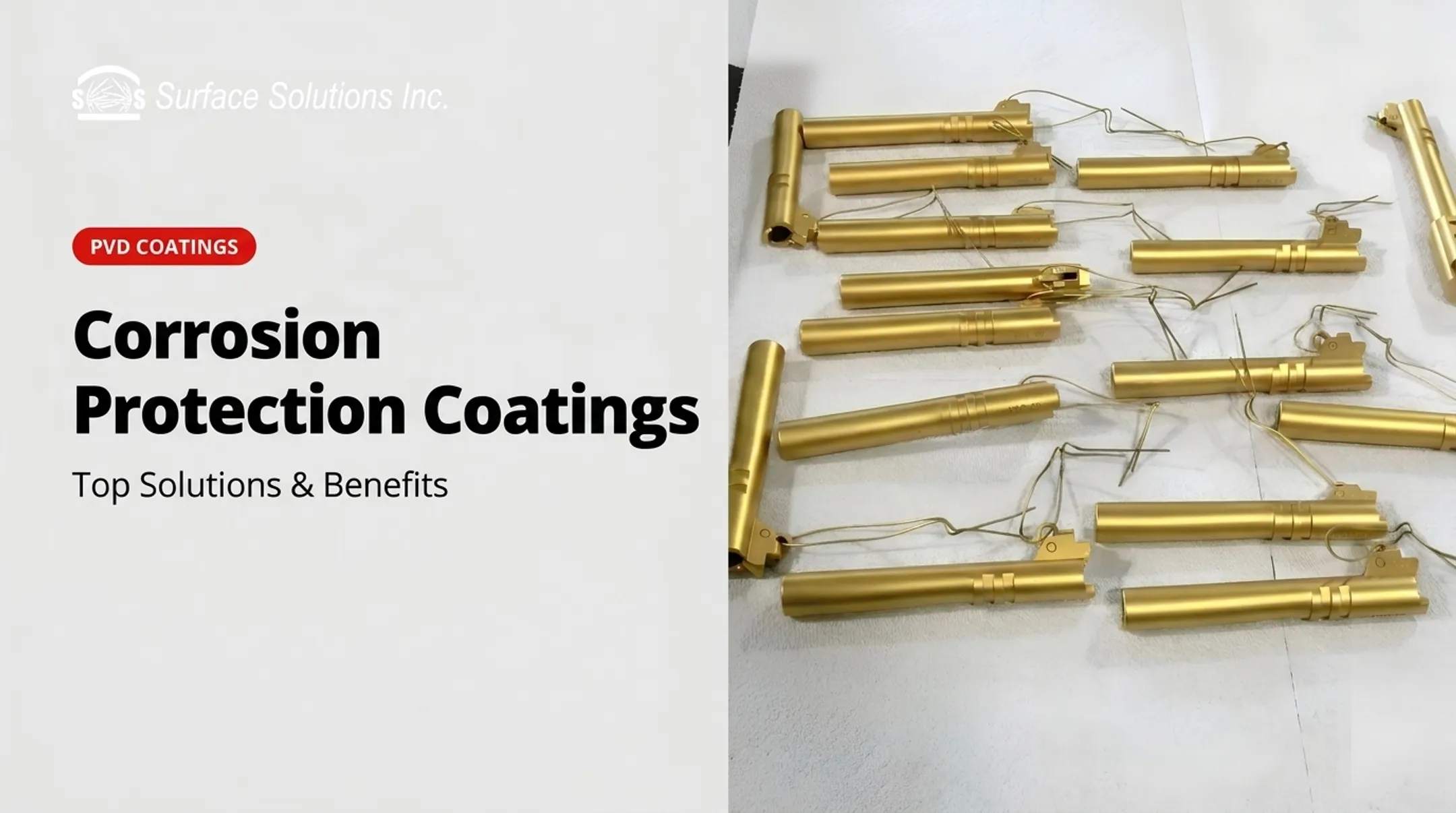
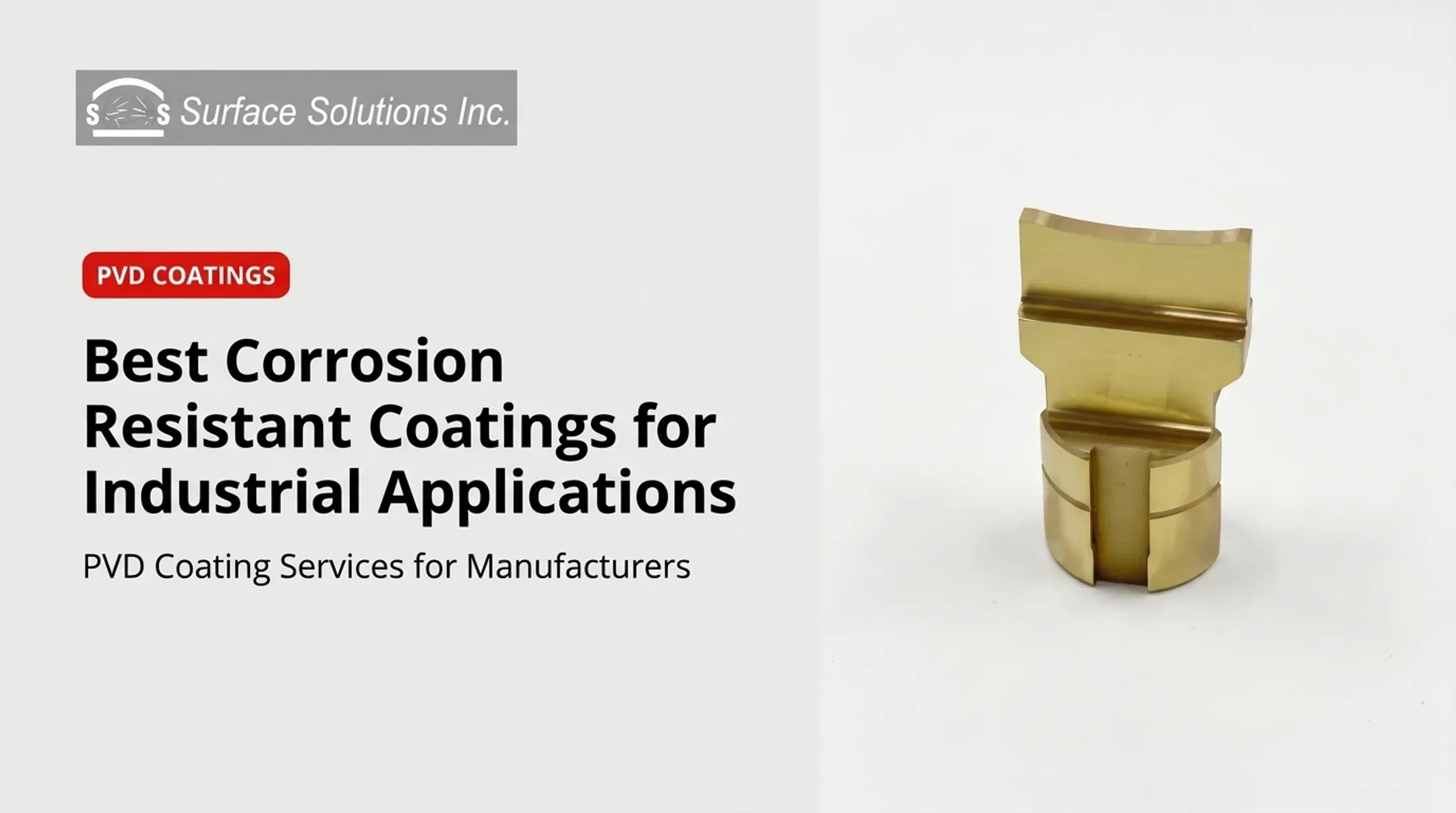
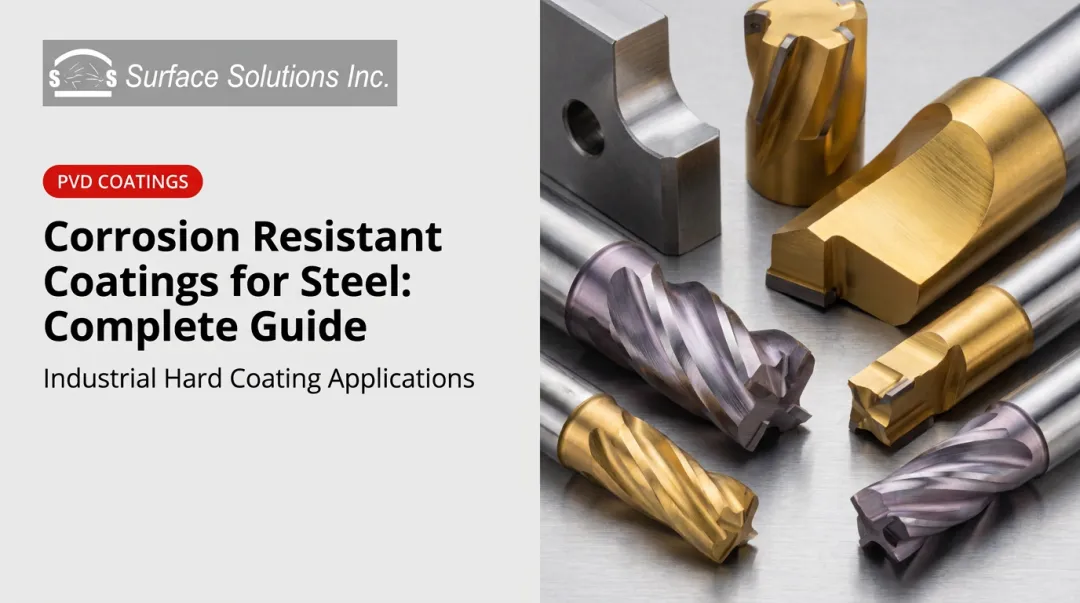
Pitting, crevice corrosion, and galvanic attack can all take hold once that layer is scratched or worn through. The right coating extends tool life, protects part integrity, and cuts maintenance downtime significantly.
This guide breaks down the top corrosion-resistant coating options for aluminum, from anodizing to PVD to nano-ceramics, so you can match the right technology to your application.
TL;DR
- Aluminum resists corrosion naturally but remains vulnerable to pitting, crevice attack, and galvanic damage
- Main options include anodizing, powder coating, PVD, chemical conversion, and nano-ceramic coatings
- Choose by exposure conditions, required service life, and total cost—not brand claims alone
- Top picks: PVD coatings, anodizing, powder coating, chemical conversion coatings, and nano-ceramic coatings
Overview of Corrosion Resistant Coatings in Aluminum Manufacturing
Corrosion-resistant coatings add a protective layer that shields aluminum parts, tooling, and structures from wear, moisture, and chemical exposure beyond what the metal can handle alone.
The AMPP Cost of Corrosion Study estimated corrosion costs the US economy $276 billion annually. Manufacturers working with aluminum tooling and components carry a real share of that burden through part failure, downtime, and premature replacement.
The sections below cover the leading coating technologies for tooling, manufacturing, and industrial aluminum applications.
Top Corrosion Resistant Coatings for Aluminum
We compared each option on real-world durability, where it fits best, key limits, and—where it matters for production tooling—turnaround.
Surface Solutions – PVD Coatings for Tools Used on Aluminum
Surface Solutions, based in Fridley, Minnesota, applies high-performance PVD coatings that extend tool and die life for metal forming, cutting, and manufacturing operations. The company serves customers across the US, Canada, and Mexico.
For steel and carbide tooling that contacts aluminum during forming, punching, or drawing, coatings like Alpha™ and CrN cut galling, galvanic buildup, and heat generation. You get fewer resharpening cycles and less reliance on lubricants during production runs. (These PVD films go on the tools—not on aluminum parts.)
One customer, Don Richardson, produced 60,000 parts without resharpening on Alpha-coated tooling, compared to the usual 10,000-part benchmark before dulling set in. Since each tool removal and resharpening cycle takes about 8 hours, avoiding six of those cycles saved roughly 48 labor hours on that job alone.
Another shop ran Alpha-coated M4 punches for over 15 months, producing an estimated 15 million parts. Uncoated D2 punches on comparable work needed sharpening every three weeks.
| Category | Details |
|---|---|
| Best For | Aluminum forming dies, punches, and cutting tools requiring extreme wear and corrosion resistance |
| Key Benefit | Up to 6x more parts before resharpening; eliminates polishing steps |
| Turnaround | Reasonable nationwide turnaround with coverage across the US |

Anodizing
Anodizing is an electrochemical process that thickens aluminum's natural oxide layer, building corrosion and wear resistance directly from the substrate itself.
It's widely used, cost-effective, and dyeable for color finishes—common on architectural trim, consumer electronics, and automotive parts.
Per MIL-PRF-8625F, anodic coatings end up harder than the base aluminum alloy. Type III (hardcoat) typically runs 0.0005 to 0.0045 inches thick for heavier wear duty.
One caution: sealing Type III coatings isn't recommended unless color or corrosion resistance is the priority, since sealing reduces wear resistance. Hard anodizing can also reduce fatigue strength, so it's not ideal where tight dimensional tolerances need to be reworked later.
| Category | Details |
|---|---|
| Best For | Architectural components, consumer electronics, automotive trim |
| Key Benefit | Builds a hard, corrosion-resistant oxide layer directly from the substrate |
| Limitation | Less effective for extreme mechanical wear compared to PVD coatings |

Powder Coating
Powder coating applies a dry polymer that's cured under heat, forming a thick protective layer with strong resistance to chipping, fading, and scratching.
Architectural-grade systems are judged against AAMA specs:
- AAMA 2604: 5 years Florida exposure; 3,000 hours humidity and salt spray
- AAMA 2605 (higher tier): 10 years Florida weathering; 6,000 hours humidity; 4,000 hours salt spray
That said, powder coating needs proper surface prep to bond correctly, and it's not the right fit for high-precision tooling where tight tolerances and low friction matter more than decorative durability.
| Category | Details |
|---|---|
| Best For | Outdoor furniture, appliances, automotive panels |
| Key Benefit | Strong environmental and UV resistance with decorative flexibility |
| Limitation | Requires proper surface prep; less suited for high-precision tooling |

Chemical Conversion Coatings (Chromate/Chromate-Free)
Chemical conversion coatings, like Alodine or chromate-free alternatives, are thin layers formed by chemical reaction with the aluminum surface. They're typically used as pretreatment before painting, not as a standalone barrier.
MIL-DTL-5541F defines the standard here, splitting coatings into Type 1 (contains hexavalent chromium) and Type 2 (chromate-free). This distinction matters more every year as environmental regulations tighten around hexavalent chromium use.
Chromate-free options are catching up. A 2019 AMPP study on trivalent-chromium-process (TCP) pretreatment for AA7075 aerospace alloy found it limited filament corrosion propagation with 86% efficiency, forming a protective zirconium-rich oxide layer roughly 22 nanometers thick.
| Category | Details |
|---|---|
| Best For | Aerospace components, pretreatment before paint/primer application |
| Key Benefit | Thin, lightweight protective layer compliant with evolving environmental regulations |
| Limitation | Primarily protective in combination with other coatings, not standalone |
Nano-Ceramic Coatings
Nano-ceramic coatings use thin, molecularly bonded layers to raise surface hardness and abrasion resistance on aluminum.
Aerospace and high-performance automotive teams use them when heat, wear, or harsh exposure outpaces standard finishes. A 2022 study on laser-processed yttria-stabilized zirconia layers reported higher hardness and wear resistance on aluminum than conventional processing, though broad commercial adoption is still early.
| Category | Details |
|---|---|
| Best For | Aerospace parts, high-performance automotive components |
| Key Benefit | Superior abrasion resistance with molecular-level bonding |
| Limitation | Higher cost compared to conventional coatings |

How We Chose the Best Coatings for Aluminum
A common mistake: picking a coating based on sticker price alone, then paying for it later in downtime and replacement costs.
We weighed each option against:
- Operating environment – chemical exposure, temperature, humidity, and salt spray
- Substrate compatibility – adhesion to aluminum and resistance to galvanic corrosion
- Wear requirements – abrasion, friction, mechanical stress
- Industry certifications – aerospace, medical, and automotive standards
- Total cost of ownership – maintenance, downtime, and replacement cycles
Each recommendation maps to longer service life, fewer corrosion failures, and lower lifecycle cost.
Conclusion
There's no single best coating for every aluminum job. Match the technology to your corrosion environment, mechanical loads, and cost targets—not brand names alone.
Before you commit to a coating partner, check:
- Real performance data on comparable parts
- Realistic turnaround times for your production schedule
- Projected long-term cost, including rework and recoating
A cheaper coating that fails early usually costs more than a premium system that lasts.
If your steel tools used in aluminum forming are galling, picking up buildup, or needing frequent resharpening, contact Surface Solutions for a PVD coating consultation on those tools.
Frequently Asked Questions
What is the best corrosion-resistant coating for aluminum?
It depends on the job. Anodizing suits general-purpose protection on aluminum parts, chemical conversion coatings are the usual aerospace pretreatment, and PVD coatings like Alpha™ and CrN excel on tooling that forms or cuts aluminum.
Does anodizing fully prevent aluminum corrosion?
Anodizing significantly improves corrosion resistance by thickening the oxide layer, but it isn't foolproof. Extreme chemical exposure or high-pH environments can still break through the anodized layer over time.
Can PVD coatings be applied to aluminum tooling and dies?
Yes. PVD coatings like Alpha™ and CrN are commonly used on tooling and dies that form or cut aluminum, reducing galling and galvanic buildup while extending service life between resharpening.
How long do corrosion-resistant coatings typically last on aluminum?
Lifespan depends on coating type, environment, and wear. Part-level finishes like anodizing can last years outdoors with proper sealing; PVD-coated forming tools often run a year or more versus uncoated tools sharpened every few weeks.
Is powder coating better than anodizing for aluminum?
It depends on the use case. Powder coating adds decorative durability and color for outdoor and consumer products; anodizing builds corrosion protection into the metal surface itself.
Are chromate-free coatings as effective as traditional chromate conversion coatings?
Trivalent-chromium and other chromate-free pretreatments can match traditional chromates for many specs. Aerospace testing has shown strong filiform-corrosion resistance on aluminum alloys when the process is correctly specified.