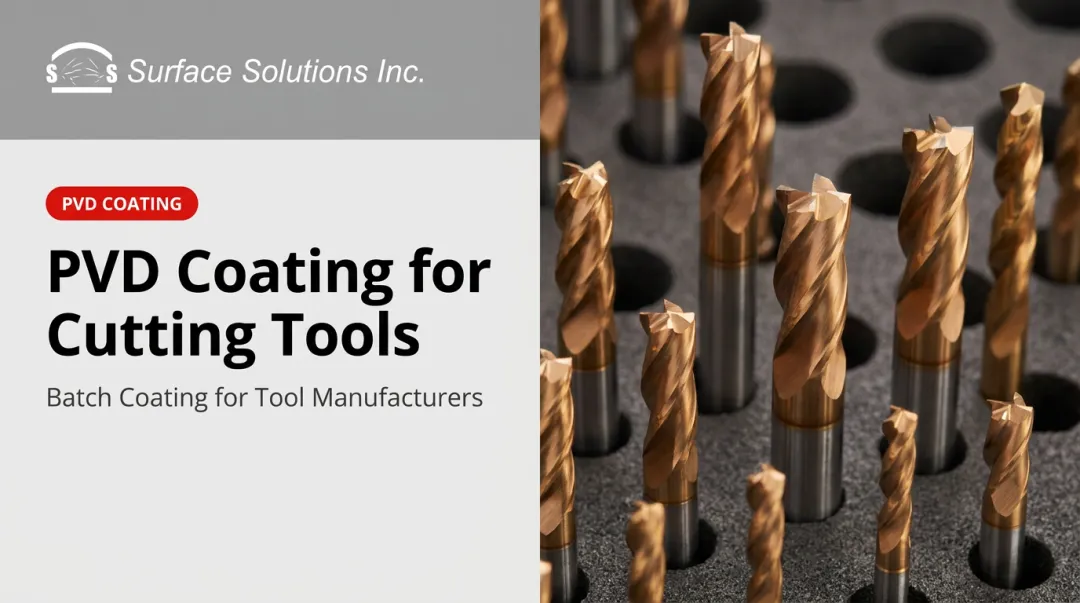
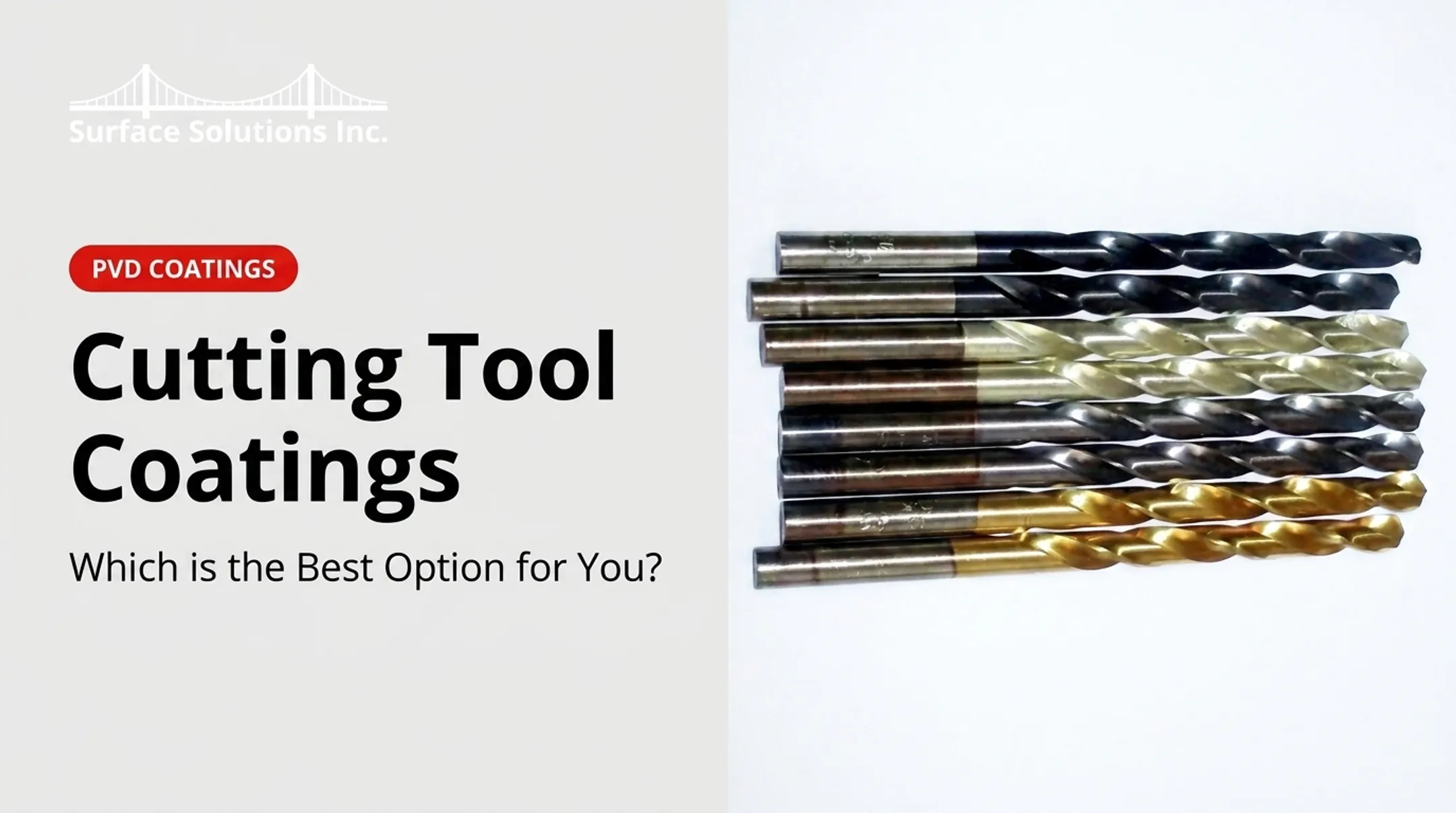
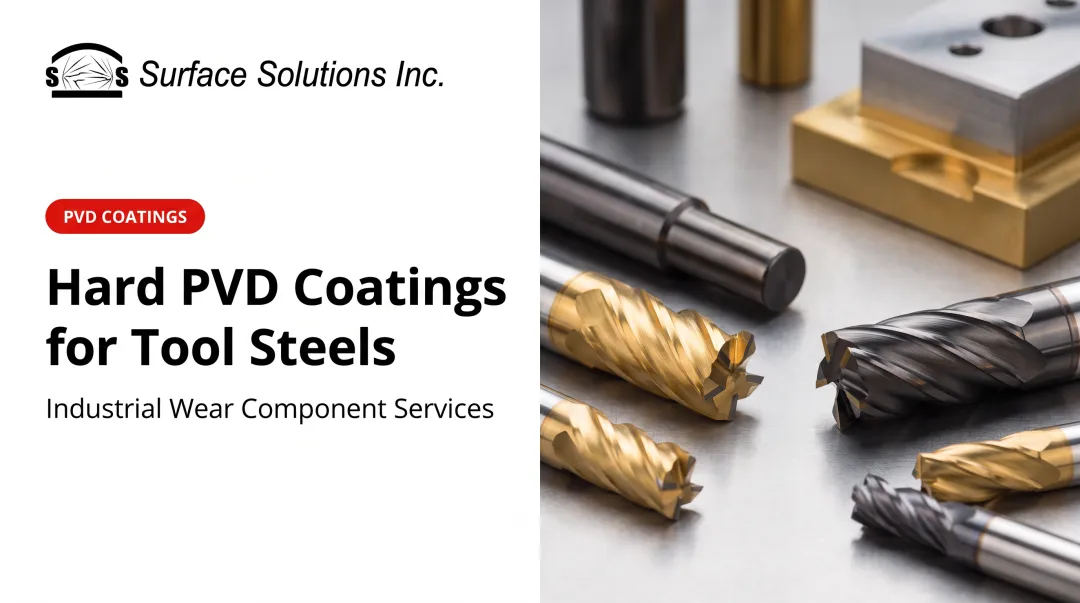
Tool steel coatings change that equation. These are thin, hard surface layers, applied through PVD, CVD, or nitriding, engineered to extend tool life, cut friction, and resist wear.
This article breaks down the coating types available, the benefits they deliver, how to pick the right one, and how Surface Solutions' PVD coatings help manufacturers get more parts out of every tool.
Key Takeaways
- Coatings can multiply parts-per-sharpening by 6x or more, cutting labor and downtime dramatically
- TiN, TiCN, TiAlN/AlTiN, and CrN are the workhorse PVD coatings for tooling applications
- Match the coating to substrate, workpiece material, and heat treatment history
- Surface Solutions' Alpha™ and CrN coatings deliver documented gains in stamping and forming jobs
What Are Tool Steel Coatings and Why Do They Matter
Tool steel coatings are engineered surface layers, typically just a few microns thick, that increase hardness, lower the coefficient of friction, and resist corrosion and abrasive wear. They don't change the bulk properties of the steel underneath. They protect the surface where the damage actually happens.
The mechanism is straightforward:
- High surface hardness resists abrasive wear from repeated contact with workpieces
- A low coefficient of friction reduces galling and adhesive wear, meaning less material sticks to the tool
- A stable, inert surface resists oxidation and corrosion in humid or chemically active environments
The production numbers back this up. One documented case involved M4 tool-steel punches coated with Surface Solutions' Alpha™ coating, running for more than 15 months and producing an estimated 15 million parts while punching 0.057-inch galvanized steel. The same shop had previously sharpened uncoated D2 punches every three weeks.
That said, coatings aren't a fix for bad fundamentals. If the tool steel is poorly heat-treated, has the wrong hardness, or was designed incorrectly, a coating won't save it. Coating adds a protective layer on top of a sound tool. It doesn't correct one built wrong.
Common Coating Application Methods
- PVD (Physical Vapor Deposition): Low-temperature (typically 480–840°F), ideal for close-tolerance tools where distortion risk must stay minimal
- CVD (Chemical Vapor Deposition): High-temperature process (up to roughly 1925°F), producing very uniform coatings on complex geometries
- Nitriding and duplex coatings: Thermochemical case hardening, often combined with a PVD topcoat, common on forming and molding tools that need a hardened subsurface plus a low-friction skin

Popular Types of Tool Steel Coatings
Not all coatings behave the same way, and picking the wrong one can cost you tool life instead of extending it.
- Titanium Nitride (TiN): Gold-colored, general-purpose coating. Solid wear resistance for taps, drills, and mild-steel machining under 100 m/min.
- Titanium Carbonitride (TiCN): Harder than TiN with lower friction, better suited to milling, blanking, and higher-pressure forming applications.
- Titanium Aluminum Nitride (TiAlN) and Aluminum Titanium Nitride (AlTiN): Built for heat. These coatings hold up under dry, high-speed machining where TiN would break down.
- Chromium Nitride (CrN): Low friction, minimal built-up edge. A strong choice for aluminum, low-alloy steels, and stainless drawing where sticking and heat buildup are the enemy.
- Diamond-Like Carbon (DLC): Extremely low friction, best suited to non-ferrous and aluminum applications where galling is the main failure mode.

Beyond these standards, proprietary coatings target tougher stamping and forming work.
Surface Solutions' Alpha™ coating is built to outperform standard TiN in demanding stamping and forming jobs. In one documented comparison on 304 stainless steel, Alpha delivered twice the tool life of TiN at unchanged speeds and feeds.
On galvanized-steel punches, Alpha showed almost no buildup where a standard TiN punch accumulated significant material.
Key Benefits of Coating Tool Steel
The value of coating shows up in fewer maintenance stops and better parts.
- Surface Solutions customer Don Richardson reported coated tools finished a 60,000-part order without resharpening, versus every 10,000 parts before. At 8 hours per cycle, skipping six sharpening events saved 48 hours of labor on that order alone.
- Lower-friction coatings cut lubricant use on the run, which reduces cleanup time and contamination risk on finished parts.
- Less chipping, less galling, and cleaner finishes improve part quality. In one stainless-steel drawing job, switching from Alpha™ to CrN raised output from 15 parts (too hot to touch) to over 500 parts that stayed only warm.
- Upfront coating cost is real, but against 48 saved labor hours or a 6x jump in parts-per-sharpening, it typically pays for itself fast.

How to Choose the Right Coating for Your Application
Coating selection isn't guesswork. It comes down to four questions:
- What's the substrate, and what's its heat treatment history? Coating temperature must stay below the tool steel's tempering point to avoid softening or distortion.
- What material are you forming or cutting? CrN suits aluminum, low-alloy steel, and stainless drawing. TiAlN handles hard steels and high-heat cutting.
- What's the operating temperature and speed? Dry, high-speed machining needs the thermal stability of TiAlN or AlTiN. Standard-speed work often does fine with TiN or TiCN.
- What are your tolerance requirements? Coating hardness, thickness, and friction all need to fit within your dimensional tolerances.

Surface Solutions coats most metals, with a few process limits:
- No aluminum or zinc-containing alloys
- Single-piece metal only—not assemblies with pressed-in components or plastic inserts
Industries and Applications That Benefit Most
| Industry | Typical Coating Use |
|---|---|
| Metal forming, punching, sheet metal drawing | TiCN, CrN, Alpha™ for long die run times |
| Cutting tools (drills, taps, reamers, mills) | TiN, TiAlN, Alpha™ for wear and heat resistance |
| Medical device manufacturing | TiN, DLC, AlTiN for precision and corrosion resistance |
Shops that coat regularly see the difference on the floor. Tony Deschenes, owner of Special Tools, Inc. in St. Francis, Minnesota, said nearly everything his shop resharpens goes to Surface Solutions for coating. Customers who tried coating once wanted every tool coated afterward because the tools performed "better than new."
Angela Naasz, CFO at K&C Manufacturing, credited Surface Solutions' Alpha™ cutters with eliminating an entire step in their process.
Surface Solutions coats parts shipped from across the US, Canada, and Mexico from its Fridley, Minnesota facility. Most of the country is reachable within two to three days by ground shipping.
Frequently Asked Questions
What is the most durable coating for steel?
TiAlN/AlTiN and DLC coatings rank among the most durable for hardness and heat resistance. The best choice still depends on your application and workpiece material.
What is the most popular coating for drill bits?
TiN remains the most common choice thanks to affordability and solid general-purpose wear resistance. TiAlN is gaining ground for high-speed drilling where heat resistance matters more.
What is tool steel good for?
Tool steel is built for cutting, forming, and molding applications where hardness, wear resistance, and toughness under repeated stress are essential.
How long does a PVD coating last on tooling?
Coating life depends on application intensity and workpiece material. Properly applied coatings can multiply output several times—one M4 punch job ran 15 million parts over 15 months.
Can old or worn tools be recoated?
Many worn tools can be stripped and recoated if the substrate is still structurally sound. Surface contamination such as oxides, EDM recast, or bluing must be removed first, since coatings won't adhere properly over them.
Does coating affect part tolerances?
Coating thickness runs about 0.0001–0.0002 inches (roughly 2-5 microns), which usually has minimal impact on fit. Precision tooling should still account for that thickness at the design stage.