Choosing wrong isn't a small mistake. The wrong coating means shorter tool life, more unplanned downtime, and higher total production costs over time. A punch that needs resharpening every three weeks instead of every three months adds up fast in labor hours alone.
This guide breaks down how each process works, how they compare on durability and cost, and how to pick the right one for metal forming, cutting, and precision tooling applications.
Key Takeaways
- PVD forms a thin ultra-hard metallic film; powder coating cures a thicker polymer layer.
- Hardness and wear resistance favor PVD, extending tool and die life significantly.
- Powder coating offers a wider color range and lower upfront investment for large parts.
- Use PVD for cutting tools, dies, and precision parts; powder for appliances and outdoor equipment.
- The right choice depends on substrate, wear environment, production volume, and budget.
PVD Coating vs Powder Coating: Quick Comparison
Cost
PVD: Requires specialized vacuum equipment and precise process control, so per-part costs run higher than powder coating. That premium often pays for itself through fewer tool changes and less downtime.
Powder coating: Lower equipment barriers and material costs make it the more budget-friendly option for large-volume structural parts.
Composition/Process
PVD: Metal is vaporized in a vacuum chamber and deposited atom-by-atom onto the part surface at deposition temperatures around 700–800°F.
Powder coating: Dry polymer powder is applied electrostatically, then cured with heat, typically around 320–400°F depending on the formulation.
Durability & Wear Resistance
PVD: Coatings can extend medical instrument life by up to 10 times compared to uncoated tools, according to Modern Machine Shop. Other sources report more conservative multiples of 1.5x–3x depending on the application.
Powder coating: Resists chipping, fading, and corrosion but doesn't approach the hardness levels of PVD films.
Coating Thickness
- PVD: 0.0001"–0.0002" (roughly 2–5 microns)
- Powder coating: Typically 60–110 microns depending on desired texture and finish

Best Applications
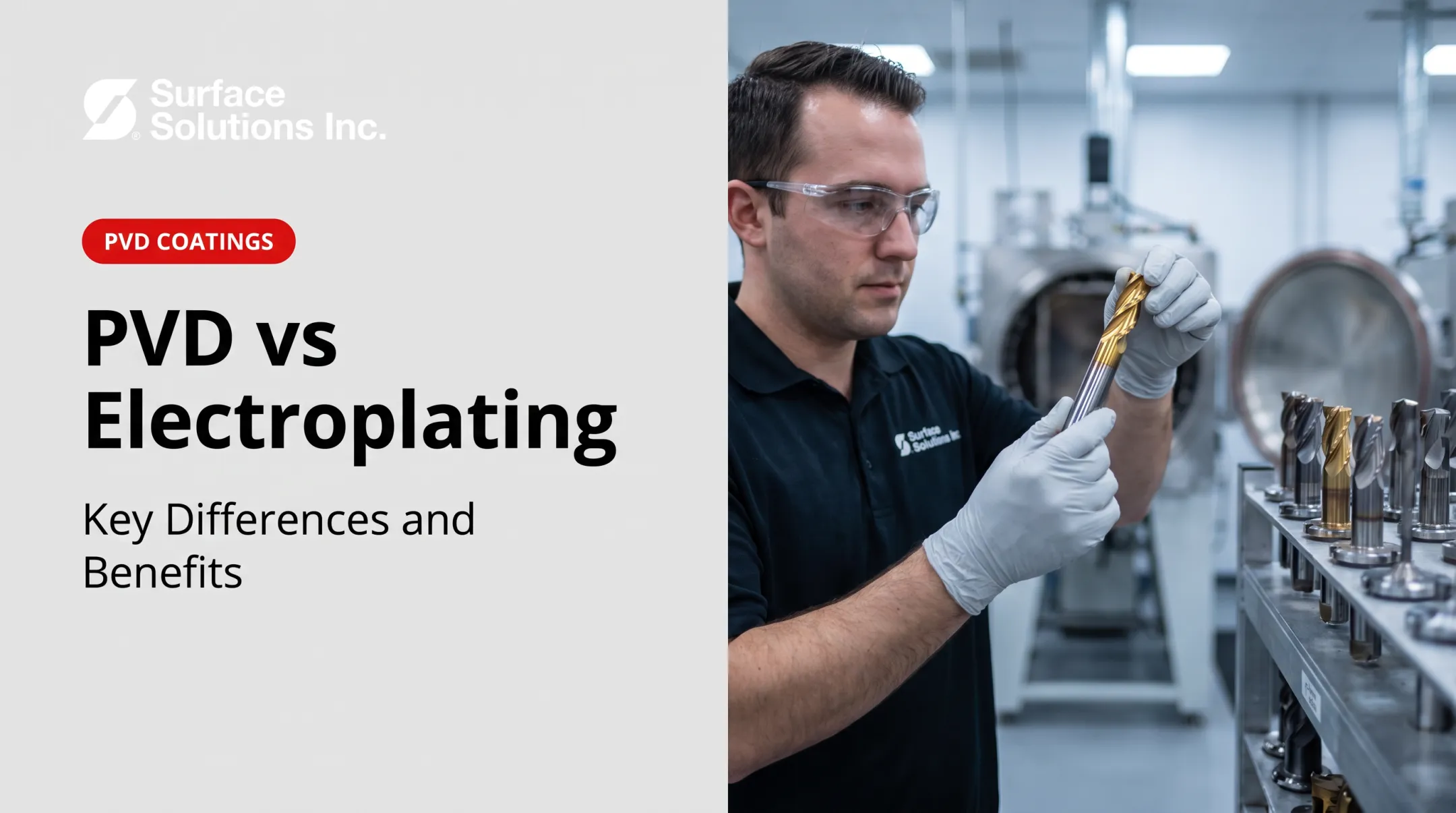
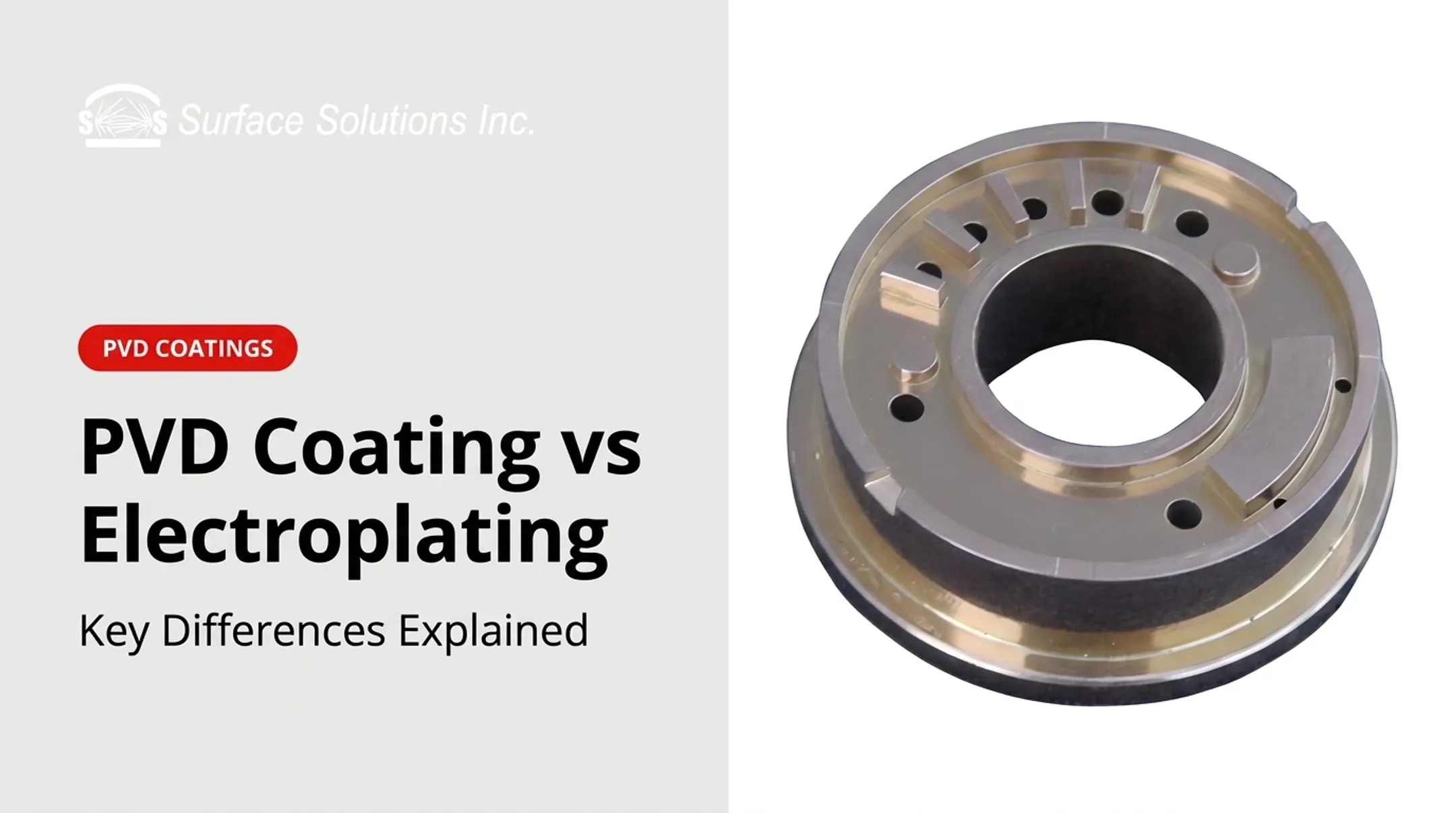
- PVD: Cutting tools, stamping dies, punches, medical instruments, injection molding tooling
- Powder coating: Appliance housings, outdoor furniture, automotive brackets, architectural components
What is PVD Coating?
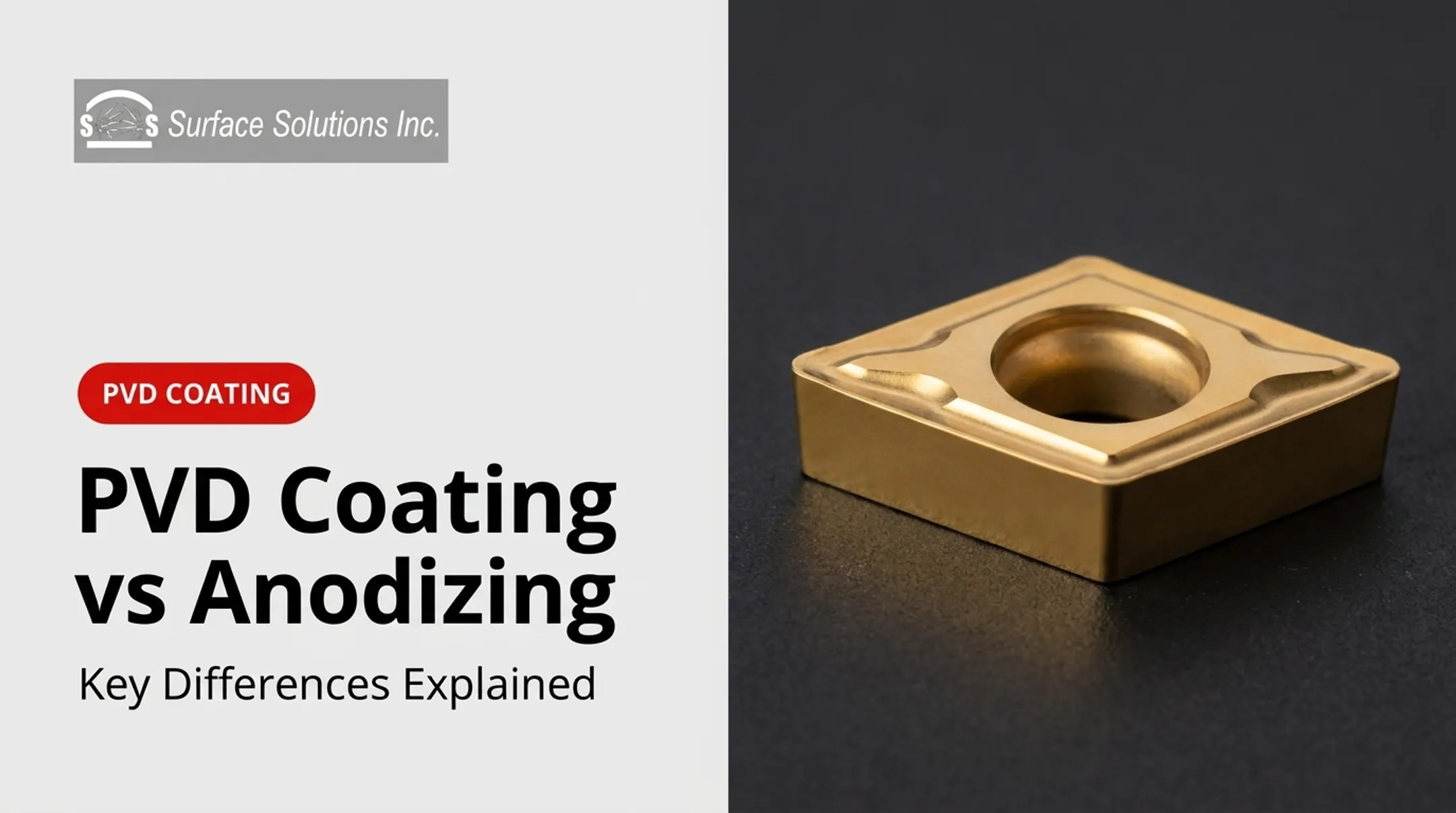
PVD, or physical vapor deposition, vaporizes coating material inside a vacuum chamber and deposits it directly onto the substrate surface. The result is a thin, hard film molecularly bonded to the part, not layered on top.
This matters for anyone running high-volume tooling operations. A well-applied PVD coating means:
- Fewer sharpening cycles
- Less lubricant needed during production
- Longer die run times between maintenance
- Reduced overall maintenance workload
Common PVD Coating Types
Different PVD coatings serve different jobs:
- TiN (Titanium Nitride): Standard high-performance coating offering excellent hardness and wear resistance
- AlTiN (Aluminum Titanium Nitride): Superior thermal stability and oxidation resistance for high-heat operations
- TiCN (Titanium Carbo-Nitride): Hybrid coating combining titanium and carbon for enhanced toughness
- CrN (Chromium Nitride): Corrosion-resistant, well-suited to medical and food-processing environments
- Alpha™: Surface Solutions' proprietary formulation built for specialized wear applications
One customer switched from uncoated D2 punches (sharpened every three weeks) to Alpha™-coated M4 punches. The coated tooling ran for over 15 months and produced an estimated 15 million parts on galvanized steel with minimal maintenance.

Use Cases of PVD Coating
PVD shows up at nearly every stage of the tooling lifecycle. Punches, dies, cutting tools, and medical device components all benefit from the added surface hardness.
Industries where PVD dominates:
- Metal forming and sheet metal drawing
- Punching and stamping operations
- Medical device manufacturing
- Precision cutting tool production
In one stainless steel drawing application, CrN-coated tooling produced over 500 parts while staying just warm to the touch. The same job managed only 15 parts before the tooling ran too hot with a different coating.
What is Powder Coating?
Powder coating applies dry polymer powder electrostatically, then cures it with heat to form a hard protective layer. It's a go-to method for parts that need durable, decorative finishing rather than extreme wear resistance.
Core benefits:
- Strong corrosion resistance for outdoor or humid environments
- Reduced chipping and fading versus liquid paint
- Fewer solvents than traditional wet coatings, cutting environmental impact

Those finishes come from several powder chemistries. Common subtypes include polyester, epoxy, polyurethane, and acrylic powders, each suited to different flexibility, UV resistance, and finish requirements.
Use Cases of Powder Coating
Powder coating works well on structural components, housings, and brackets where color and corrosion protection matter more than extreme hardness.
Typical products and industries:
- Home appliances
- Automotive trim and structural parts
- Outdoor furniture and equipment
- Architectural panels and fixtures
The Powder Coating Institute notes that material utilization efficiencies of 95%–98% are achievable with proper recovery equipment, which helps keep material waste and costs down on large production runs.
PVD vs Powder Coating: What is Better for Manufacturing?
Neither process wins in every shop. The better choice depends on a few practical factors:
- Substrate type — PVD needs conductive, single-piece metal parts; it won't work on assemblies, parts with plastic inserts, or aluminum and zinc alloys
- Wear exposure — High-friction, high-heat tooling needs PVD's hardness; decorative or low-wear parts usually don't
- Production volume — High-cycle tooling justifies PVD's higher upfront cost through less downtime
- Repairability — Powder coating can be touched up; PVD generally cannot
- Budget — Powder coating wins on lower initial investment
Choose PVD for high-wear tooling and precision parts that need longer service life: dies, punches, cutting tools, and medical instruments.
Choose powder coating for large structural parts where cost and color options matter more than extreme durability.
Real World Example: Tooling Performance Case Study
A manufacturer running uncoated D2 die punches faced a familiar problem: sharpening every three weeks. Each maintenance cycle meant:
- 1 hour to remove the die
- 2 hours (minimum) to separate, sharpen, and reassemble
- 1 hour to reinstall and get back to production
That's roughly 4 hours of downtime every three weeks — cycle after cycle.
The manufacturer switched to M4 tool steel with Alpha™ PVD coating from Surface Solutions. Over 15 months of continuous use, the coated tooling produced an estimated 15 million parts — a sharp jump from the previous three-week sharpening cycle.
In a separate case, a customer producing standard parts hit 60,000 parts before needing a resharpening, compared to the typical 10,000-part benchmark. That's 6 times more parts per sharpening cycle. At roughly 8 hours of labor per sharpening, avoiding six sharpening cycles saved 48 hours of labor — time that went straight back into production instead of maintenance.

Takeaway: For high-wear tooling applications, PVD coating pays for itself quickly through reduced downtime and fewer replacement cycles.
If your tools or dies are eating up maintenance hours, check whether they qualify for a PVD coating upgrade. Contact Surface Solutions to talk through your tooling setup.
Conclusion
Neither coating is universally better. Choose based on the job, not a blanket ranking.
- PVD: High-wear precision tooling where longer tool life and less maintenance matter most
- Powder coating: Large, cost-sensitive structural parts where color range and lower upfront cost come first
Weigh tool life, maintenance cost, and production goals against your budget. If frequent tool replacement or downtime is eating into output, Surface Solutions applies high-performance PVD coatings like Alpha™ and CrN to extend tool life and cut operating costs.
Frequently Asked Questions
Is PVD stronger than Cerakote?
PVD generally offers higher hardness and wear resistance for demanding tooling applications. Cerakote offers more flexibility when impact absorption matters, though direct hardness comparisons are difficult because the two use different testing scales.
Is PVD coating better than powder coating?
It depends on the application. PVD wins on durability, hardness, and tool life extension; powder coating wins on upfront cost and color variety for large parts.
Can PVD coating be repaired if damaged?
No. PVD is molecularly bonded to the substrate and can't be spot-repaired like powder coating, which allows touch-ups on damaged areas.
How long does PVD coating last on tools and dies?
PVD-coated tools often last up to 6 times longer between resharpenings than uncoated tools. Results vary by substrate, coating type, and application conditions.
Is powder coating cheaper than PVD coating?
Yes. Powder coating typically costs less upfront and needs less specialized equipment than PVD, so it suits large-volume structural parts better.
What industries use PVD coating the most?
Metal forming, cutting tools, medical device manufacturing, and precision tooling industries rely on PVD most heavily due to its extreme hardness and wear resistance in high-cycle applications.