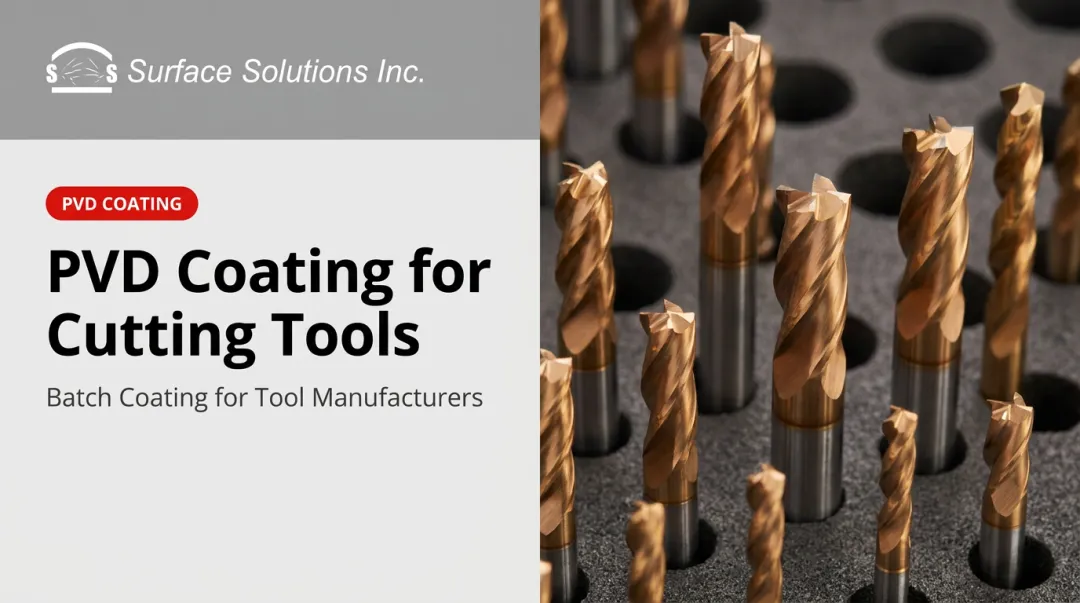
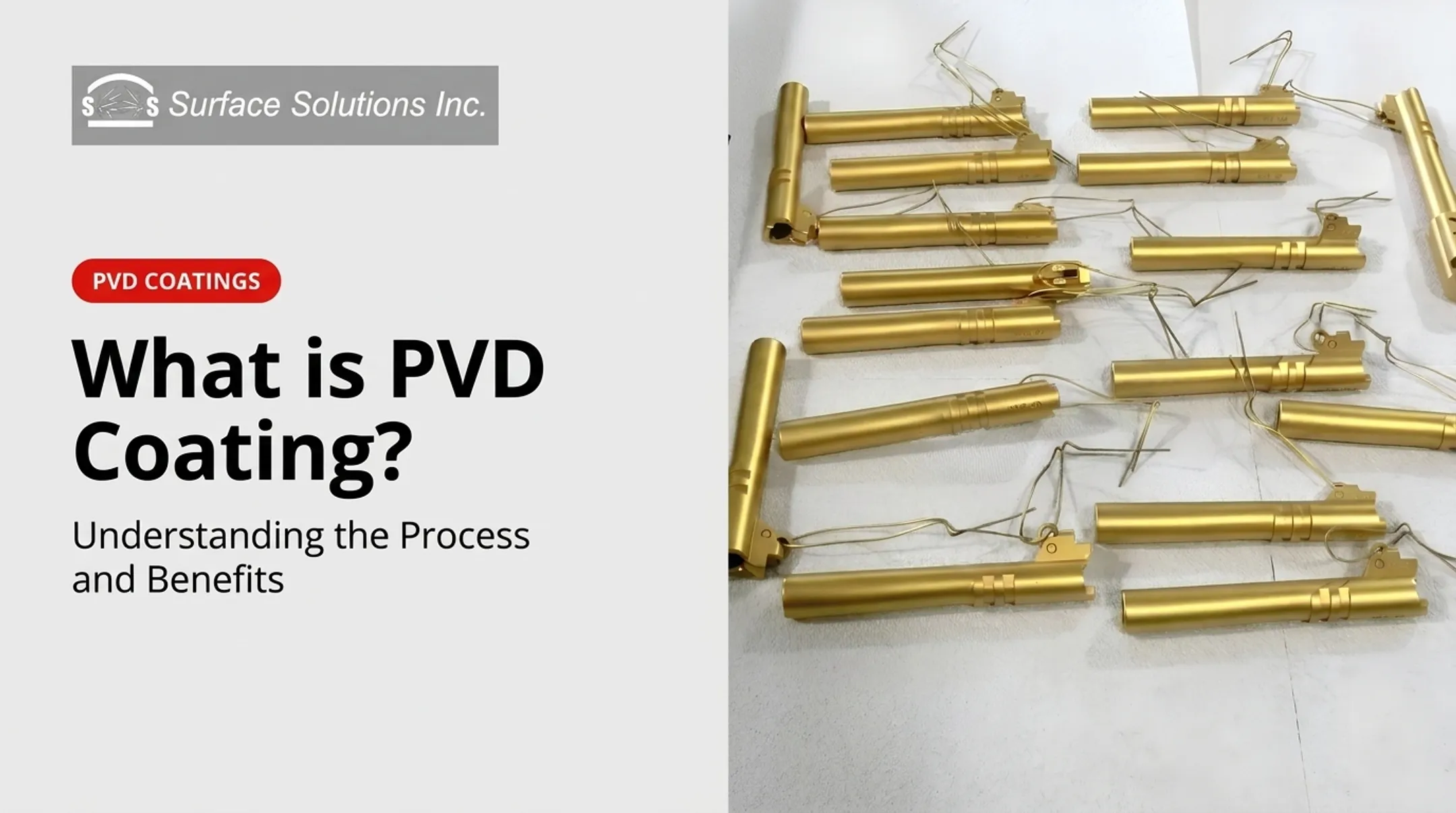
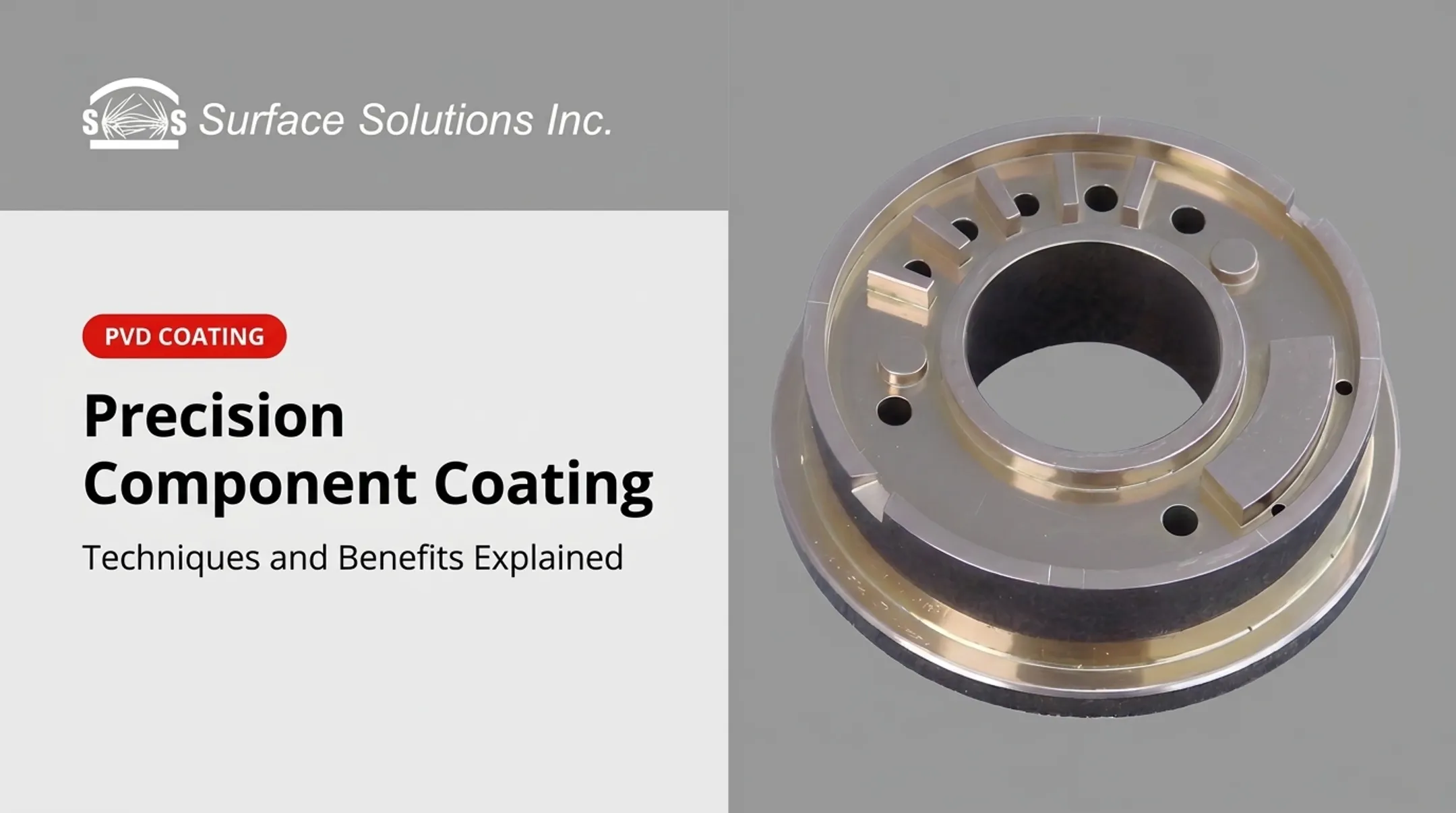
PVD coating gets discussed in technical terms: hardness values, deposition temperatures, coating chemistries. But on the shop floor, none of that matters as much as what it actually changes: fewer resharpening cycles, less scrap, more parts per shift.
This article breaks down what PVD coating capabilities deliver in day-to-day metal forming, cutting, and manufacturing operations, not just in a lab report.
TL;DR
- PVD adds an ultra-thin hard film in a vacuum chamber that protects tools from wear
- Longer tool life, fewer resharpening cycles, better part finish, and lower lubricant use
- Used on cutting tools, stamping dies, punches, drawing tools, and medical instruments
- Matching TiN, CrN, AlTiN, or Alpha™ to the job extends tool life and lowers cost per part
What Is PVD Coating (Brief Context)
PVD, or Physical Vapor Deposition, is a vacuum process that converts a solid coating material into vapor, then condenses it as a thin, hard film onto a tool's surface. The film bonds at the atomic level, so it doesn't flake or peel like a paint or plating layer might.
Typical thickness runs 0.0001–0.0002 inches (2–5 microns) — thin enough that it rarely affects part fit or tolerance, but hard enough to resist abrasion and heat.
You'll find PVD coating applied to:
- Cutting tools and carbide inserts
- Stamping dies and punches
- Drawing and forming tools
- Injection molding components
- Medical instruments and precision components
What matters on the floor is the outcome: tools that last longer, produce cleaner parts, and require less monitoring.
Key Advantages of PVD Coating Capabilities
These gains show up in cost per part, downtime frequency, and scrap rate—and over a high-volume run, small per-part improvements compound quickly.
Advantage 1: Extended Tool Life and Reduced Resharpening
PVD coatings create a hard barrier against abrasive wear, which pushes back the point where a tool needs resharpening. That changes maintenance schedules from "constant interruption" to "planned event."
A 2019 tinplate-stamping study found reconditioning intervals moving from roughly 80,000 cycles uncoated to an expected 500,000 cycles with TiAlN — a gain of more than 500%, according to research published in Micromachines.
Surface Solutions has documented similar patterns closer to home. In one case study, a three-corner carbide insert machining 304 stainless steel saw:
- TiN set the baseline life
- Alpha™ delivered 2x the life of TiN
- AlTiN delivered 3x the life of Alpha™
- Stacked result: about 6x the life of the TiN baseline

KPIs impacted: tool life cycles, labor hours per shift, cost per part, downtime frequency.
Highest impact: high-volume punching, stamping, and drawing, where every changeover cuts into throughput.
Advantage 2: Reduced Maintenance Workload and Process Elimination
Some coatings do more than resist wear—they change the workflow. In certain forming jobs, Alpha™ coatings can remove polishing from the process entirely.
One Surface Solutions customer forming 3/8-inch Grade 80 hot-rolled steel into a tight channel reported: "we have never had to polish" after switching to Alpha coating, while also using less lubricant and getting a better-looking finished part.
Dropping that step saves time, frees labor for higher-value work, and removes a failure point from the line.
KPIs impacted: labor hours saved, cycle time, maintenance frequency, overall equipment effectiveness.
Highest impact: tight production schedules or shops with limited in-house maintenance staff.
Advantage 3: Improved Part Quality and Reduced Material Build-Up
Certain coatings minimize galvanized material build-up and reduce chipping on punches. Less friction and adhesion mean cleaner parts with less lubricant needed.
In a documented comparison, Alpha-coated punches used on 0.057-inch galvanized steel showed "almost no galvanized build-up," compared to substantially more build-up on a TiN-coated punch. The Alpha-coated punches ran for more than 15 months, producing an estimated 15 million parts — versus uncoated D2 punches that needed sharpening every three weeks.
Separately, in AHSS blanking tests, PVD-applied TiAlN produced a cleaner, more uniform edge and reduced galling after 200,000 parts, according to AHSS Guidelines research.
KPIs impacted: defect and scrap rate, lubricant costs, finish quality, chipping incidents.
Highest impact: medical device manufacturing and precision sheet metal forming, where finish consistency is non-negotiable.
Common PVD Coating Types and Their Best-Fit Applications
Not every coating suits every job. Selection depends on substrate, geometry, and volume.
| Coating | Best fit | Notes |
|---|---|---|
| TiN | General cutting and machining tools | Standard hardness and wear resistance for low-to-medium cutting speeds |
| CrN | High-heat, high-volume punching | Corrosion-resistant; suited to forming carbon steels, stainless, galvanized and prepainted steels |
| Alpha™ | Punching, forming, and cutting tools needing delayed sharpening | Documented to reduce galvanized build-up and chipping significantly versus standard coatings |
A coating that works well on cutting tools may not suit a forming die running galvanized sheet. Real run conditions and material type matter more than the datasheet alone.
What Happens When PVD Coating Capabilities Are Missing or Ignored
Running uncoated tools or settling for an inferior coating shows up the same way across shops:
- Frequent, unplanned resharpening and rising labor costs
- More scrap and rework from chipping or inconsistent finishes
- Excess lubricant consumption driving up process costs
- Shorter die run times requiring constant basic maintenance
- Unpredictable production schedules that make planning harder
In one documented AHSS example, a chrome-plated tool produced only 50,000 parts before failure, while a PVD CrN-treated tool produced more than 1.2 million parts in a comparable application. That gap shows up as downtime, labor hours, and scrap cost on the shop floor.

How to Get the Most Value from PVD Coating
Getting real ROI from PVD coating comes down to three things:
- Match the coating to the application. Cutting, forming, and medical tooling all have different failure modes. The right coating chemistry depends on substrate, friction, and heat exposure.
- Work with a provider that has proven turnaround and durability. Surface Solutions serves manufacturers across metal forming, punching, and tool resharpening nationwide, coating everything from cutting inserts to stamping dies.
- Track performance over time. Parts produced before resharpening, defect rates, and maintenance hours all give you the data to validate ROI and plan future tooling decisions.
PVD coating services apply to metal substrates only. Aluminum and zinc alloys, assemblies with pressed-in parts, and components with plastic inserts fall outside standard scope. Confirm compatibility before specifying a coating for your parts.
Conclusion
PVD coating capabilities deliver measurable value: longer tool life, fewer maintenance stops, and cleaner parts. Those gains show up in resharpening schedules, scrap rates, and labor hours.
The advantages compound over time, especially in high-volume metal forming, cutting, and manufacturing environments where every changeover counts. Surface Solutions, based in Fridley, Minnesota, serves manufacturers across the US, Canada, and Mexico. Their PVD coatings are built to extend tool life and cut operational costs on the shop floor.
Frequently Asked Questions
How tough is PVD coating?
PVD coatings are extremely hard and wear-resistant, outperforming uncoated tool steel in abrasion and corrosion resistance. Exact hardness varies by coating type; AlTiN, for instance, runs harder than CrN.
What is PVD coating and how does it work?
PVD is a vacuum deposition process that vaporizes a solid coating material and deposits it as a thin, adherent film onto a tool's surface. The film bonds at the atomic level rather than sitting on top like paint.
How long does PVD coating typically last on tools?
Lifespan depends on coating type, substrate, and application conditions. Quality PVD coatings commonly extend tool life several times—often up to about 6x more parts before resharpening versus uncoated tools.
Can PVD coating be applied to already-used or worn tools?
Generally, yes, but tools need to be in good condition and properly cleaned and prepped first. Surface oxides, EDM recast, or bluing must be removed for the coating to adhere properly.
Does PVD coating affect part dimensions or tolerances?
No, not meaningfully. PVD films run about 0.0001–0.0002 inches thick, which has minimal impact on dimensions, making the process suitable for precision tooling.
Is PVD coating safe and environmentally friendly compared to other finishing processes?
PVD is a dry, vacuum-based process with no liquid solvents, unlike wet chemical plating methods. That means less hazardous waste and fewer chemical-handling risks in the finishing step.